Political Sociologist · Public Scholar · UNESCO Advisor
Category: The Alexandria Files
“Alexandria has evoked both place and displacement, both achievement and frustration and a continuing search.” – Anthony Hirst & Michael Silk, Alexandria, Real and Imagined (2004)
Articles, posts, lectures, and videos, that deal with Alexandria-related issues or employs Alexandria as an illustration.
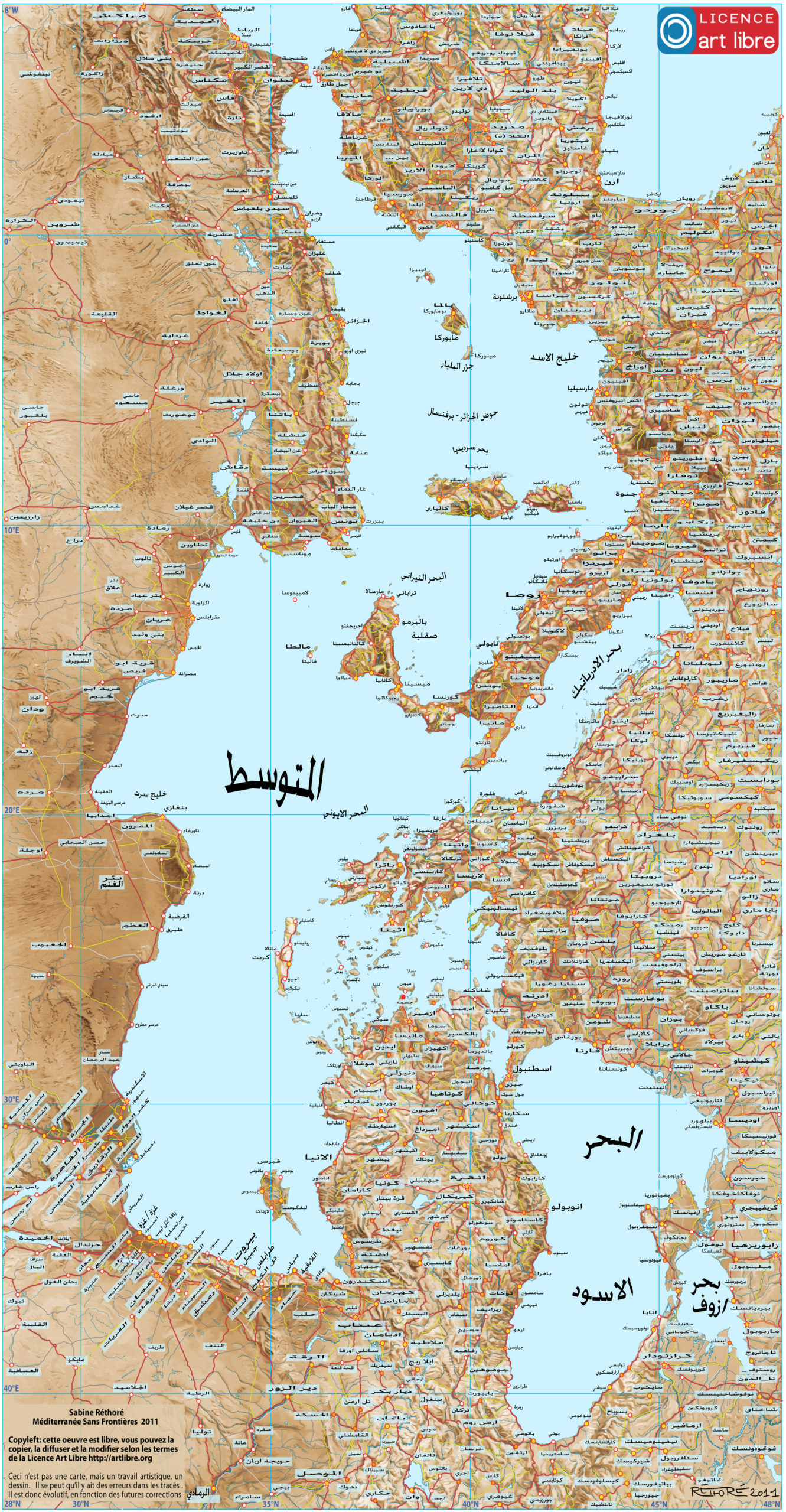
“Mediterranean Without Borders” Sabine Réthoré, 2011 (Arabic).
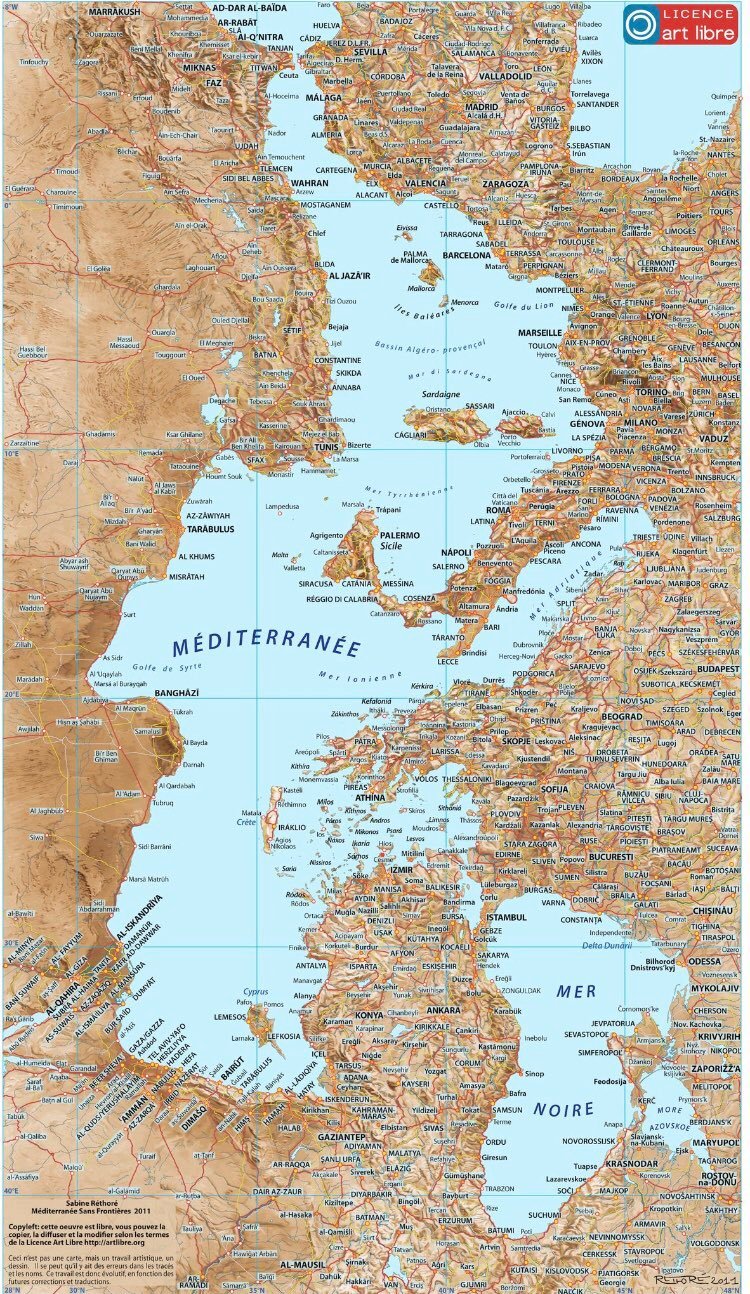
The “Mediterranean Without Borders” map was produced, in the political euphoria of 2011, by Paris-based artist Sabine Réthoré. Its profound simple 90-degree rotation not only underwrites an artistic streak, but can also largely impact one’s perspective. The end result is that the question is no longer about north-south as much as it is about parity and closeness. In the context of Mediterranean geopolitics, refugees crossing and drowning, fortress Europe, colonial history, skewed markets, condescending north to south (top to bottom) attitudes, post-colonial stagnation and so forth, means the simple rotation of the map is a big political statement with humanizing tendencies that make transnational ties look more intimate. That is an artistic statement in itself. This does not mean it will work for all maps, but it does so with the Mediterranean basin given the weight of its contemporary politics and long rich history.
“Mediterranean Without Borders” Sabine Réthoré, 2011 (French).
The map was shown at an event in Brussels in November 2019, where I was invited to speak to EU and MENA youth, the opening was made by Marseille-based writer Mary Fitzgerald who presented this curious map of the Mediterranean rotated 90 degrees to the right. Fitzgerald provoked a lively discussion and the audience related more to the alternative map than its standard appearance. When I shared the image with others, it elicited various responses from it looking like a fantasy map to the humorous old woman trying to avoid stepping into the mud. Intimacy was a key response to the map. When I posted it to Twitter, geographer Joshua S. Campbell responded “Amazing how rotating a map changes your perspective. Maps tend to ossify spatial relationships in your mind…tweak the map, break the pattern. Also why spatial thinkers are useful, they possess the ability to rotate spatial relationships in their mind.”
What Réthoré’s artwork also does is furnish a metaphysical canopy to Gianluca Solera’s idea of transnational Mediterranean citizenship and breathes life into the dying political imagination. Solera argues
“the Mediterranean could become again a cradle of a new Renaissance if conditions were put in place for a project of transnational citizenship. A shared political initiative, putting together the various experiences of resistance, protest and popular alternatives, and building a Mediterranean platform for a new social contract, so urgent in times of profound crisis both in Europe and in the Mediterranean” (Solera, 2017).
Indeed, it may appear that we are a long way from this, but the grim reality of securitization, refugee crisis, and a pandemic overturning the world as we know it, can eclipse the years that saw thousands of initiatives taking place, stories, theorizing, training, in what Solera has deemed a Mediterranean “Shadow government.” Moreover, the region is moving towards a thinking in which the social contract will require rewriting as it faces the pressures of epidemiological threats, climate change, alarm at the dominance of big tech, to the receding of the long-haul flight in favor of local and regional travel, a travel bubble in some cases.
This is crucial if civil society, social movements, and transnational Mediterranean responsibility is to take on meaningful qualities towards how the digital order and terrestrial order are to be negotiated. Italian sociologist Franco Cassano noted:
“Unbridled technology does not signify the abandonment of earthy grittiness, but its perfecting it through the will to power. Mediterranean man, instead, lives always between land and sea; he restrains one through the other; and, in his technological delay, in his vices, there is also a moderation that others have lost. The unbridled development of technology is not tied to the crossing of land and sea, but to the oceanic lack of moderation, the chasing of the sunset by the sun, the absolutization of the West.” (Cassano, 2011).
In other words, the Mediterranean world is a philosophical gateway to deconstruct fundamentalisms as it has the “capacity to transform our limitations in a common benefit, a tragic memory in the fight against all forms of fundamentalism” (Cassano, 2011). Be it techno-fundamentalism or else.
The above is a short modified extract from my paper, “Re-envisioning Civil Society and Social Movements in the Mediterranean in an Era of Techno-Fundamentalism,” published in the European Institute of the Mediterranean (Barcelona). The journal article is open access.
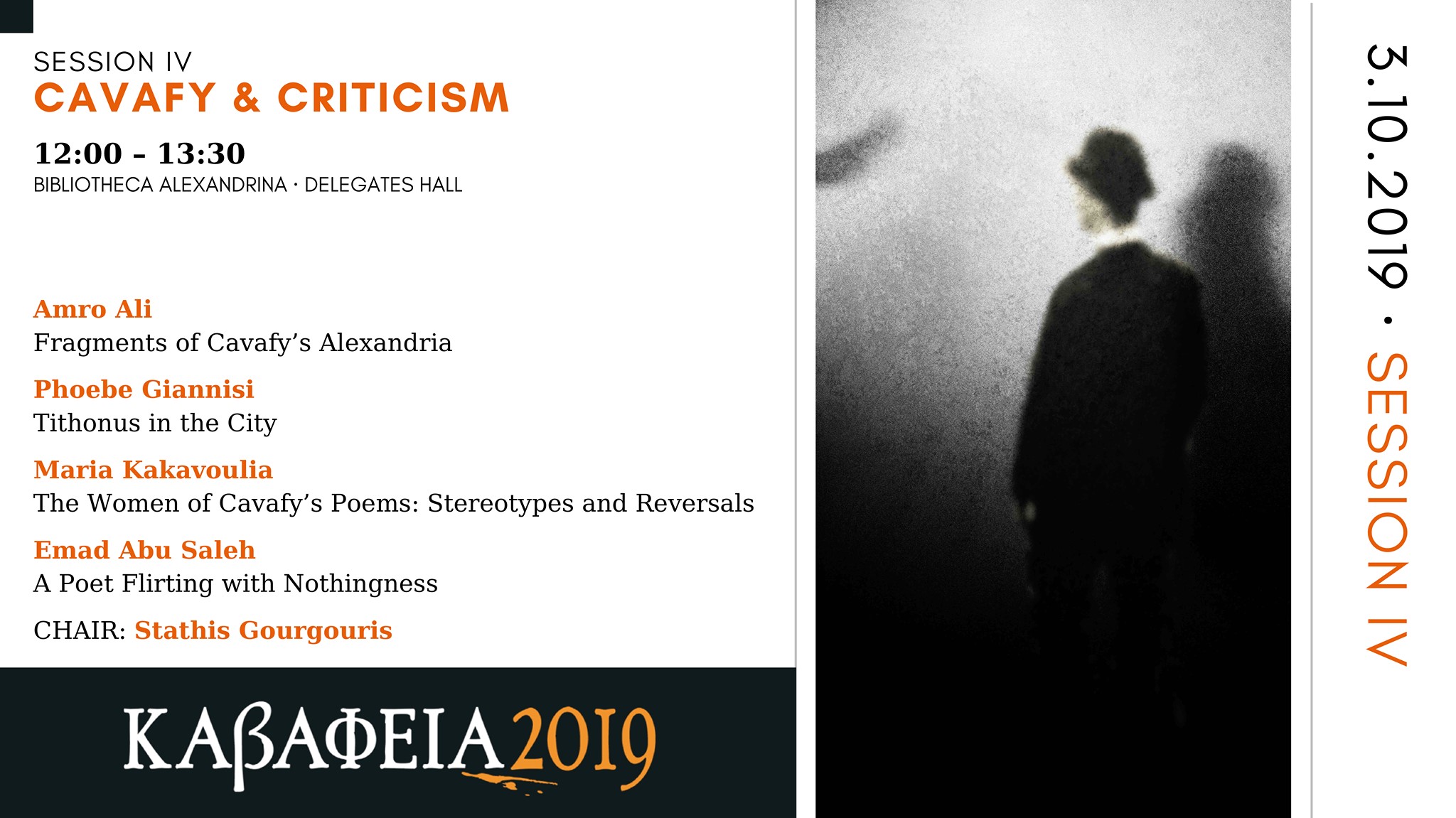
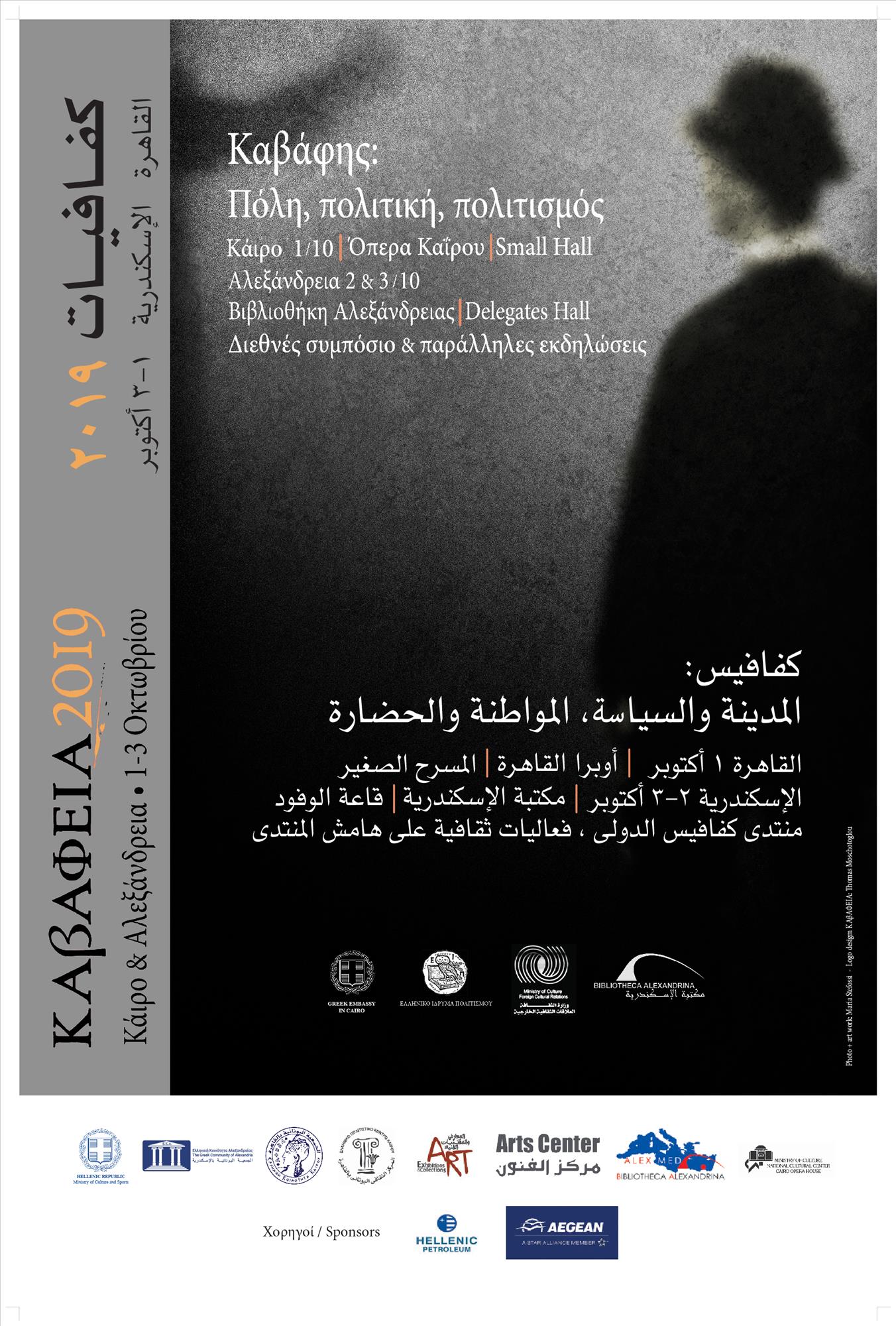
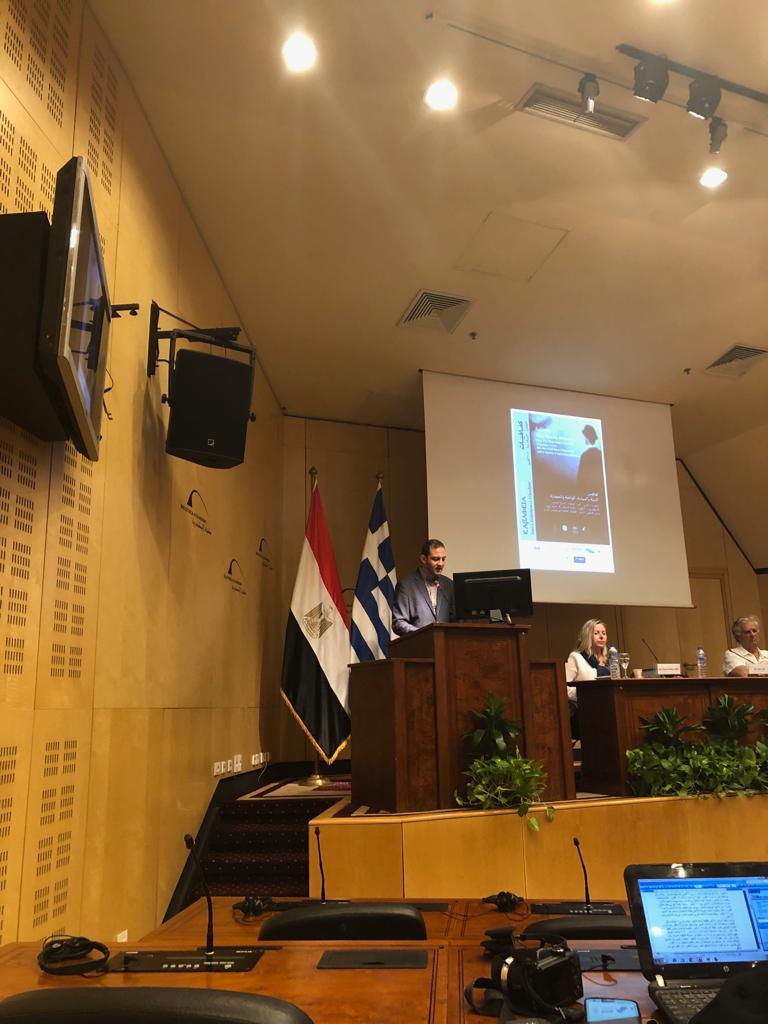
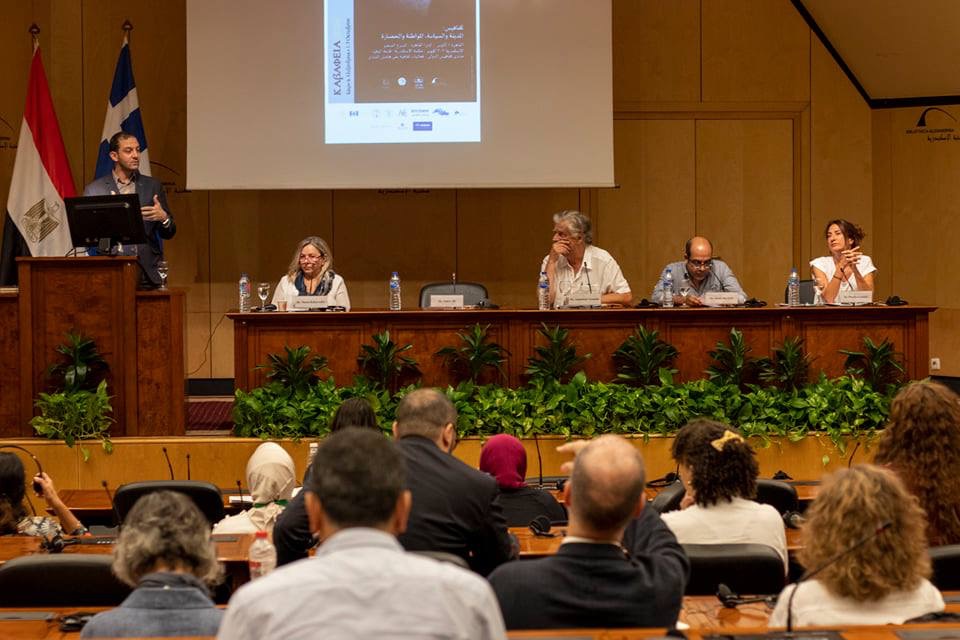
It was an honour to be invited to speak at the Cavafy International Symposium which was held at the Bibliotheca Alexandrina. The symposium, Cavafy: Polis & Politics; Civitas & Civilization, brought together scholars, intellectuals, writers and poets from Egypt, Greece, the Greek diaspora, and elsewhere to discuss the many ways C. P. Cavafy’s work lives on in the city in which he lived and wrote. “Fragments of Cavafy’s Alexandria,” was my contribution for the Cavafy and Criticism session.
There are two words that I chose to focus on: “implication” and “real” to understand Cafavy’s relationship to Alexandria, and the Alexandria he imagined.
Cavafy came to represent a moment in the city’s life, while, at the same time, his poems brought Alexandria’s past into the present. Like the rare perfect marriage, Cavafy gave the city a new mythology, and Alexandria gave the poet a history and a setting in which he could ground his poems and hear his voice.
A visiting British critic Bonamy Dobree, speaks of Cavafy’s conversation in tones:
“I have met an Alexandrian—with all that implies. Implication, that word is important when thinking of Mr. Cavafy, for his poems are like his conversation, his conversation like Alexandria, and Alexandria is all implication. . . . He may talk of the Alexandrian tram-service, of the Ptolemies, of the use of a certain word in seventeenth-century English: one scarcely knows what it is that one has talked to Mr. Cavafy about . . . both his talk and his poems leave you with a flavour, something you have never quite met before, a sound that remains in the ear. . . .”
“Only the city is real,” said Durrel, “Real,” the only word, as Nabokov has said, that requires quotation marks. While Cavafy’s Alexandria is a mythical land, but it is Alexandria; her landscape and her peoples, the spirit of place, had, perhaps more than any other city of the 20th century, the power to excite mythic visions, and in order to know those visions fully we must examine the spot on which they grew.
One of Cavafy’s achievements went beyond his beautiful poetry. I would dare to say that his unintended achievement was to show how a city can continue to exist, even after so much has disappeared, through what remains implied. He turned his face to the streets and half-forgotten conversations rather than the monuments and cliched grandeur of the city.
That is what interested me in thinking about Cavafy and Alexandria, imagining the city in fragments in a place that unfortunately does not generously yield its archives and records.
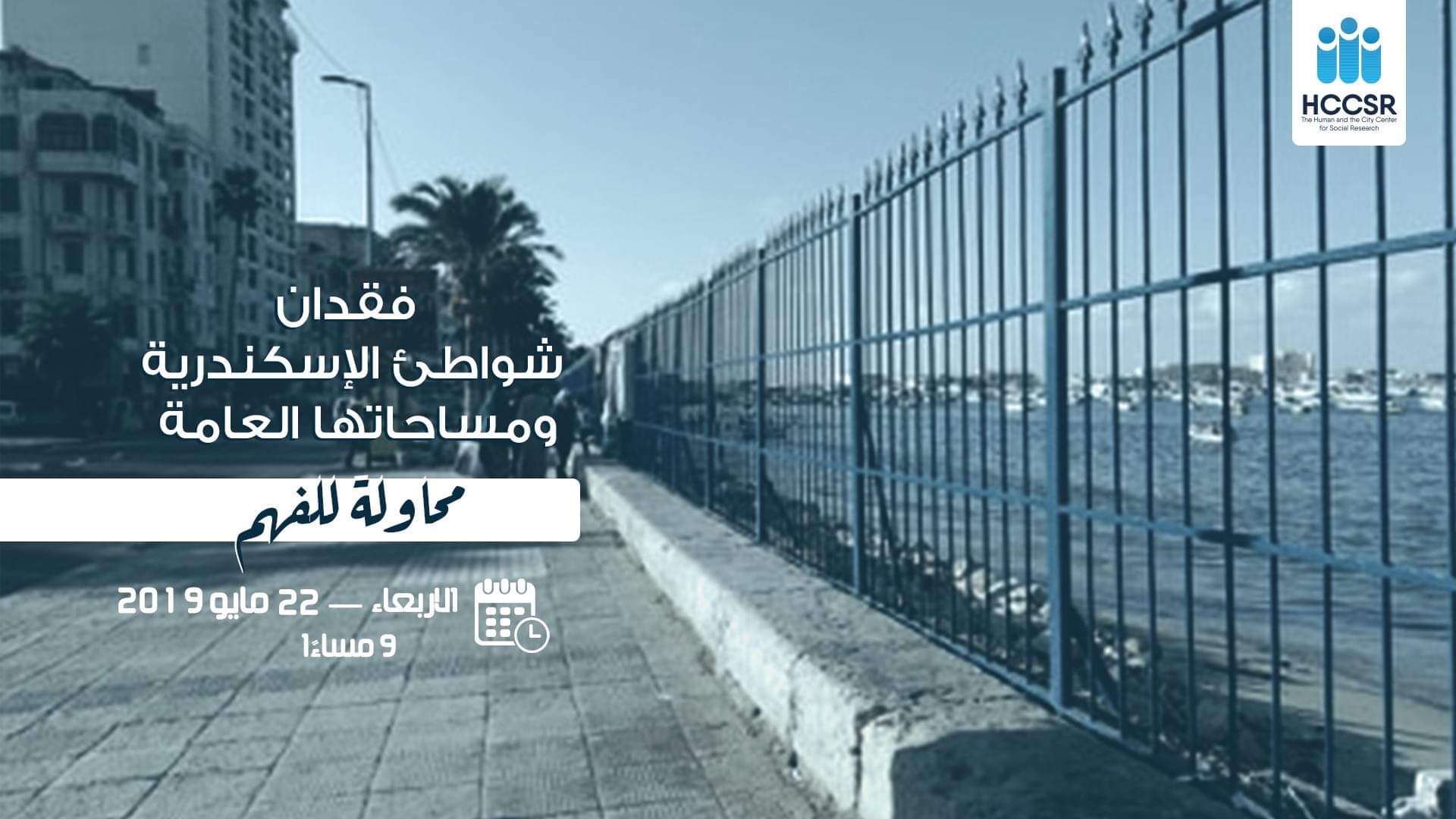
I’m giving a talk (in Arabic) on 22 May 2019 at Human and the City for Social Research that explores Alexandria’s loss of public beaches and public spaces.
This lecture will trace the historical and contemporary forces that shape the idea of civic joy and belonging in Alexandria, and its unravelling in recent decades under the weight of centralization, an illegal building craze, brain drain, consumerism, privatization, the slow vanishing common narrative, and, above all, the disintegration of the public space. The seminar will also explore the characteristics and implications of a peculiar despair across a growing swathe of the Alexandrian citizenry that is manifesting itself through a shared agony that glances around for answers, sensing that time is slowing down again, desiring to live in the past, and developing an obsession with any object that represents loss. Click here for the Facebook event.
“Unhappy is the land that breeds no hero,” Andrea cries in the 1938 play, Life of Galileo, by German dramatist Bertolt Brecht, to which Galileo responds: “No, unhappy is the land that needs a hero.”
Egypt can be that unhappy land, a land where farewell parties have outstripped homecoming parties. Where a young female doctor laments she wants to leave because “to give birth to a baby here feels morally wrong, it feels sort of illegal.” Where a juice seller sarcastically quips, “We no longer have time to think of anything else but survival, we don’t even have time to contemplate suicide.” When a country is mired in endless social and economic problems, and smothered in despair, the yearning grows for that batal (hero), that one human figure where all painful and complex abstracts will be realised within and resolved without.
Something happened in Egypt that short-circuited a sport that is often treated by governments of all persuasions as a distracting bread and circus for the masses. Something interrupted the despotic drive to stamp out the uniqueness from the flow of Egyptian life.
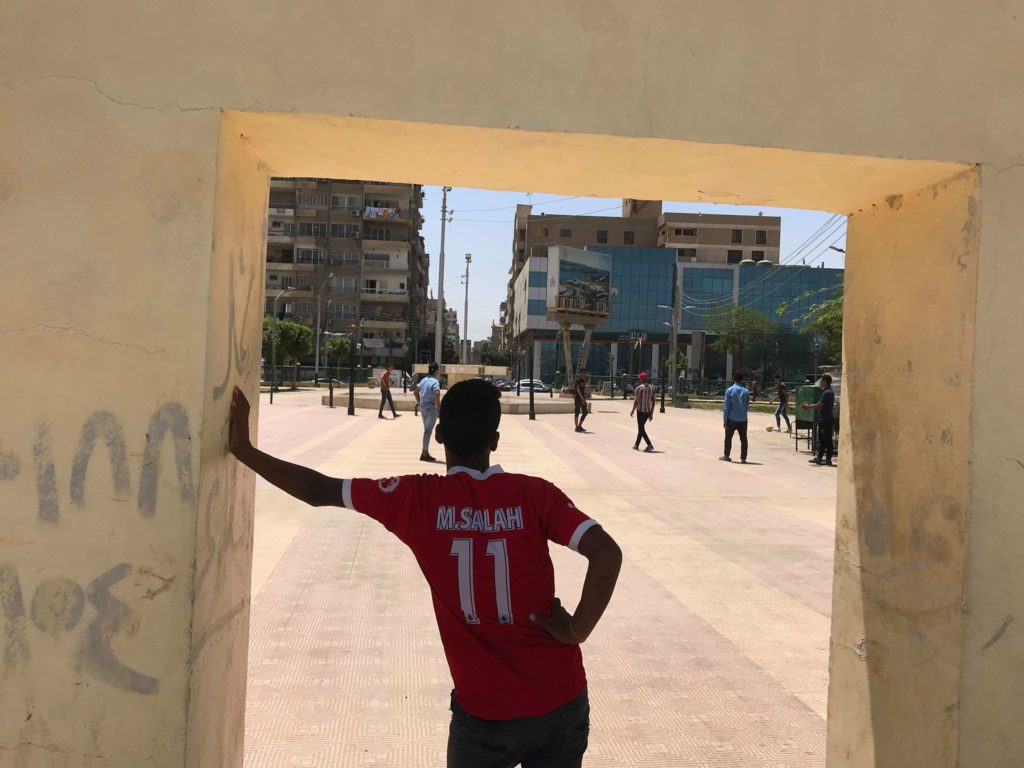
Enter Mohamed Salah armed with a moral code.
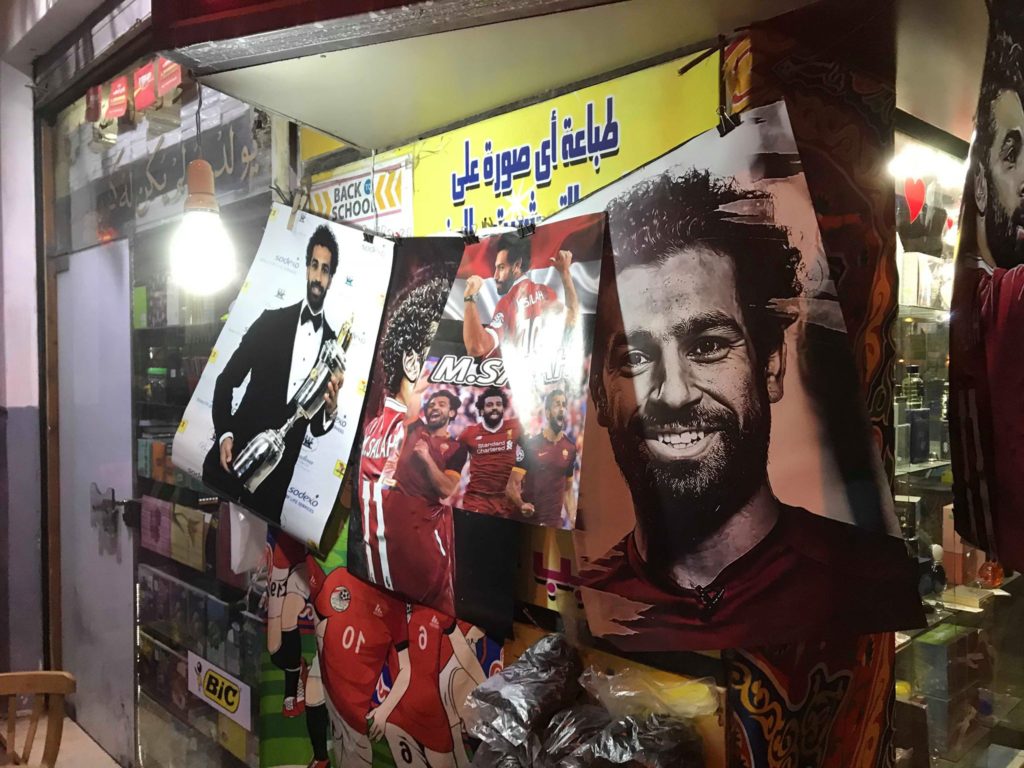
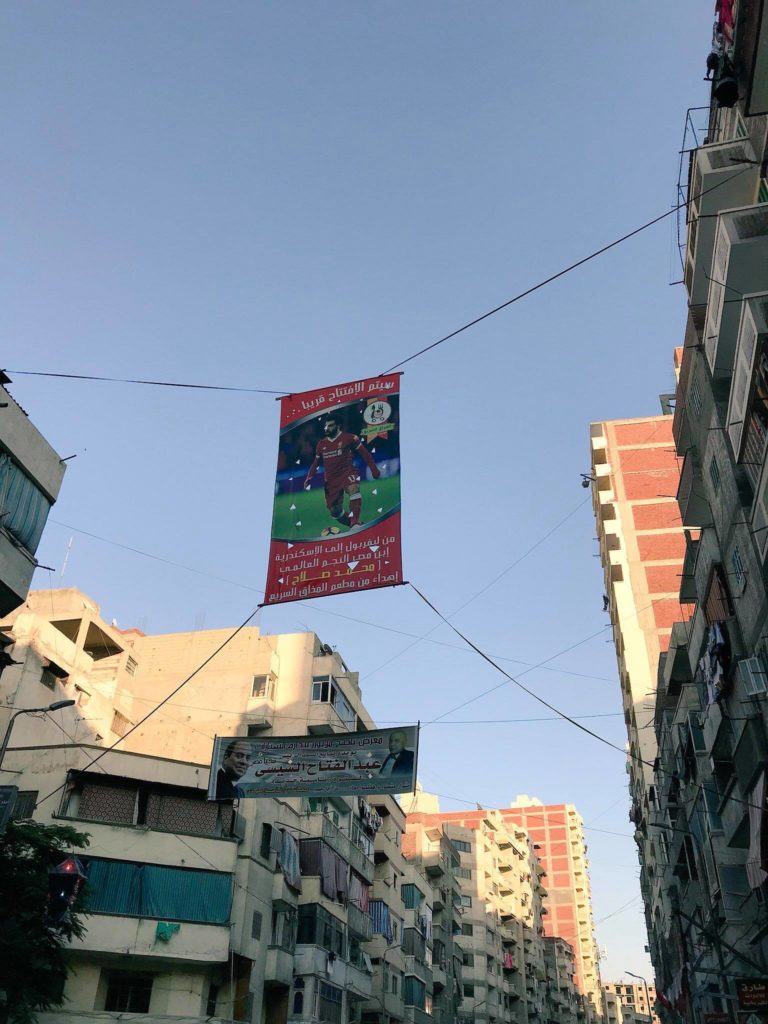
Mohamed Salah banners and merchandise (Sporting, Alexandria).
While Salah is seen to bring hope to many, he is an unsettling spectre that silently haunts the establishment, for he has options, international prestige and the perception of untouchability. He has grown to be more than a hero of football success. Salah is a different sort of hero, he is a hero of disruption, and a living paradox of a political voice without talking politics. Salah operates in a politics of juxtaposition in which his perceived immaculate persona is unconsciously contrasted with the familiar polluted forces of high politics.
While many of Egypt’s prominent and established figures seem to have an answer for everything, Salah shows up and we’re faced with difficult questions. Namely, why are we investing so much hope in one man? This is more than about the World Cup.
Salah is not a substitute for viable high politics. He is, after all, a football player, and a very good one at that, but his insertion into the volatile Egyptian climate sheds some light on what has gone wrong and why the current fervor around him can illuminate the question of Egyptian unhappiness.
Salah’s stance to steer away from politics, or from inadvertently disclosing his political leanings, has given him an amplified united base. Since the 2011 revolution, Egyptians have had to live with binaries: revolutionary versus counter-revolutionary, secular versus Islamist, civilian versus military, liberal versus hyper-nationalist, pro and anti-Brotherhood, among others. While many of these binaries have diminished under the shadow of the generals, the unity that has come in its place is a negative unity. It is almost always against something, such as terrorism, and when it stands for something, let’s say Egypt, it’s a nationalist straightjacket that is imposed, with no room for plurality of thought or voices.
Salah might just be the first figure in a while behind which pro- and anti-regime supporters can unite. In the words of an Egyptian doctoral candidate studying in California, “Salah is the reason I’m mending my relationship with Egypt.”
It has become commonplace to argue that unhappiness in Egypt is caused by high unemployment, poverty, dysfunctional education, censorship, a crackdown on independent voices, and overall human rights abuses. While there is no doubt these factors contribute to the misery of many Egyptians, there is something worse and pathological that lurks behind them all: The grim reality that new possibilities no longer emerge on the horizon. The dilution of hope that once offered the promise that unhappiness was a temporary moment, now feels for many like the ink of sadness has dried. Depression disarms you before repression even has time to put on its uniform.
For this reason, Salah is like a sudden assertion of human values within a dehumanising system. This did not arise when Salah helped defeat Congo, propelling Egypt into the World Cup last October. Astonishing football talent is not always enough to convert non-football watchers. Nor did his story of humble beginnings to stardom take hold in this moment. There was nothing original in any of these individual success stories. Perhaps because they remained just that: individual.
But then came the other, and equally decisive, side of Salah. Barely two weeks after this victory, and because of it, Salah was offered a luxury villa by entrepreneur Mamdouh Abbas. He politely declined the gift and suggested that a donation to his village Nagrig in Gharbia would make him happier. This move, along with many of his charitable acts, for non-football fans, including myself, was thunderous to say the least, and swayed us to his camp.
To put the implications of this act in a wider context: Cairo’s highways are nauseatingly choked with billboards flaunting the latest exuberant luxury real estate and gated compounds. It is an assault on the senses of millions of Egyptians who are puzzled as to how such developments take place in an era of painful austerity measures, in which they are being asked to continually sacrifice. The billboards, almost always in English and at times with white, blue-eyed European faces, loudly proclaim, “It’s time to think about you,” and, “This time it’s personal.” It is not enough that Egypt’s capitalism on crack and real estate speculation is skewing the economy, but it also ramps up hyper-individualism, greed, and various strands of self-hatred.
Salah’s rejection of the villa was a violent piercing into a culture of the grotesque and excessive, and signified his upholding of the values born, or crystallized, during the 2011 revolution that put the common good above all. His refusal was a significant breach in the business-as-usual patronage and wheeling and dealing circles. If Salah was loved for his victory over Congo, he was now respected more for this move and the many charitable stories that emerged, making it obvious that this has been his character for a long time, and that he didn’t reinvent himself for PR purposes. Love and respect are two different beasts. Egyptians have long missed looking up to someone who commands respect, at least someone who is not in exile, in prison, or long dead.
In recent years, Egyptians have had to live with the exhausting spectacle of doublespeak in which official interpretations are often in conflict with lived realities and common sense. The train heading to Alexandria is declared to be on its way to Aswan, as veteran journalist Yosri Fouda once put it. This war of attrition on rationality has plunged Egyptians deep into a spiral of conformity, scepticism and indifference toward each other. The idea of the higher good receded as officialdom continued, in Czech philosopher Václav Havel’s words, “not to excite people with the truth, but to reassure them with lies.” The intervention of Salah did not necessarily change all that, nor did it reverse the Orwellian trend, but he did help restore meaning to terms that had become scrambled: dignity became dignity again, principles became principles, kindness became kindness, and happiness became happiness.
Salah touched on another existential question within Egyptian state and society: the strong desire for international recognition. This phenomenon weaves its way through Egypt’s modern history. There have been concerted efforts to export Sisi’s branded Egypt, for example, with the new Suez Canal project billboards dotting New York’s Times Square with the slogan “Egypt’s gift to the world.” Salah, instead, lived up to fulfilling that slogan in a much more dramatic and compelling way. In fact, Salah has arguably had more impact on the world’s positive views of Egypt than all the recent years of tourist campaigns, international conferences and mega projects combined. In light of this, mentioning Salah in conversation can give many Egyptians a feeling of breathlessness, tingling hands and a sensation of weightlessness.
This in part has to do with the function of happiness and meaning. If the regime is not suffering from cherophobia (fear of happiness), it believes it can commodify happiness by stating it intends to make “Egyptians among the world’s happiest,” or through the recent discussions with the UAE’s Ministry of Happiness to “export” some of their cool psychedelic juice to Egypt.
Happiness is a question that spans a history of philosophical musings, from Aristotle’s Nicomachean Ethics, to Al-Ghazali’s Alchemy of Happiness, to Nietzsche’s Twilight of the Idols and the Antichrist. All of them would shun the Anglo-inspired utilitarianism of John Stuart Mills that speaks of happiness as the ultimate net objective and has been largely repackaged for neoliberal modernity, rather than a meaningful higher life that produces happiness as a by-product. In other words, you cannot separate the attainment of happiness from respect for justice, dignity, honour, etc. It doesn’t seem to phase the authorities that happiness is meaningless without rescuing vibrant citizenship, opening public spaces, providing fair trials, encouraging pluralism, and preventing overall existential meaning from being fragmented.
Salah offers glimpses into the voids spawned by the above fractures as he communicates not only on the instrumental level of football success, but with meaningful and empathic qualities that come with an honourable character. It is no wonder that Salah was able to inspire calls to a drug user helpline to shoot up by 400 percent.
Salah’s fame, coupled with his stance on religion, comes interestingly at a time when many Egyptians are renegotiating their faith, identity markers and boundaries. The norms of what once constituted a religious person are breaking down under the weight of the country’s endless contradictions. All this takes place beneath the purview of a state that uses religion to arbitrarily police the public space, and preachers who continue to push a baroque Islam at the expense of the religion’s humble essence.
The rise of a widespread spiritual passivity contrasts with Salah’s faith, which has come to animate his public life. He saw no need to dismiss or distil his Muslim identity, even after he achieved a turbo-charged social mobility and stardom. This is not lost on many. The sight of Salah’s veiled wife, Maggie, by his side on a green oval in a European city before the eyes of millions, is a hypnotic sight to Egyptians (and the rest of the world) precisely because it is unusual, particularly at a time of heightened anxieties toward Muslims in the West. “I respect him as he is not embarrassed nor does he try to hide his veiled wife after all that success,” an Alexandrian barber says.
It is for the same reasons that Salah can sprout pan-Arab and pan-Islamic wings across the Arab and Muslim world. He has made it into Lebanon’s graffiti scene and protest ballots in the Lebanese elections (just like Egypt) to a bizarre planned peaceful protest outside the Spanish embassy in Jakarta after the injurious tackle by Sergio Ramos. The Arab world’s traditional idea of a leading, strong, vibrant, noble and outward-looking Egypt – one that spearheads the arts, preserves the seat of intellectual Sunnism, champions pan-Arabism, and stands up for the Palestinian cause – is projected onto Salah with deafening force. Between prostrating on the grass and raising his index fingers to the heavens, hundreds of millions of Muslims are drawn to this well-understood language of piety.
But this attraction transcends culture and religion. As the western world is bogged down in neoliberal sterility, rampant consumerism, loneliness, high-level scandals, populism, xenophobia against refugees and immigrants, anti-Muslim bigotry, anti-Semitism and fake news, the multi-layered Salah – the intimately relatable footballer and loving father who kicks a ball with his daughter Makka – stands out like a moment of truth and living universality, with a mammoth mural recently going up in Times Square reflecting his larger than life image.
Albert Camus wrote to an estranged German friend in 1943: “I should like to be able to love my country and still love justice. I don’t want any greatness for it, particularly a greatness born of blood and falsehood. I want to keep it alive by keeping justice alive.”
Salah perhaps embodies this ideal. That love of country does not require drums and chest-beating, but grace, sincerity, modesty and charity. He is a reminder to Egyptians that there exists a better human nature in a landscape barren of prominent reverential role-models. To Egypt and even the rest of the world, Salah is the outlier that proclaims the alternative to nationalism is not treachery but civic responsibility, the alternative to stifling religious conservatism does not always have to be apathy or mockery of the sacred, but breathing faith into a sound value system, and the alternative to injustice can be forgiveness. Ultimately, people had almost forgotten what humility among those with renown looks like. Particularly, a humility that is relentless and consistent, despite being trialled under the stadium floodlights and the stars sprinkled across the Liverpool night sky.
A Salah poster in Sidi Bishr, Alexandria.
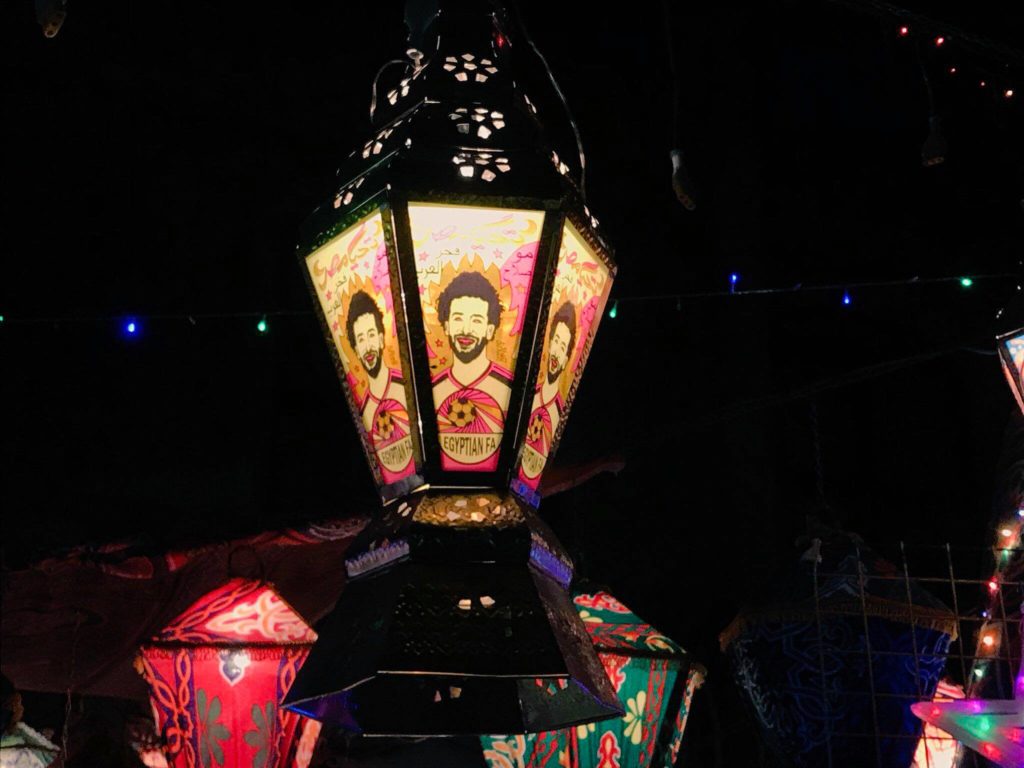
Salah is the rare homecoming party Egyptians have long awaited. His face on dangling lanterns lights up dark alleyways, and his colourful posters germinate over the debris of fading election posters in a country that sees official and media-manufactured heroes reckon with publicly-anointed heroes.
While it cannot be implied nor expected that Salah could impact the political situation in Egypt, his animated existence spotlights entry points back into the realm of authenticity. He widens the moral imagination of an attentive public and parades the possibilities that infer that the rhythm of life involves more than birth, marriage, death and even sports. He also raises questions that many power-holders will have to grapple with eventually, someday: That, above all, there are reasons why people ache for heroes in the first place. — What have you done to make them this unhappy?
Understanding Alexandria as a second city can shed light on how historical imaginaries influence present-day experiences, as well as the cultural practices and social norms that arise; as the very notion of “second,” and the inevitable comparisons with other cities that it spurs, can drive decisions and shape a peculiar approach to one’s city.
Time: 7pm
Date: Sunday 22 April 2018
Venue: Institut français d’Egypte à Alexandrie
The philosophy talk and conversation will examine the forces behind the degrading of aesthetics and the normalization of mediocrity in everyday life.
This event is not so much about urban studies and public space as it is about delving into the toxins of modernity and its relationship to the human condition under assault. It will explore themes of shapelessness, powerlessness, meaninglessness, responsibility, alienation and asks, above all, what is ugly? Questions will be raised to help absorb the nature of the problem, and how do people refuse this malaise? The session will introduce concepts from the writings of Al-Farabi, Ibn Sina, Ibn Rushd, Edmund Burke, Friedrich Nietzsche, Hannah Arendt, Walter Benjamin, and Václav Havel.
The event will primarily be in English, however, an Arabic session will be followed up in the next month.
Venue: French Cultural Institute Alexandria (L’institut Francais D’Egypte A Alexandrie)
Date: 7 October 2017
Time: 7.30pm Facebook page
Originally published in Mada Masr, click here for the English translation.
منذ صغري، اعتدت على رؤية المناسبات الدينية تُفرّغ من معناها، سواء كان هذا في رمضان المتخم بالتسالي، أو في الكريسماس المتمحور حول الشراء.
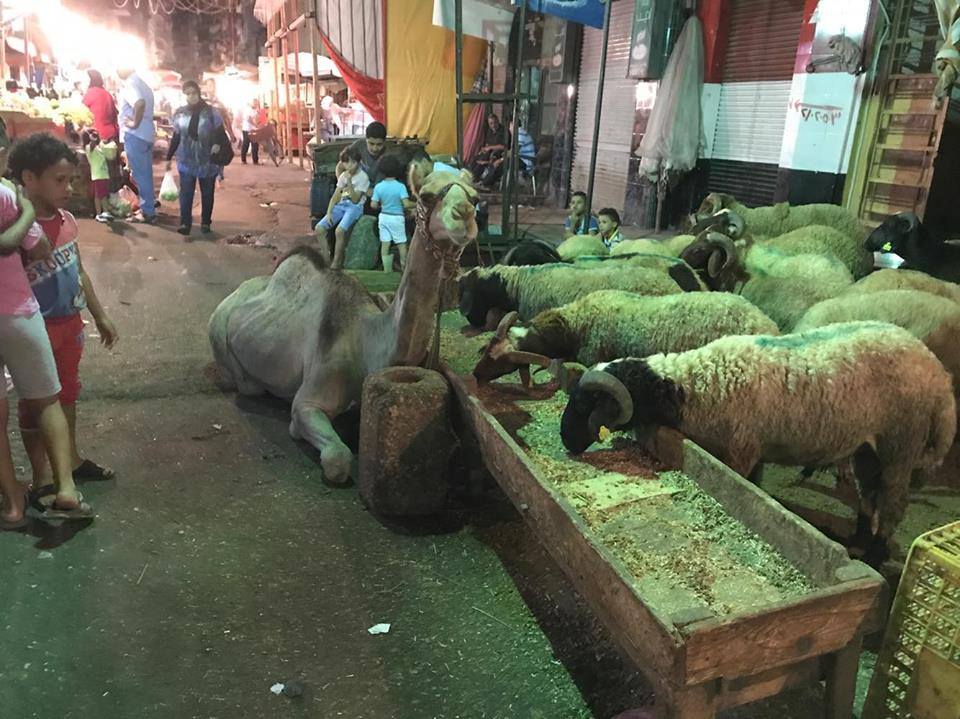
ولكن عيد الأضحى يتعدى ذلك، فهو يقوم على مشهد دماء الخراف والمواشي السائلة في شرايين المدن المصرية. أن تسكن مثلي في أحد أحياء الإسكندرية المحاطة بالجزارين يشبه أن تجد نفسك في الشريان الأورطي للمدينة.
عيد الأضحى، والذي يمجد تضحية إبراهيم، مفعم بالمعاني والرمزية، من مثابرة النفس البشرية والالتفاف التقليدي للمجتمع، بالإضافة إلى كونه فرصة للانفتاح الرمزي على المسيحيين واليهود الذين يفهمون هم أيضًا محنة إبراهيم.
يضاف لذلك أن العيد هو فرصة لجموع المصريين، الذين قد أصبحوا نباتيين رغمًا عنهم، لكي يعيدوا اللحم إلى سُفرتهم، بالإضافة للعيديات والعطايا التي يجود بها ميسورو الحال في هذه المناسبة.
عيد الأضحى مثال للصدقة، ولكن ينقصه الكثير من التضحية.
أدمن المجتمع المصري عبر السنين المظاهر الفاحشة للتدين. تدهور عيد الأضحى حتى أصبح مناسبة يصل فيها المجتمع إلى قمة الالتفاف حول المظاهر، بشكل يدمر فرصة وجود أي أثر للحياة العامة. تعود جذور هذه المشكلة إلى التمدن، حيث انتقلت الطقوس من المزارع والمذابح إلى الشوارع. وانتقلت شعائر ذبح الخروف بالتالي إلى مناور المباني لمدة طويلة. ولكن مع الرغبة في التباهي بالثروة أصبح الذبح يجري على نطاق شديد الاتساع، وبدون رقابة أو تنظيم.
رغم معارضة السلطة لتلك الممارسات وتغريم البعض بمخالفات هنا أو هناك، إلا أن الدولة ظلت أسرع كثيرًا في التحرك ضد متظاهر مسالم يرفع لافتة، من سرعتها في إيقاف المسؤولين عن سد نظام الصرف بآلاف اللترات من الدم، مع إطلاق رائحة الحيوانات الميتة في الهواء وتجاهل أدنى معايير الصحة العامة.
تجرُد الذبح من الأخلاقيات الإسلامية يظهر في غياب عدد من الأسئلة الأساسية مثل: «لماذا يُحتفظ بالحيوانات في ظروف رديئة قبل أن يواجهوا مصيرهم؟»، «لماذا يشاهد الأطفال المجزرة؟» وبعد كل ذلك، «ما هو الحلال أصلًا؟»
في النهاية، يصبح الخروف هو بطل الاحتفال الذي يطمس الرسالة الأصلية ويستهين بالإدمان غير الصحي للحم.
كان أكل اللحوم محدودًا جدًا في العصور الأولى للإسلام؛ كان الرسول وصحابته شبه نباتيين، وكان أحدهم نباتيًا بالفعل. تتفق المصادر على أن الطعام المفضل للرسول كان البلح والشعير والتين والعسل واللبن وأكلات نباتية أخرى. لم يأكل الرسول لحم البقر أبدًا، بل وقد قال: «البقر لحمه داء ولبنه دواء». كما حذر الخليفة عمر: «إياكم واللحم، فإن له ضراوة كضراوة الخمر». تاريخيًا، كان أثرياء المسلمين وحدهم هم من يملكون شراء اللحم، وكانوا يأكلونه يوم الجمعة، بينما ينتظر الفقراء وجبة اللحم كل عيد.
يجب أخذ هذه العوامل التاريخية في الاعتبار، لدى التطرق للحاجة لانتشال عيد الأضحى من الارتباك المحيط به. ربما يجب التعامل مع اللحوم كرفاهية تؤكل بشكل غير منتظم في كل الطبقات الإجتماعية.
لست نباتيًا، ولكن الإفراط في إنتاج وتناول اللحم، بالإضافة للضغط الذي يسببه ذلك على الكوكب، يشير إلى ضرورة تنويع الطعام وإعلاء شأن ما هو نباتي منه.
ما يحدث لم يعد يخص قصة إبراهيم، ولكنه مجرد شيء تفعله لأنك فعلته العام الماضي، وستفعله العام القادم. بعض هؤلاء الجزارين، والمؤتمنين على تنفيذ طقوس مقدسة، لا يجدون حرجًا في الجلوس أمام مجازرهم لشرب الشاي، بينما يصطف المصلون قربهم يوم الجمعة. يبدو أن صلاة الجمعة المفروضة ليست مربحة بشكل كافي لهم.
بشكل متصاعد، نشهد عيدًا عدميًا كل عام. لا يعرف الجزارون لماذا يذبحون، ولا يعرف الناس لماذا يشهدون الذبح، والفئة الوحيدة التي يبدو أنها تدرك أن هناك شيئًا ليس على ما يرام هم الخرفان والماعز والماشية.
I have grown accustomed to gradually seeing religious festivities being disemboweled of their meaning, whether it’s the entertainment-saturated Ramadan, or the hyper-commercialized Christmas. But the Islamic Eid al-Adha (Feast of the Sacrifice) stands out starkly, as it has been built on an all-encompassing annual spectacle, with the blood of sheep and cattle running through the veins of Egyptian cities. To live in a part of Alexandria surrounded by butchers, as I do, is to be unfortunately placed at one of the city’s aorta.
Eid al-Adha, which celebrates the Prophet Abraham’s sacrifice, is rich in meaning and symbolism, from the perseverance of the human condition to the traditional binding of families and community, as well as allowing, at the very least, a metaphorical reaching out to Jews and Christians who can relate to the tribulations of Abraham. More so, given that many poor Egyptians are “vegetarian” by default, as they can rarely afford meat, Eid is an opportunity to put meat on their tables. This is not to mention the money and other charitable gifts that are given out generously on this festive occasion.
When it comes to charity, Eid Al-Adha is an exemplar. When it comes to the actual sacrifice, it has become frighteningly lacking.
Egyptian society over the years has developed an unhealthy obsession with ostentatious displays of piety. Eid al-Adha has regressed to the point where public piety meets peak voyeurism, leading to the collapse of any semblance of a public sphere. The origins of this problem came with urbanization that saw the ritual move from farms and slaughterhouses to the streets. And for a long time, the practice was undertaken in the building’s manwar (interior) by a few families. Now, driven by the flaunting of wealth, it has reached an industrial scale, with minimal supervision, regulation or consensus. The authorities, despite being against it and issuing fines here and there, would rather react swiftly to one innocent protester holding a sign than the instigators of thousands of liters of blood clogging the fragile drainage system, overwhelming the minimal sanitation standards and releasing the smell of dead animals into the air.
The withering of Islamic ethics regarding the practice of slaughter is obvious when basic questions are not even asked as to why animals are kept in dire conditions in the lead-up to their fate, why they are forced to witness others being slaughtered and why are children watching this bloodbath. What is halal anymore?
Moreover, the implication is that the animal is the centerpiece of the festivity, obscuring the underlying message and normalizing our problematic addiction to meat.
Meat consumption was extremely limited in the early days of Islam. The Prophet and his companions were semi-vegetarians. One, in fact, was an outright vegetarian. The sources consistently showed the Prophet’s favorite foods to be dates, barley, figs, grapes, honey and milk, among other non-meat foods. The Prophet never ate beef, going as far as saying, “The meat of a cow produces sickness, but its milk is a cure.” The Caliph Omar warned to, “Beware of meat, because it is addictive like wine.” Historically, it was only rich Muslims who could afford meat, and it would only be eaten on Fridays, while the poor had to wait for Eid to eat meat.
These historical factors ought to be considered in light of the need to reframe Eid Al-Adha away from the morass it has been dragged into. Perhaps meat can be treated as that rare luxury that is eaten infrequently across the social strata. I’m no vegetarian, but the excessive quantity of meat produced and consumed, the social signifiers that accompany it, the deep inequalities that it sharpens and the troubling medical problems that it exacerbates, not to mention the additional pressure meat production places on the planet, means that there is an urgent need to diversify cuisines and elevate non-meat options.
Whatever is happening, it is no longer about the story of Abraham, it is something that you just do because you did it last year and you will do it next year as well.
More and more, each year, we experience a nihilist Eid on the streets. The butchers don’t know why they are slaughtering, the donors don’t know why they are paying for it, the public doesn’t know why they are witnessing it, and the sermons have hit a tone-deaf level. The only ones who seem to have some awareness that something is not quite right are the sheep, goats and cattle.
I have noticed over the past year that archival footage on Egyptian history and post-2011 videos on Egypt’s events are (mysteriously?) disappearing from YouTube, even when the issue could not be one of copyright. Similarly, the vanishing act is reportedly happening to content produced in other Arab countries. A video that is deleted is an assault on our collective memory and our post-2011 quest to build an unfettered archival culture (despite how contested archives can be).
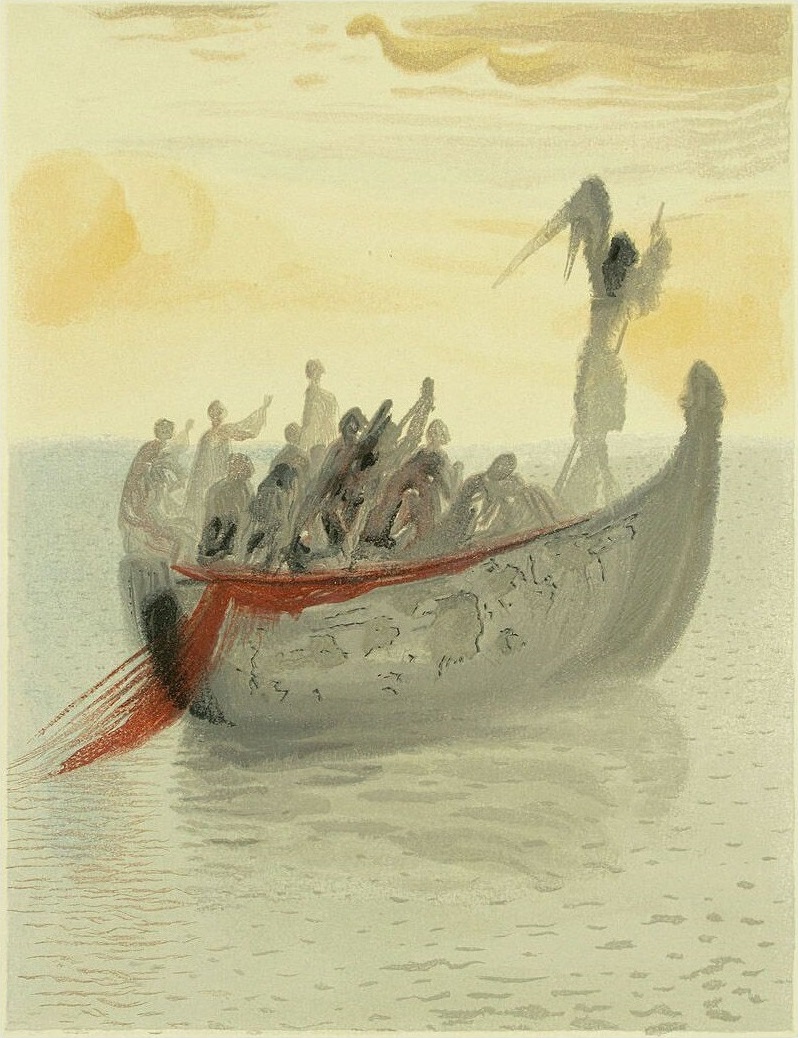
*The mythical river of Lethe, that appears in Ovid’s Metamorphosis, caused forgetfulness when drank from (Painting by Salvador Dali). English poet John Milton described Lethe as the river of oblivion that “whoso drinks forgets both joy and grief.”
We have long taken for granted that a video on YouTube was left untouched unless it violated copyright rules like a song, TV program, or film. It was always assumed that historical footage, even the most mundane type to the authorities like 1950s village life, would be unharmed given it posed no political threat. However, even these videos are fading. We can no longer take for granted that such videos will remain in perpetuity.
The four possible reasons for this that I can think of include:
Egyptian authorities or pro-regime trolls are misleading YouTube into thinking an Arabic video in question is violating copyright. Perhaps the content’s language barrier would stifle YouTube’s ability to verify the claim.
Such ambiguity enables videos to be deleted and because of “multiple third-party notifications of copyright infringement” which also raises a question as to who owns a Nasser speech given at a stadium in 1962 or a protest video from 1950s Alexandria uploaded by a former Greek resident?
Certain YouTube users have been identified by officialdom and are being threatened into deleting their content.
YouTube Users are removing any digital traces for safety reasons (Similar outcome to the third point, but I find this one highly implausible as the termination message often shown is the user being suspended or deleted for some violation, not “user no longer exists”).
Irrespective of any reason, the end-result is the same and fits a pattern: The authoritarian attempt at drowning Arab publics in the mythical river of Lethe (forgetfulness).*
How can the situation be resolved? For the time being, and I say this with a sense of urgency,if you think a video is worth saving for posterity, then it would be wise to download such videos through this link: http://www.clipconverter.cc
It’s quite a simple three step process. This is the most important step even if you don’t carry out the next steps. In any case, you will probably require these videos in some personal or work capacity in the future.
The next step is to make it accessible by uploading it to Google Drive, OneDrive, DropBox etc, and setting access permissions for that specific folder or video to public. Then notify the web by sending out the link and using the hashtag on social media: #SaveArabHistory (Or any universally agreed hashtag).
This is an ad-hoc approach until there is a concerted, organised and collective way to preserve, catalogue, and offer video access for offline and online use. But once they are gone, they are gone! There is no guarantee that the original user (who may have passed away) will upload them again or can be contacted. If there are already existing initiatives doing this, then they are welcome to advise and get involved.
When I assign my sociology students certain videos to watch but it turns out the respective videos have perished, then it not only means my students have been partially deprived of a comprehensive understanding of their subject matter (which is worrying enough), but the way we deal with technology, in an era that is seeing censorship and blocked websites slowly normalised, needs to change.
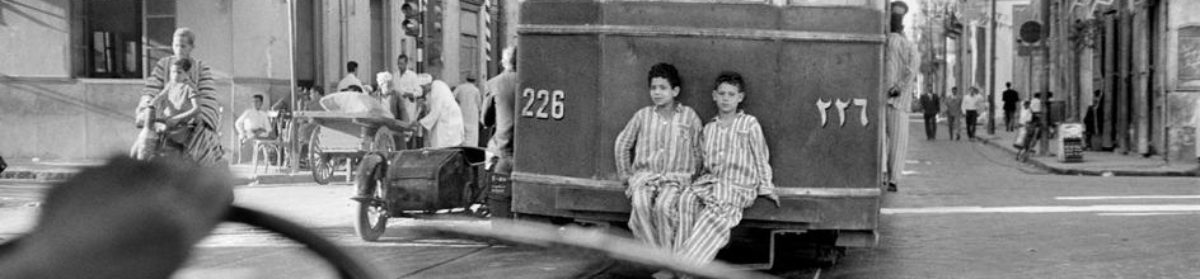
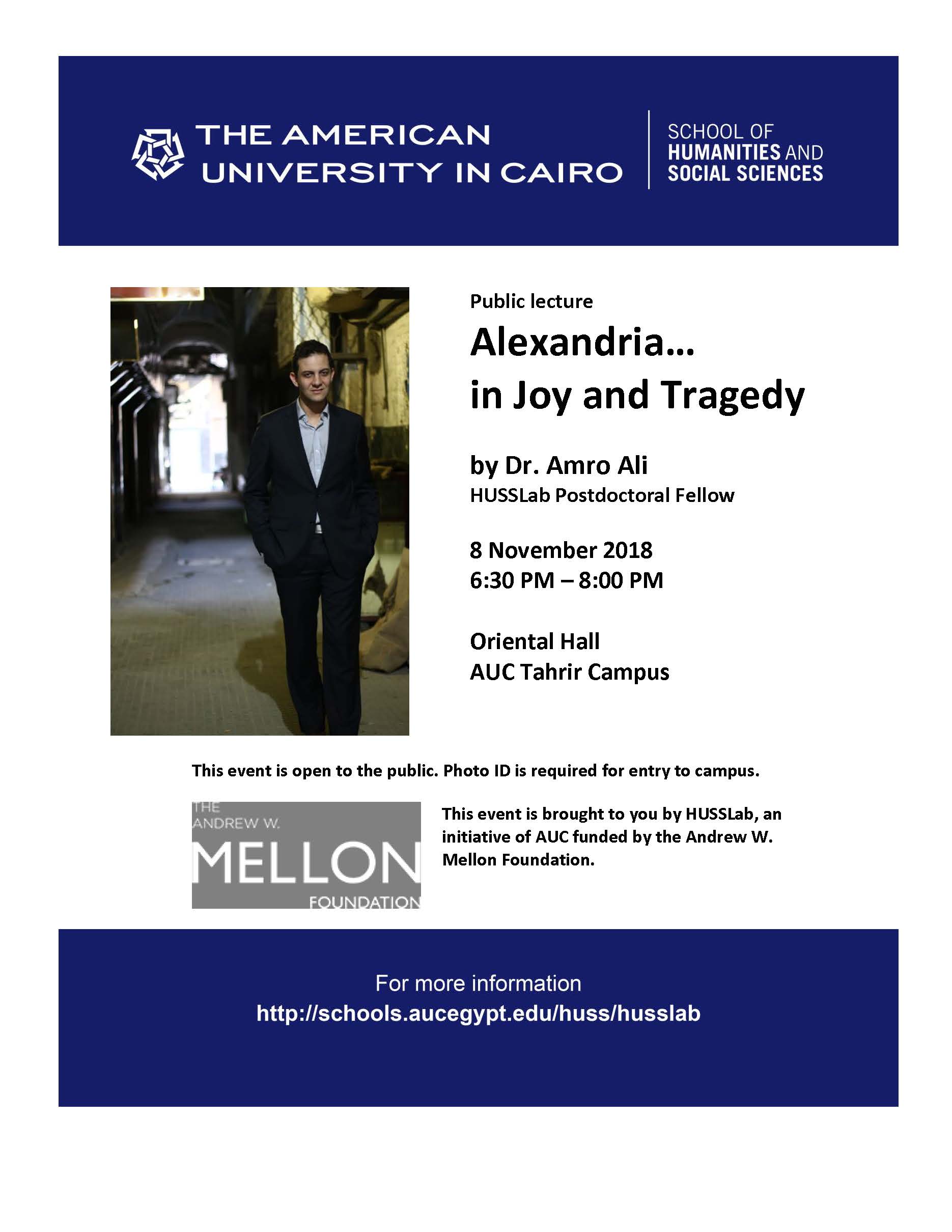

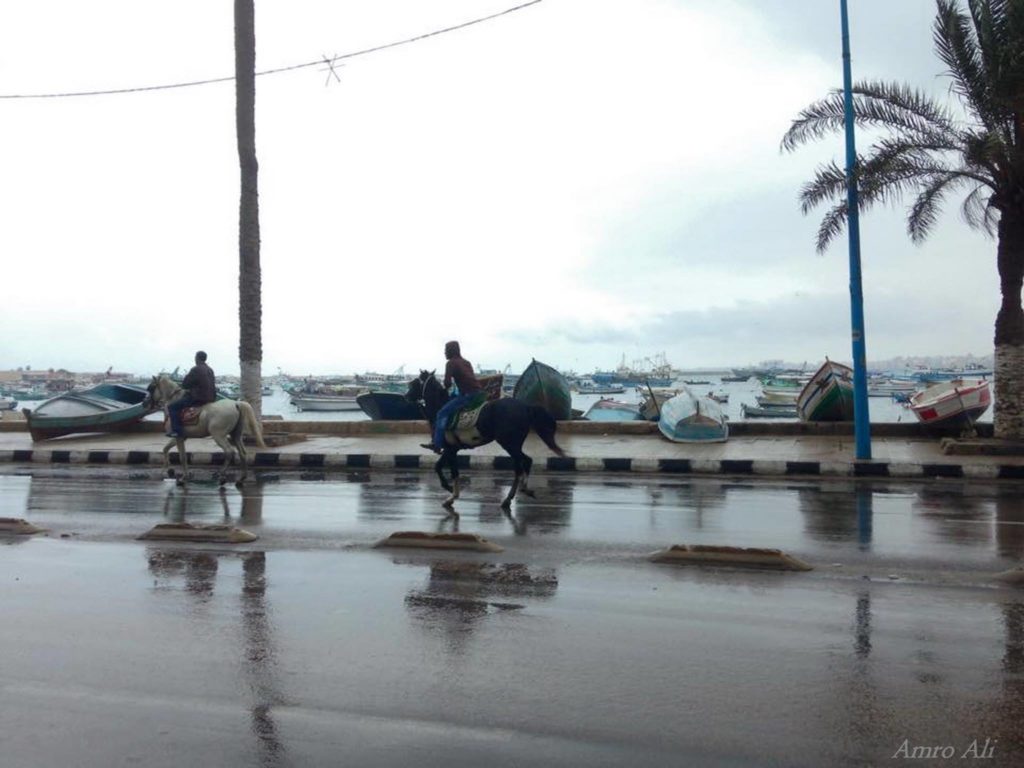 Understanding Alexandria as a second city can shed light on how historical imaginaries influence present-day experiences, as well as the cultural practices and social norms that arise; as the very notion of “second,” and the inevitable comparisons with other cities that it spurs, can drive decisions and shape a peculiar approach to one’s city.