Political Sociologist · Public Scholar · UNESCO Advisor
Category: Mediterranean Margins
“At my first sight of the Mediterranean world I realized that I had never known light before. I was from the world of darkness. London was not so bad, but the light of the northwest is a very dull light. The light of the Mediterranean held my eyes so I decided to stay for a time.” – Albert Hourani (1915-1993)
All my content related to the glorious Mediterranean Sea.
Constantine Cavafy and Ahmed Shawqi, the prince of poets, did meet more than once. Yet only a few lines of their conversations survive, most is lost to us.
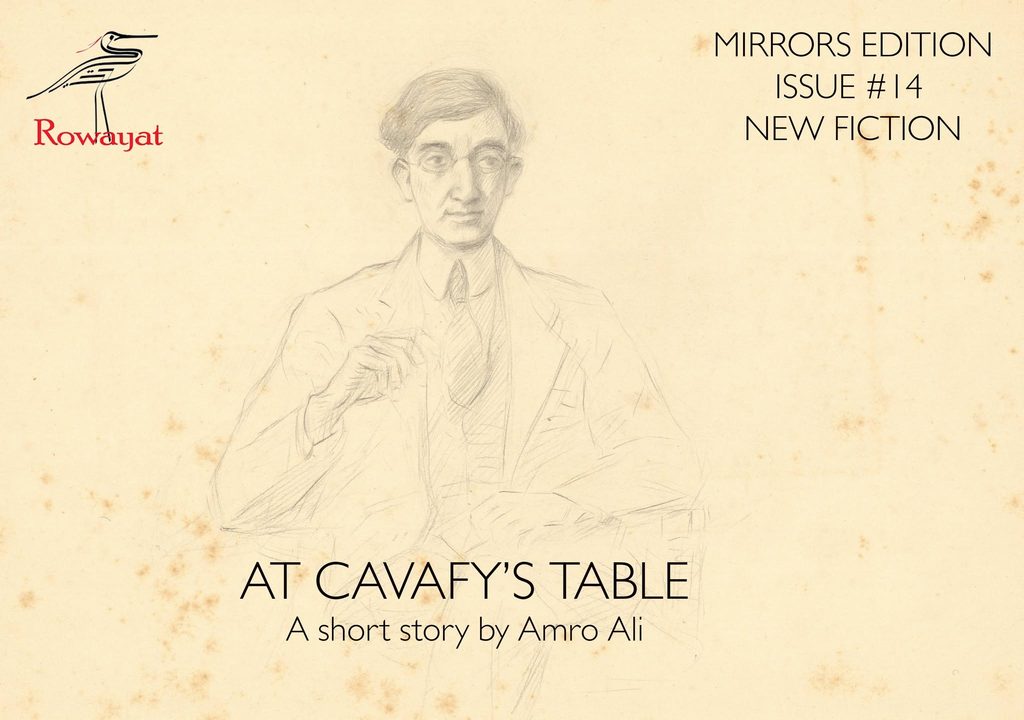
So what happens in that silence? I tried to enter that silence. In At Cavafy’s Table, literature enters it.
In January 1929, during the Al-Karam winter storm, Cavafy and Shawqi meet at Baudrot Café in Alexandria in their final reunion. There is also a waiter named Mina.
I spent quite some time reconstructing this world from Cavafy’s notebooks, Shawqi’s habits, correspondence, poems and the surviving literature of the city to give us fragments of the world around them in a year that saw Alexandria’s only recorded snowfall of the twentieth century.
At Cavafy’s Table is published in the Rowayat literary journal, Issue 14, Mirrors edition.
The Mediterranean sends storms and Alexandrians respond by naming them. Al-Karam, Generosity, is the January storm that drenches Alexandria and stays for days. It sends people indoors, street cats under the canopies, and birds to the balconies. The city finds itself alone with the sea that made it. When you live beside this sea long enough, you know that naming a thing is the closest you can get to someday taming it.
“Who takes twenty years to reply to a letter!” Cavafy shouted in the middle of Fouad Street.
After a bout of heavy coughing, he kept walking, passing under a fluttering white banner strung high between two lamp poles, hand-painted with Happy New Year, 1929! in Arabic, Greek, Italian, English, and French. It was, however, already a few weeks past the new year. The banner struggled but held, saved only by the torn holes that let the wind through. More thunder drew Cavafy’s face to the night sky as flashes lit the neoclassical and Belle Époque facades.
The rain resumed, but he kept the same pace as he turned the corner of Cherif Pasha Street toward Baudrot Café. He stood at the door that was ringed with frosted light bulbs. He hadn’t expected it to be packed on a winter Thursday. Cotton brokers, tobacco traders, artists, intellectuals (and self-proclaimed ones), playwrights, actors, and the odd one or two anarchists overfilled the art deco space. Men in tailored suits with fedoras and fezzes, women in silk coats with cloche hats. Many Egyptians fresh from a rehearsal of Ahmed Shawqi’s The Death of Cleopatra at the nearby Mohamed Ali Theater mingled – politely, if a little awkwardly – with Europeans from a French comedy at the Alhambra. They all sought refuge from the rain.
Cavafy lingered at the coat rack, slowly taking off his coat and hat, mapping the room. Some familiar faces approached. He was quick to mumble a Bonjour, Kalispéra or Buonasera with a forced smile, extending brief, stiff handshakes when he couldn’t avoid them. He made it through the crowd toward his usual corner table by the window. A waiter recognized him and rushed to remove two Cypriots from it, giving them the excuse that it was reserved. Cavafy took his seat while looking out the window. “Is he coming or not?”
The hour was smudged. He could not tell if he was early or late.
“Good evening, Mr. Cavafy. It has been a while since I’ve seen you here, I’m sure”
The waiter gabbled, eager to show off his English skills before Cavafy cut him off.
“Get me a raki!”
The rain eased. The customers slowly left, until the cafe belonged to one man. Cavafy looked up at the empty tables a few times, his hand resting on the cane. He had wanted the quiet, at least he thought he did, but now that quiet felt different. He doodled circles on the back of the telegram. He then leaned the cane against the wall and took out an Irma cigarette, snapped it in half, lit one end, and returned the other to the packet.
The same waiter, Mina, approached him.
“No poem tonight, Mr. Cavafy?”
Cavafy waved him away. Mina remained.
“I never write properly outside my apartment,” Cavafy said, taking a deep puff of his cigarette, and exhaling toward the street. He took out scraps of paper from his pocket and continued the doodling, then screwed them up.
Mina paced about clearing the tables. When he moved closer to the entrance, he found the leg of a wobbling table that hadn’t been repaired in years. He steadied it and stood there for a moment. The singer Sayed Darwish had complained about this table in the final months of his life. Specifically, irritably. In the way that dying men sometimes fasten on to the smallest of things. Mina even thought of the table at the funeral. One of the other waiters placed his hand on Mina’s shoulder. “We were there when nobody else was,” he said.
Mina nodded. “Barely anyone saw him lowered into the ground,” he said. “The whole country was swept up in Saad Zaghloul’s return from exile.”
Mina took some folded papers from his pocket. Some poems he had written that morning – or last night, or last week. He couldn’t remember when. He read the first line, then crumpled them up. He brought Cavafy a couple of sablés. He took a few steps back as one of the waiters whispered, “Are we seriously going to stay open for this Greek crank?”
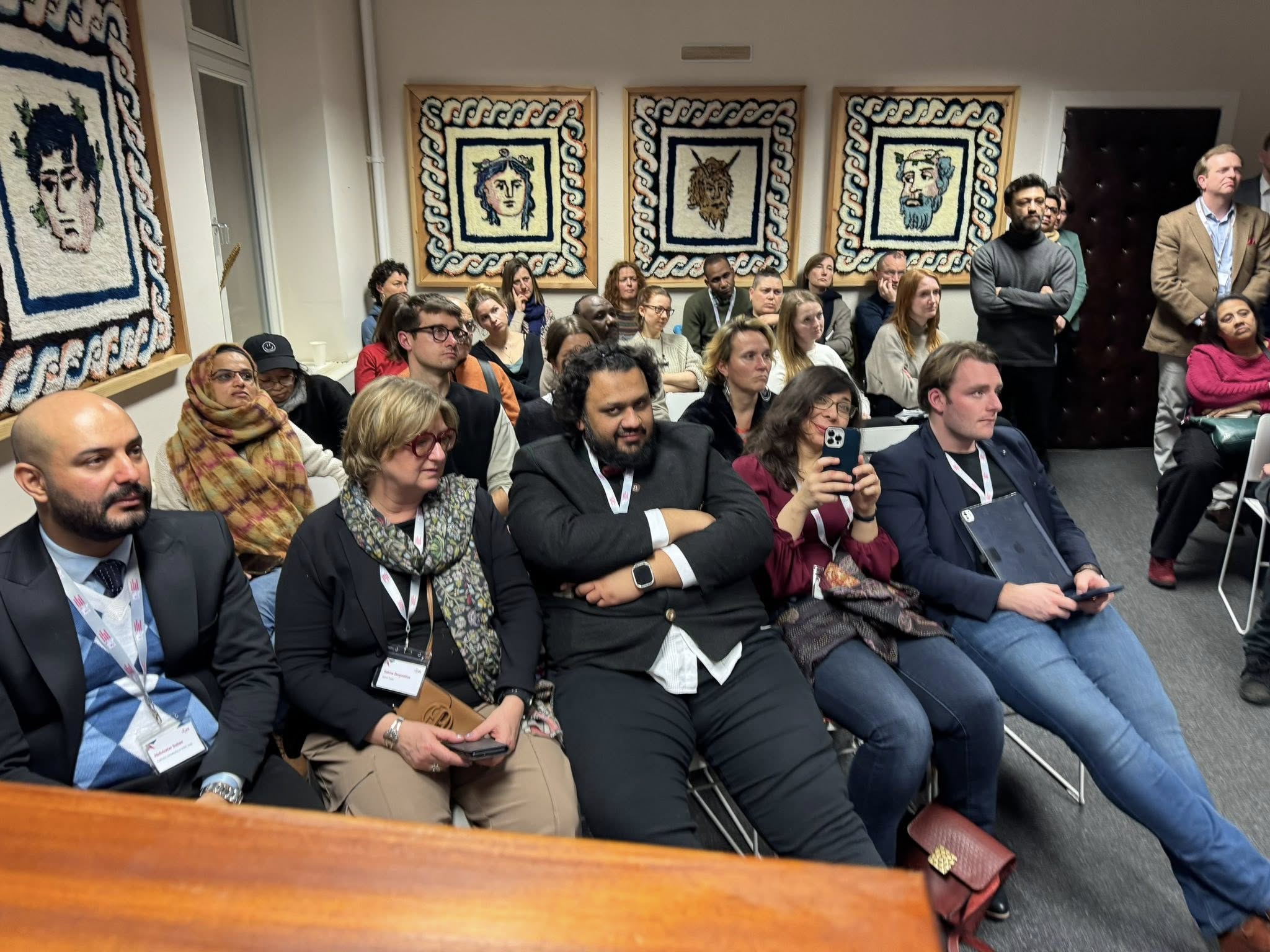
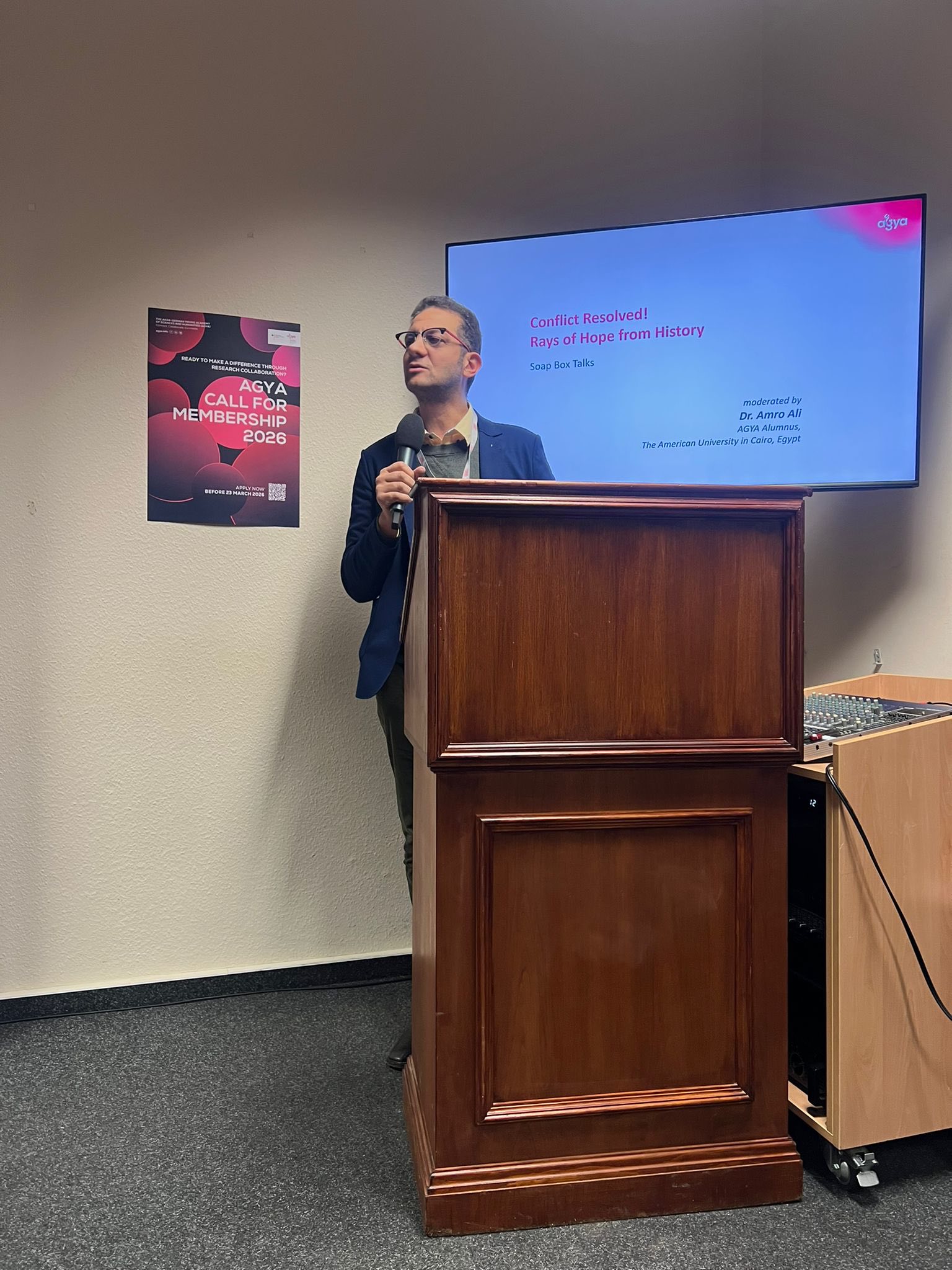
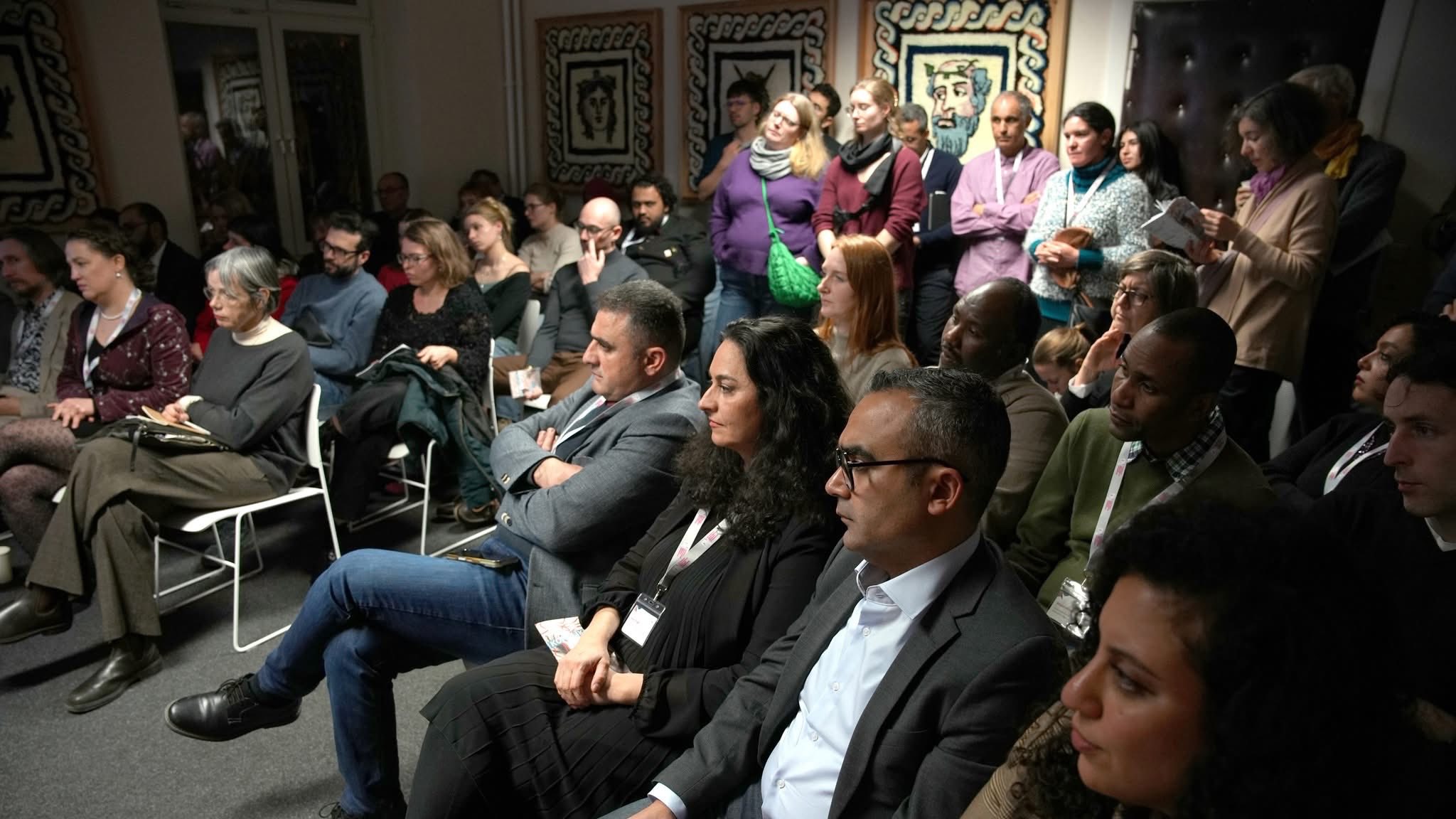
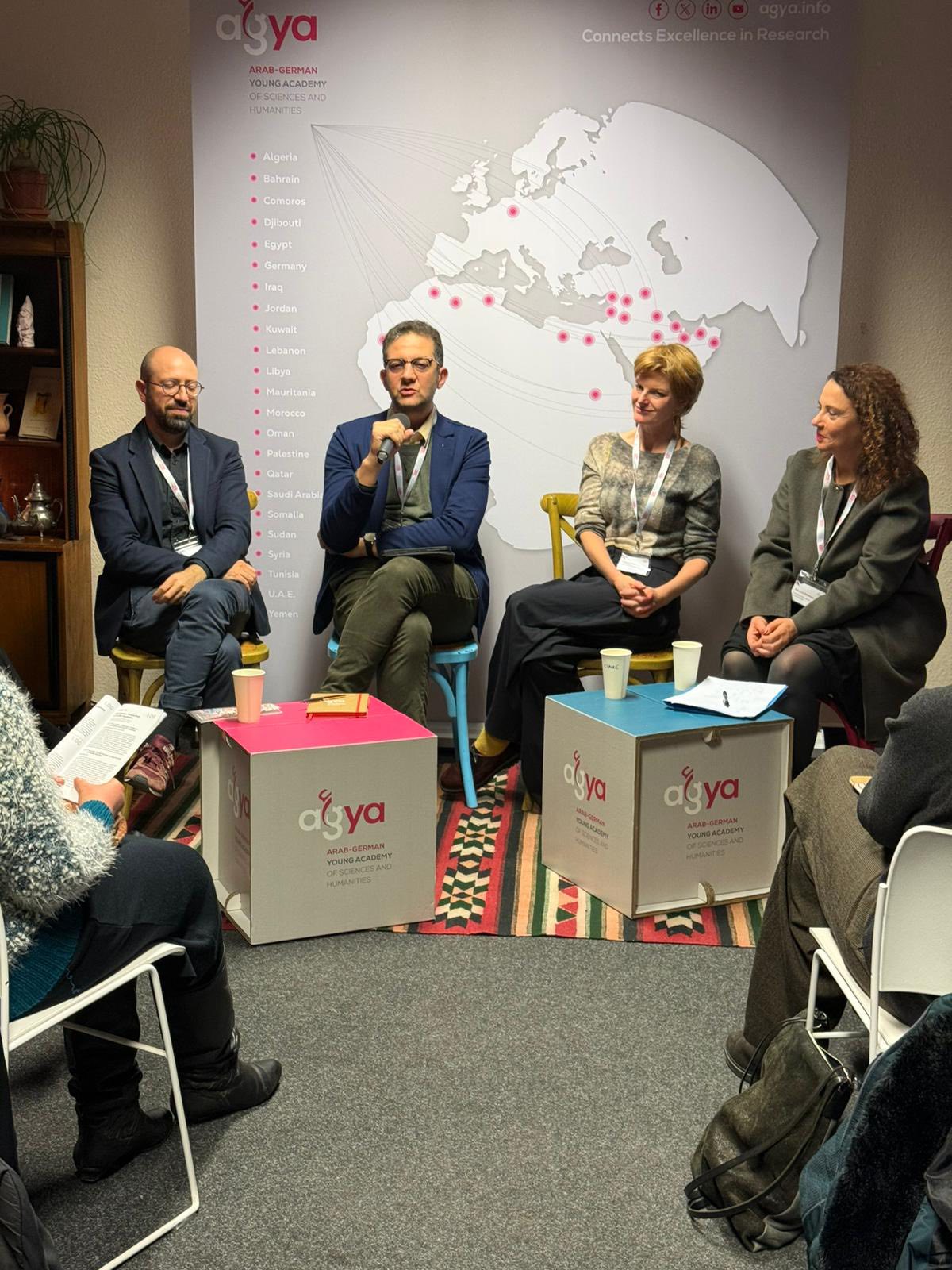
At the Berlin-Brandenburg Academy of Sciences and Humanities, AGYA organized the salon around the theme of conflict as part of the annual Salon Sophie Charlotte in Berlin (17 Jan 2026). I spoke on how Mediterranean communities are moving away from nostalgia as a political resource (e.g. old cosmopolitan myths) and more towards future-oriented imaginaries of belonging that are less about shared origins and more about shared vulnerabilities: climate change, housing precarity, mobility restrictions, and economic uncertainty.
I was also honored to moderate the soap box talks with nine outstanding scholars, looking at the history of conflict resolutions.
I presented my paper at Hassan II University of Casablanca on how the waterfront comes in the form of corniches, beaches, promenades, and quays, and why they are where Mediterranean cities stage their most charged rituals of civic life. The basin of memory sheds light on why littoral spaces act as a projection that crystalizes identity, belonging, nostalgia, and crisis through inhabitants, the state, and visitors.
The presentation was part of the workshop “Urban Conflict and Conviviality around the Mediterranean: Exploring Entanglements, Encounters and Transformations around a Contested Sea”
My presentation “Before Borders: Pre-colonial routes and worldviews in the Southern Mediterranean” for the conference/workshop on perceptions of the League of Arab States.
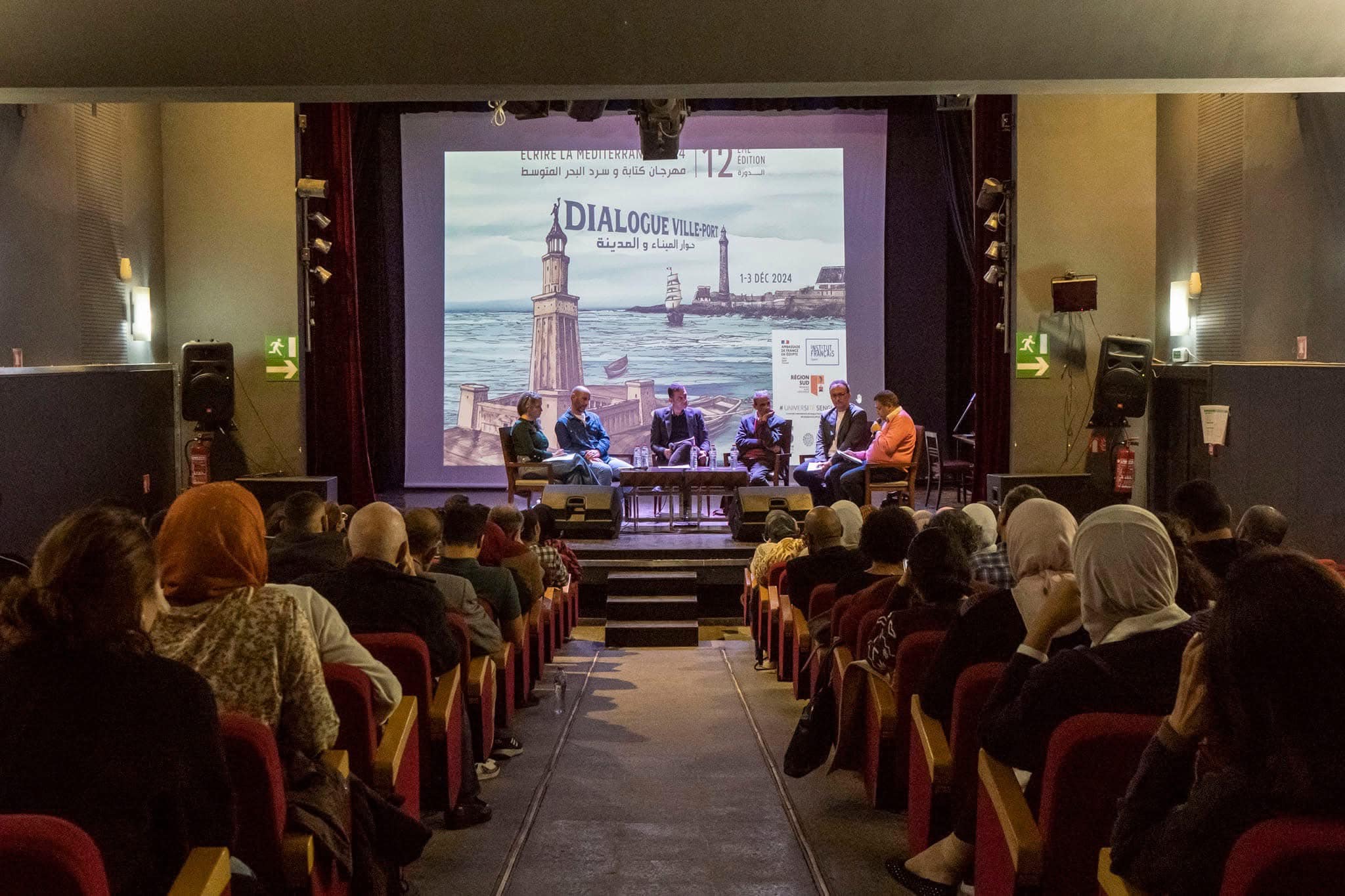
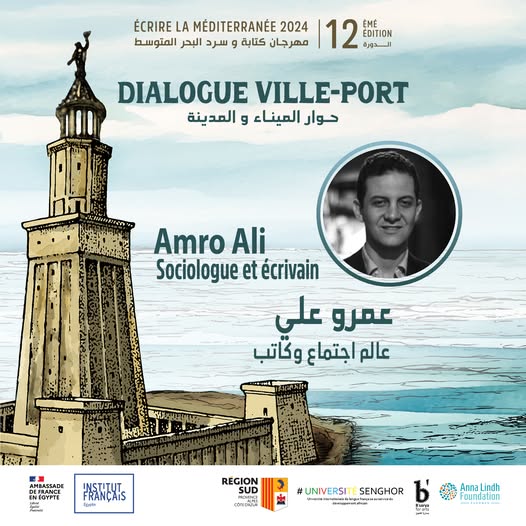
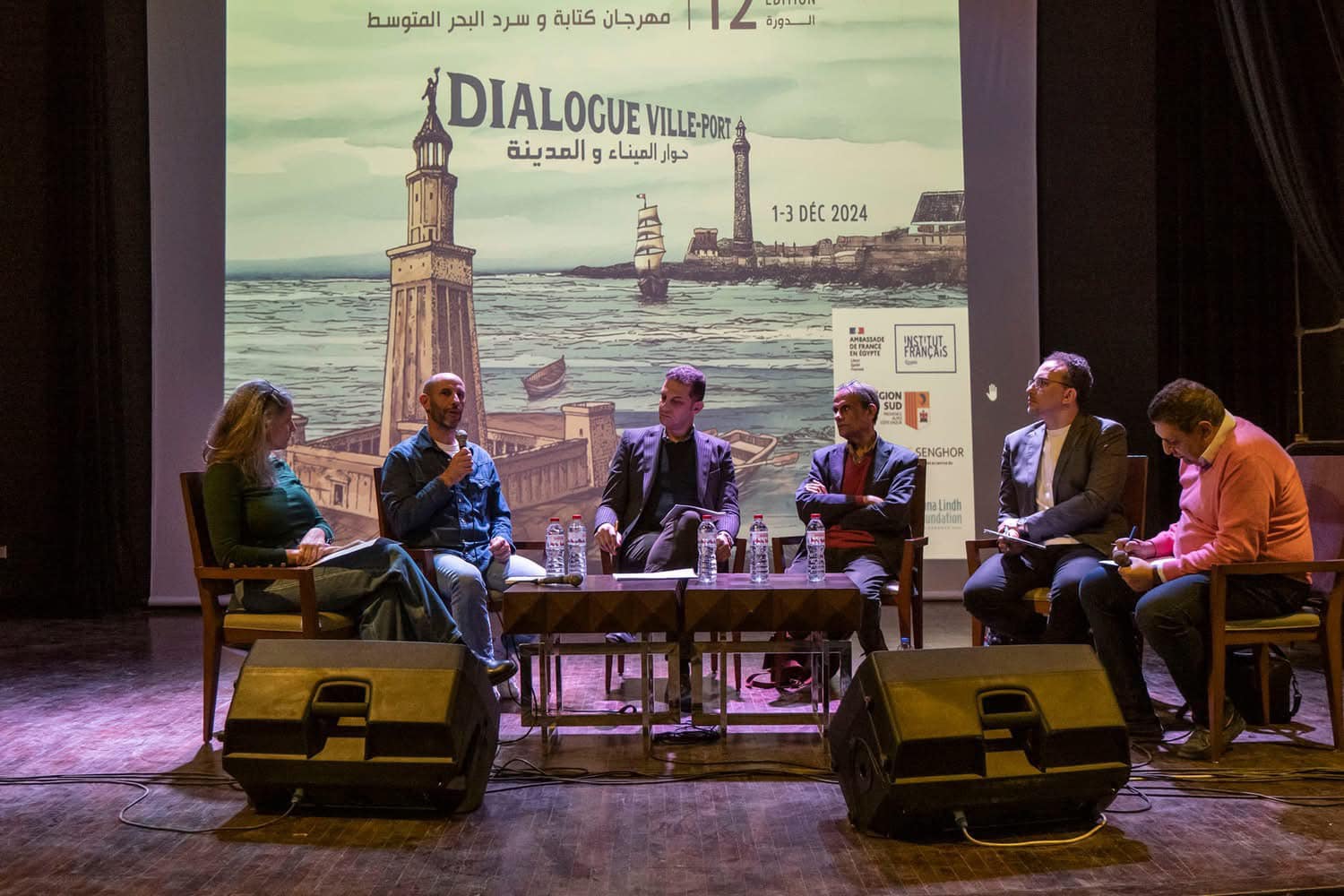
It was an honour to moderate the Port-City dialogues event between the scholars and writers of Alexandria and Marseilles, with Alaa Khaled, Mohamed Adel Dessouki, Anne Millet, and Philippe Pujol. We explored the role of port cities after empire, and how ports shape the identities of these two magnificent cities of the Mediterranean.
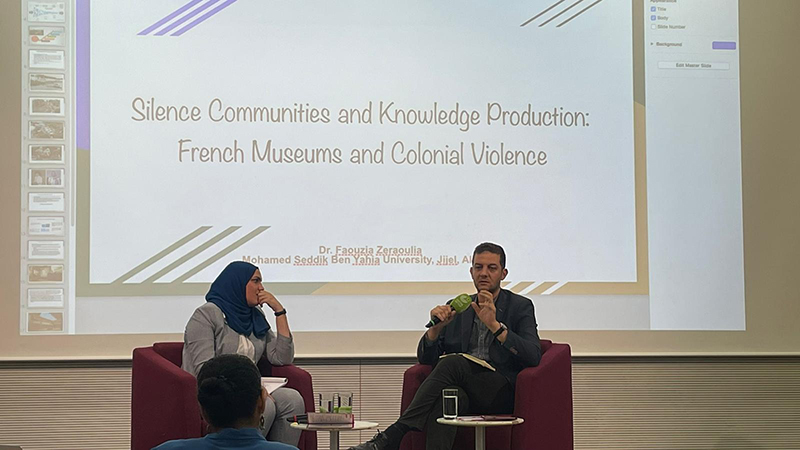
Moderating Dr. Faouzia Zeraoulia’s lecture on knowledge transfer and colonialism in the Maghreb, with a focus on Algeria. We had a spirited discussion on how knowledge production was reshaped through Francophone and Anglophone colonialism in Algeria and Egypt. This was part of the conference, Knowledge Transfer: Interdisciplinary Approaches Between Arts, Science And Society organized by AGYA.
I was delighted to give a lecture and workshop for Turkish students and cultural workers as part of the Summer School at the Swedish Institute Istanbul titled: Remembering and Coexisting in Turkey and the Eastern Meditteranean. We focussed primarily on Istanbul and Alexandria, discussing how the latter has become a bellweather for the erosion of pluralism, and how Istanbul understands this “demise” of Alexandria, and the warning it serves it and other cities.
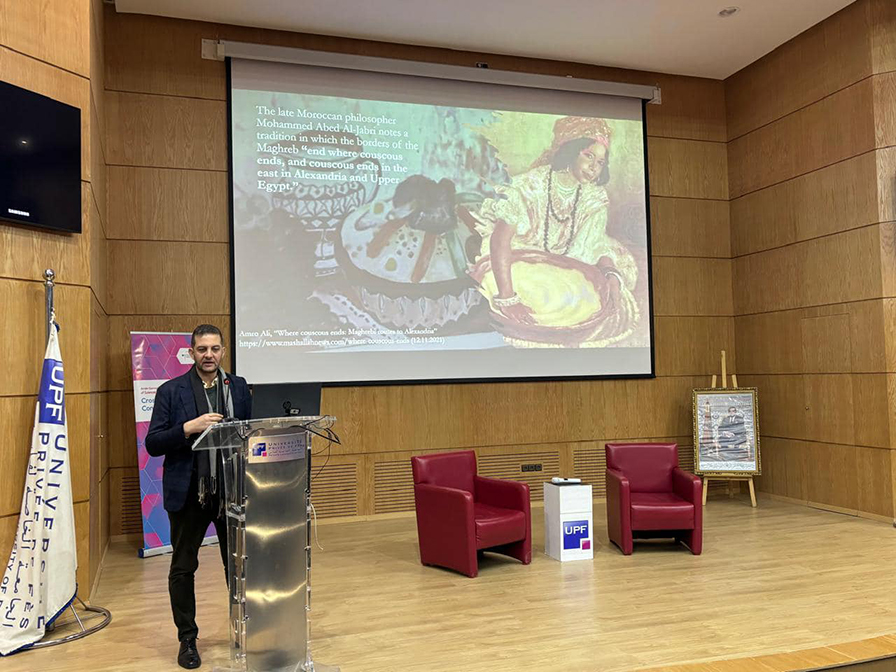
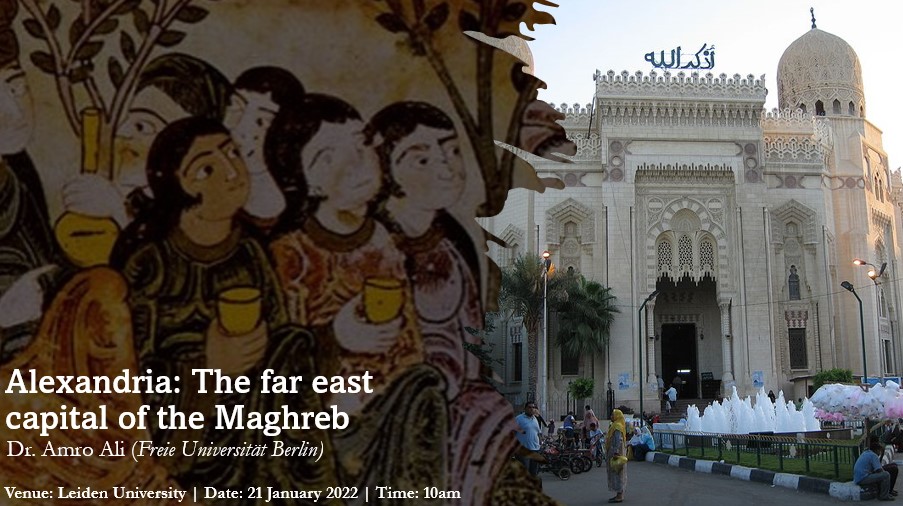
I will be giving a public lecture at Leiden University on 21 January 2022, titled “Alexandria: The far eastern capital of the Maghreb” which is based on the recent essay “Where couscous ends: Maghrebi routes to Alexandria.”
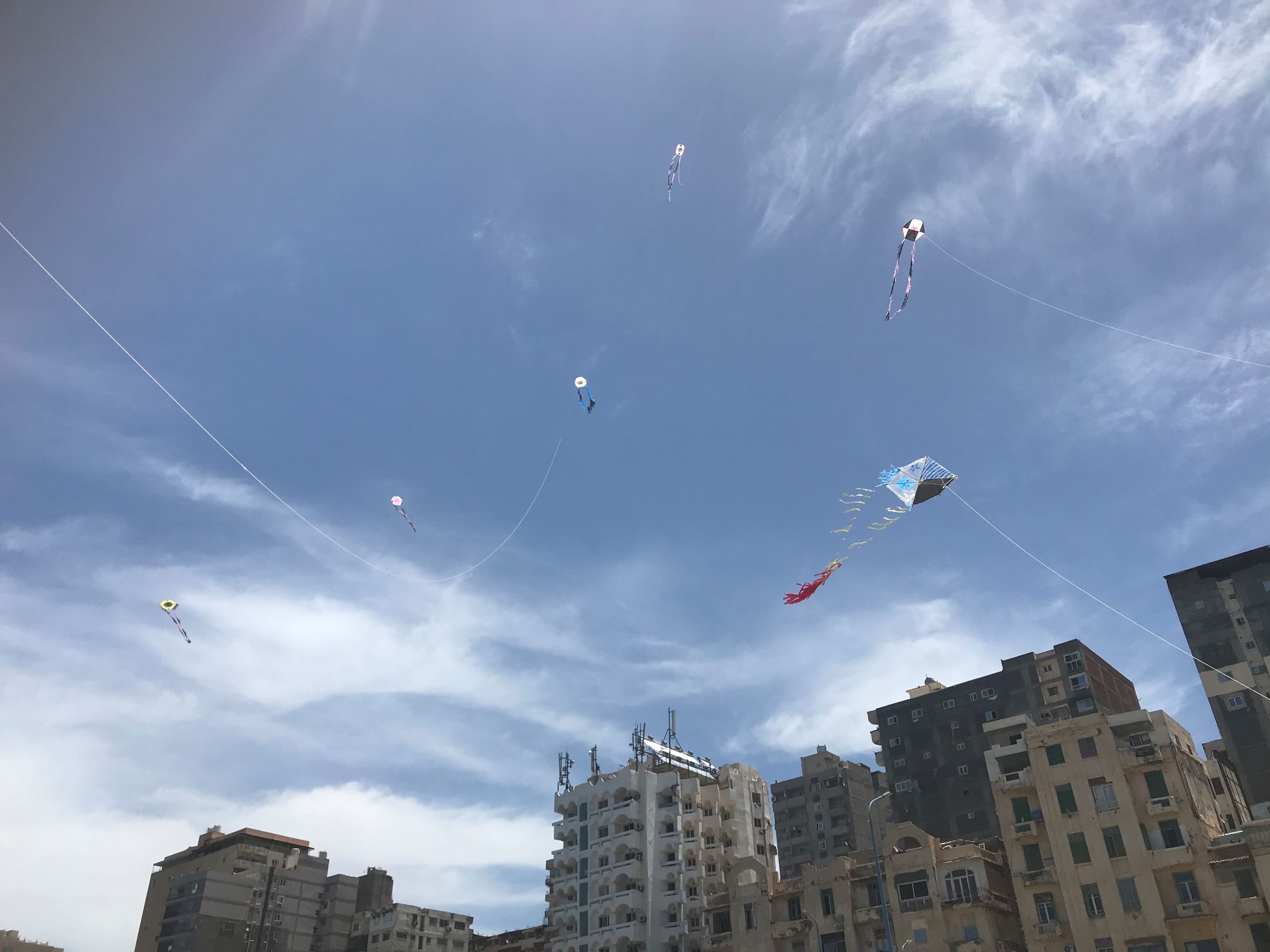
Kites flying above the Alexandria corniche. Photo by Amro Ali (2020)
The modern history and contemporary nature of Alexandria is a brew of different identities that give off (or once gave) a distinct resonance: Mediterranean, Egyptian, Arab, African, Middle Eastern, Islamic, Christian, Jewish, Levantine, among others. But the one profile that emerges as rooted in Alexandria’s existential survival is the Mediterranean identity. Within a few decades, rising sea levels will inundate parts of Alexandria in what could be the start of history’s closing curtains on the 2300-year-old city. Along with political and institutional will, it is imperative that Alexandria’s relationship to the Mediterranean shifts its face from past and present towards the future and pushed further into a wider regional narrative.
Ask an Alexandrian what makes up their identity and the first word you will most likely hear is the sea. The sea is central to the popular imagination, literature, films, theatre, escapism, growing up, families, wedding shoots, and a street art that reflects the bond with the sea and its history and myths: mermaids, citadel, centurions, Alexander the Great, and lots of ship-themed graffiti. Right down to the common line “If I leave Alexandria, I will feel like a fish out of water.”
The long stretch of corniche and wave breakers have displaced the beaches as the dividing line, liminal space, and intersection between the public and the sea. Access to the corniche and the ability to see the sea is a continuing battle in light of the privatisation and “development” drive that has, in many cases, cut off the public from viewing the sea, let alone accessing it. Yet pockets of communal respite are to be found. At the outset of the pandemic, the corniche furnished many of Alexandria’s young with the newly discovered hobby of kite flying that became a unifying public spectacle as even street children could get access to cheaply made kites. I had never seen that high degree of elation induced by any activity before on the corniche in many years. Barely a month or so passed and the kites were banned by the government on the official reason that they were behind a series of accidents (which is a legitimate concern but outright banning is different to regulating). The kite had, for a moment, become a hovering icon that connected sky, sea, corniche, and public.
To speak of Alexandria in a regional narrative is nothing new. Since the 1990s, elite efforts have been made to reintegrate Alexandria into the Mediterranean imaginary – albeit a neoliberal one that succeeded its colonial predecessor. The government rehabilitated the façade of the city as several institutes directed energies to crystalizing Alexandria’s role in the Mediterranean world which included the Bibliotheca Alexandrina, Anna Lindh Foundation, and the former Swedish Institute, along with various cultural centres and initiatives.
Yet an endeavor needs to expand the notion of the sea from one linked to the past that evokes nostalgia and childhood memories, as well as the present that touches upon romance, enchantment, leisure, and livelihoods, to a future where an apocalypse looms on the horizon. Not to terrify the populace, but rather to deepen civic responsibility – from anti-littering to reconsideration of investment decisions – as part of the fight against climate change that can complement the respective policy on the matter. As well as linking Alexandria to efforts made by other cities in the basin as part of an unfolding story that aims to rescue the historical hubs of the middle sea. However, short of radical adaption measures, it is Alexandria, the only major city in the Mediterranean, that is at the highest risk of being largely submerged by 2050. It is no wonder why popular Google searches for Alexandria in the context of climate change reveal bizarre questions such as “Does Alexandria Egypt still exist?” and “who destroyed Alexandria Egypt?” It is an omen the city can do without.
Time and again, events have shown that Alexandrian public engagement or interest, particularly among the young and students, in their city’s welfare is heightened when they feel the city is part of a regional or global story – whether it be visits by foreign heads of state, clean up campaigns, artistic troupes, or the Africa Cup. It is part of the conscious Alexandrian mode of living to make sense of the fractured present while living in the shadow of multiple ancestral giants. It is the “nature of identity”, individual or city identity no less, “to change depending on time, place, [and] audience.” In this case, the repositioning of Alexandria’s Mediterranean identity can no longer be limited to culture wars, Euro-centric elites, and postcolonial critiques. It is now a question of survival.
As I have argued before, the Mediterranean is a laboratory with natural demarcations, rich history, trade, and cultural ties that could enable “an overarching new Mediterranean narrative to be written through a series of conferences, symposiums, workshops and accessible publications” with the possibility of contributing to “animating forms of transnational citizenship, a project that builds a Mediterranean platform” that can construct a new narrative and social contract.
Alexandria needs to feel part of the neighborhood story and brought into a mission in which its fate is tied with the same menace confronting Beirut, Tunis, Tangiers, Barcelona, Marseilles, and the rest of the cities dotted around the basin. While many Mediterranean cities will suffer from rising sea levels to hotter temperatures, the menace is eyeing Alexandria with the utmost ferocity and has earmarked a swathe of the city to be turned into one large underwater museum. A rising sea level that will perhaps regurgitate onto the city’s future and permanently flooded streets the thousands of abandoned facemasks and lost kites.
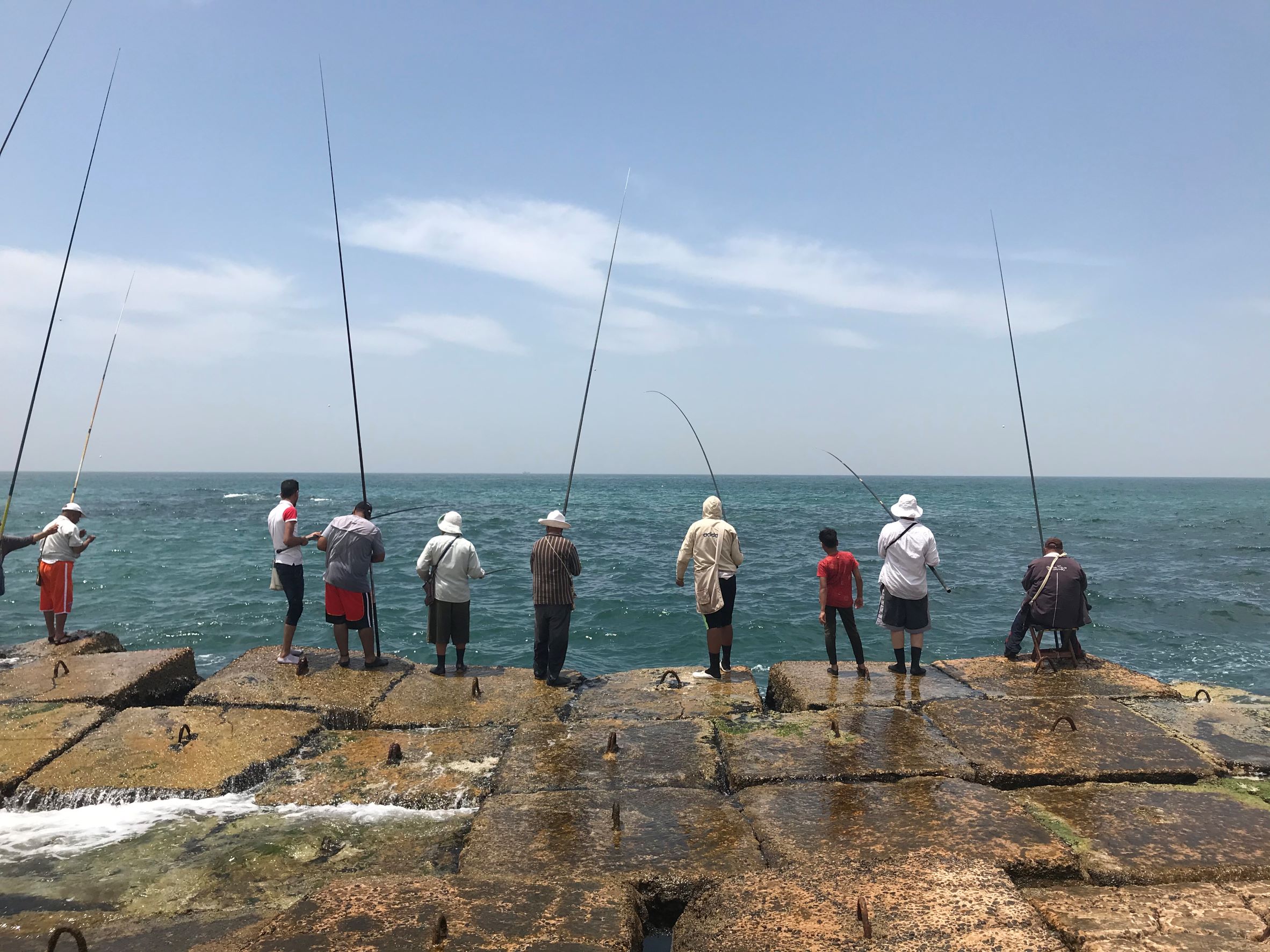
Fishermen in Alexandria, 2020 (photo by Amro Ali).
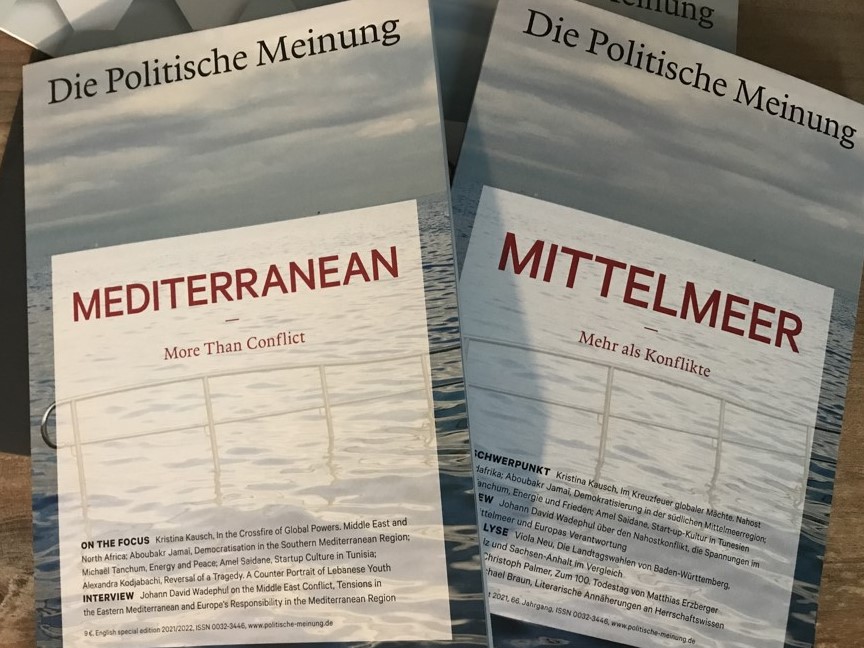
This essay was first published in German in the Berlin journal Die Politische Meinung (PDF) under the title, Mediterran?: Eine Lebensart und das Phänomen der Entfremdung (“Mediterranean?: A way of life and the phenomenon of alienation”) and later appeared in the English edition of the same journal.
“At my first sight of the Mediterranean world I realized that I had never known light before. I was from the world of darkness. London was not so bad, but the light of the northwest is a very dull light. The light of the Mediterranean held my eyes so I decided to stay for a time.” – Albert Hourani (1915-1993)
Hearing the word “Mediterranean” can elicit metaphors of cruises, golden beaches, lush hills, and succulent cuisines. In fact, follow up Mediterranean by appending the words diet, sunset, and villa, among others, and you have already produced the mental image of a semi paradise on earth. Yet the so-called “Mediterranean lifestyle” is often a highly-charged romanticised product of western consumption habits, holiday brochures, and diaspora musings – with a heavy focus on Greece, Italy, and Spain with the rest of the other Mediterranean countries at times acting as background furniture. The lifestyle is habitually treated as a given – it evacuates economics, class, and gender, and presumes that geography is all that counts. I want to visit this idea of the Mediterranean lifestyle and broaden its meaning, to look at how modern alienation ails the notion of the Mediterranean lifestyle and how we can think of it beyond its olive oil coat of arms.
In the literature and popular culture, the Mediterranean lifestyle is mostly the domain of food consumption, followed by tropes such as laughter, simplicity, passion, pleasure, living the moment, and visiting family and friends. This is not to say that none of these can be true or one does not relate to them on some level, but an idealised Mediterranean lifestyle is a claimant to a shared identity and space which does not necessarily exist for many.
The Mediterranean lifestyle weds a collective imaginary with an individual identity to form outlooks, attitudes, social relations, and possessions. As a key marker of social geography, the sea is an integral piece to the mosaic of personal identity. Inhabitants of the cities dotted around the sea will have some conception of a lifestyle uniquely tied to the sea. This distinguishes their coastal metropolis as different or “privileged” by virtue of being by the water, even if they do not necessarily call it the Mediterranean lifestyle. Sitting on opposite ends of the basin’s shore, a Spaniard in Barcelona and a Palestinian in Gaza would understand the sea differently. It can be a poetical space or a tormenting space, but it can also be one of shared possibilities.
Retrospective of a wonderful sea
Yet it is one of the ironies that a beautiful basin can be made the least economically viable. The story is an all too familiar one. The newly-minted graduate in Alexandria that eats her last seafood meal with loved ones before rushing to catch the train to start her new job in Cairo; the Sicilian youth in Palermo that gives one last glance to the sea before migrating to the affluent north in search for work in landlocked Milan; the underemployed Greek man who leaves his homeland for the colder but prosperous lands of the EU; the young Lebanese woman who has for years worked in Beirut’s culture scene and has decided to leave for Montreal to start her PhD, not only for educational advancement but to acquire a western passport as a form of mobility and partial restitution justice in an unequal world. Over the years, you get the impression that no one seems to want to leave the Mediterranean, but they are given little choice. Short of family connections, viable monetary inheritance, access to meaningful employment, ability to save, marry and buy a home; a growing number choose to abandon a wondrous sea that does not deserve to be abandoned.
Historically, the Mediterranean is not without its darkness. It is the sea that saw millions of deaths and gallons of blood spilled over the centuries through empire building, colonial conquests, pirate raids, and two world wars that turned blue skies into recurring passages of grey. Not to mention today’s refugee who flees political persecution and economic destitution, and dreads the possibility that the sea might become his or her graveyard.
But history is not always a history of sorrow and despair. In the everyday spectrum of life, there was a time when the Mediterranean lifestyle was understood as part of the sacred route by a Muslim pilgrim from Tangiers crossing several cities of the Mediterranean to eventually reach Mecca. The traders from Venice and Damascus that intermingled at the port in Alexandria. The Syrian that decided not to leave Tunis after he married and settled down there. The aspiring scholar on the Libyan coast that goes to Al-Andalus to further their studies.
A distortion of time and space
This is not to engage in a past utopia but to highlight that mobility was much more frequent among key demographics that enabled a holistic approach to the Mediterranean unlike our modern era which is characterised increasingly by forms of alienation. To speak of a vibrant Mediterranean lifestyle today requires some contemplation on the missing human encounters and away from mutant capitalist discourse that treats individuals as commodities zapping between resorts for Instagram shots, and mostly by travellers from the global north.
The alienation, in part, commenced long ago when port cities fell out of fashion with the dramatic reduction in the use of sea travel and the rise of commercial airlines in the mid-twentieth century which meant a person can go from Athens to Cairo, bypassing Alexandria. The once demanding but rhythmic process of departure and arrival across the sea now took on a radical change in which the human being exited the terrestrial order and was now suspended above the sea and moving at high velocity across the skies. Time and space were not only distorted, but the traditional relationship between humans and sea became a form of alienation limited to touching or swimming in the waters of one’s respective city, rather than traversing it. The once familiar homecoming and farewell scenes at ports greatly diminished. Civilian travel by sea was now mostly restricted to trips of limited duration and environmental-destructive cruises.
The 1990s saw the revival of port or second cities, such as Tangiers and Alexandria, that became favourable to neoliberal trade and transnationalism which, unlike capital cities that heavily invested in national culture, favoured cultural experimentation given that it could also be monetised. But this new Mediterranean world fell victim to the Washington Consensus, northern European banks, privatisation, environmental damage, and debilitating strands of neoliberal modernity. The expression “I no longer recognise my city” became a frequent mantra of a new internal exile in the Mediterranean.
The other form of alienation is governed by the visa regimes and passport tyranny, especially for the southern and eastern shores. As I have written before, “no transnational Mediterranean project can materialize when one side faces insurmountable inequalities in partnerships, safety, movement, and engagements.”[1] While I was specifically referring to the notion of a Mediterranean social contract and projects, the absence of equitable passport and visa arrangements still has the effect of skewing lifestyles in the lands of the global south depriving them of meaningful travel, exposure, and growth in their own neighbourhood. This is not only obvious from south to north; an Italian national can visit the entire countries of North Africa and the Levant with little to no effort in terms of no-visa requirement or a cheap visa on arrival. The Egyptian national does not know this world, travel is possible but it comes at a high probable chance of rejection by the consulate. The postcolonial story is one of insecurity even towards fellow global south countries. The end result is that the Italian is able to acquire a developed acquaintance with the region which add layers to his or her understanding of the Mediterranean lifestyle while the Egyptian is trapped in a provincial dimension of what constitutes his or her idea of that lifestyle. The Mediterranean lifestyle is not just a social or economic question, it is in the end, a political one.
Perhaps the Mediterranean lifestyle needs an accompanying conversation on developing a Mediterranean philosophy, one that correlates and thinks with rising political thought and activities through a shared space beyond markets. Activists and organisations are glaringly aware of the inequalities and are endeavouring to revive some sort of philosophy or social contract grounded in human rights, climate change initiatives, backed by the pandemic-induced shunning of long-haul flights in favour of short trips. Yet as someone who has sat through numerous meetings at the institutional level to discuss subjects related to the Mediterranean, I would sometimes wonder where are we going with all this? Gianluca Solera, who has advocated for a “renaissance” of the Mediterranean, argued that institutions with a Mediterranean mandate suffer from “deleterious development ideas, the same void decision-making mechanisms, the same discriminatory interpretation of citizenship, the same lassitude vis-à-vis its founding values would be produced, in the middle of a crisis, which is, before being economic, a political and cultural one.”[2]
“Return to origin” myth
It is heartening that there has been a growing interest in the Mediterranean that has been driven by organisations, cultural currents, universities, and international bodies and this stems from the fact that the Mediterranean sells itself: it is a metaphysical blueprint and socio-geographical crossroads that furnishes centuries of civilisations, scholarship, trade, religions, philosophies, and marriages. In a sense, there is a “return to origin” myth that enchants even the coldest of cold international bureaucracies that deal with the Mediterranean subject. But the question remains, how to readjust the gaze at the sea that is often one of distortion? Exacerbated by the excessive focus on the securitization and the refugee crisis which does little to address the alienation question. A democratic bottom-up approach is needed to marshal the thousands of initiatives that are taking place, stories told to one another, theorizing through the nights, workshops and training, and solidifying grassroots networks across the basin in what Solera has dared to deem a Mediterranean “Shadow-government.” I was at a meeting in Brussels, at the Friends of Europe summit, in 2019 where there was even talk of a “talent passport,” which still came across as problematic, but at least the question of global south mobility was being recognised and was pushed by activists and cultural workers. Still, there is a long way to go, many conversations to be had, and difficult questions to be addressed.
A depoliticised Mediterranean lifestyle should be respected, but we should also allow its political counterpart to show another way out of the alienation abyss. As it stands, the Mediterranean lifestyle is an indeterminate, fluid, and elastic conception that means different things to different people, yet is bounded by the natural demarcations of an ancient sea that sees an overlap of history, trade, tourism, cultural ties, and social justice within wider shared narratives. Despite the region’s cultural richness, the internal exile is a modern phenomenon of our time. Alienation, in the midst of underutilised cultural bonds, is a peculiar aspect of the modern Mediterranean lifestyle.
Passing by the wave breakers on Alexandria’s shore, I came across an impoverished boy gazing longingly at the sea. I asked him his name, he replied “Shaaban,” I followed it up with what his dream was when he became older, “to be a pilot.” I knew everything was stacked against his dream but I still told him “I hope you become a pilot, Inshallah.” He gave a big smile. These little moments in our Mediterranean world still matter.