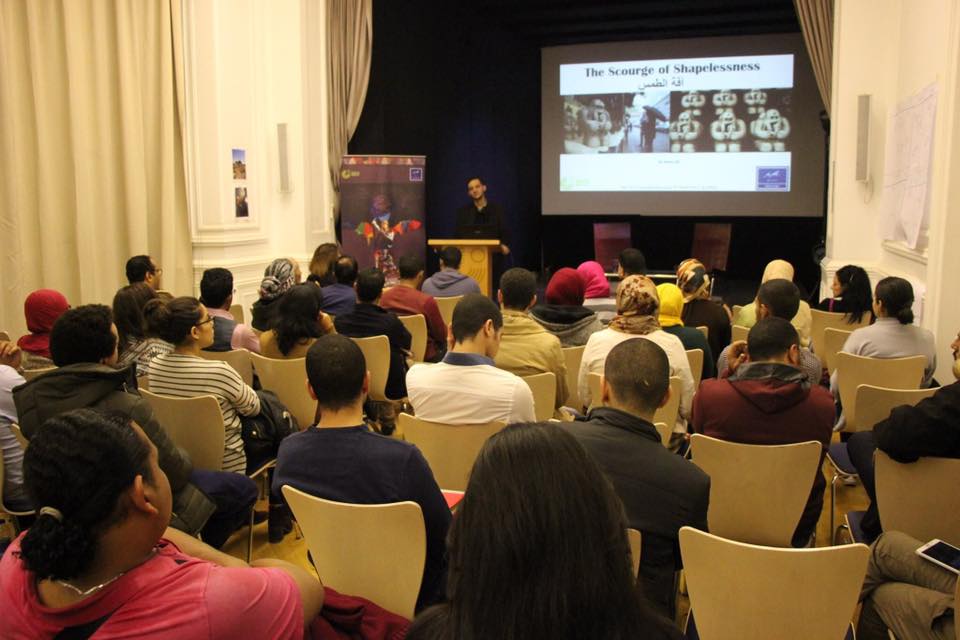
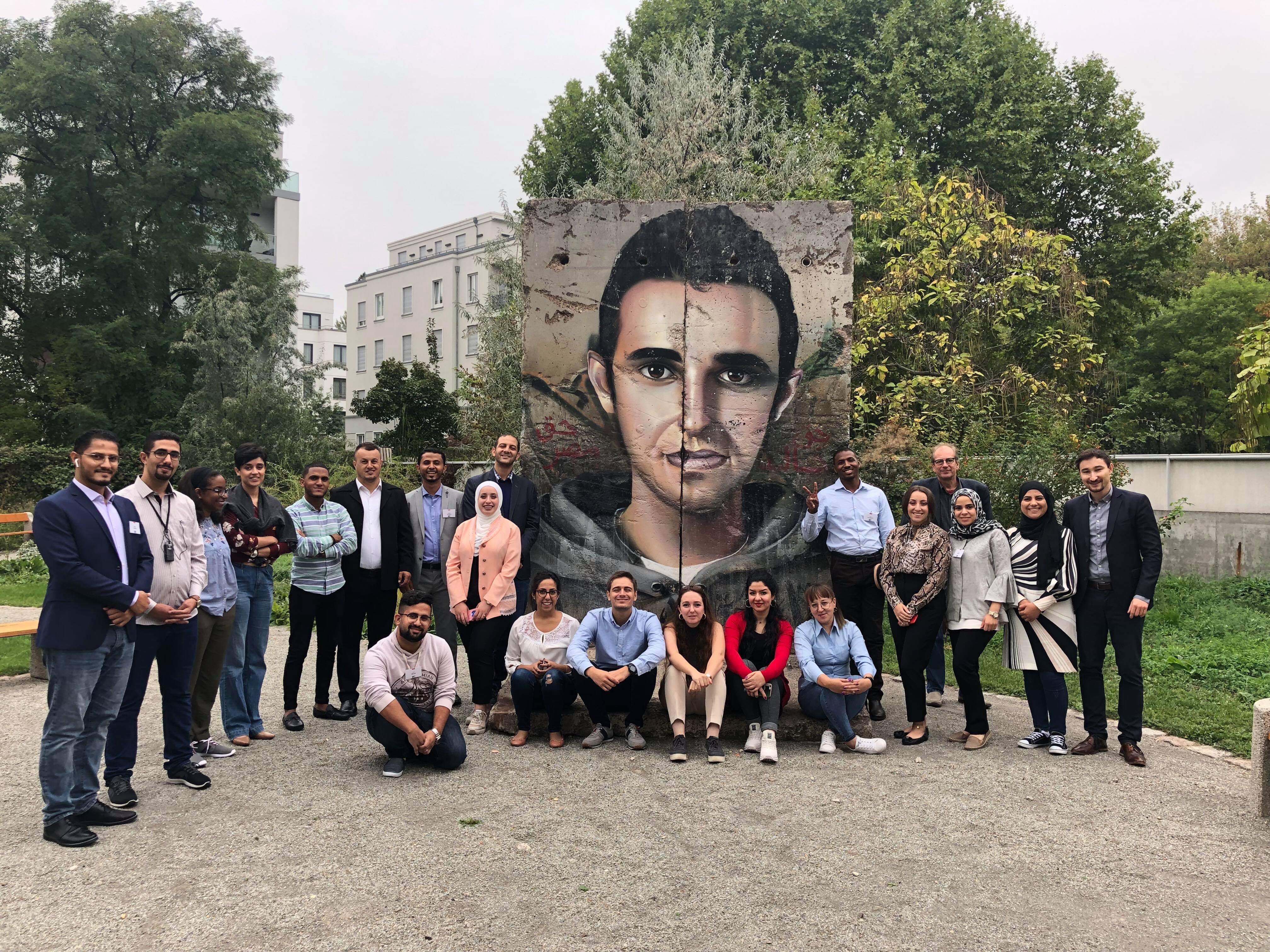
I’ll be presenting a short talk on the Theatre of Thought project in Egypt and the ways in which philosophy can be brought to the public to address social problems. The panel session starts at 3pm, 9 November 2019, at Freie Universität Berlin, Silberlaube Hörsaal 1a, as part of the AGYA conference that explores the place of humanities in Germany and the Arab world.
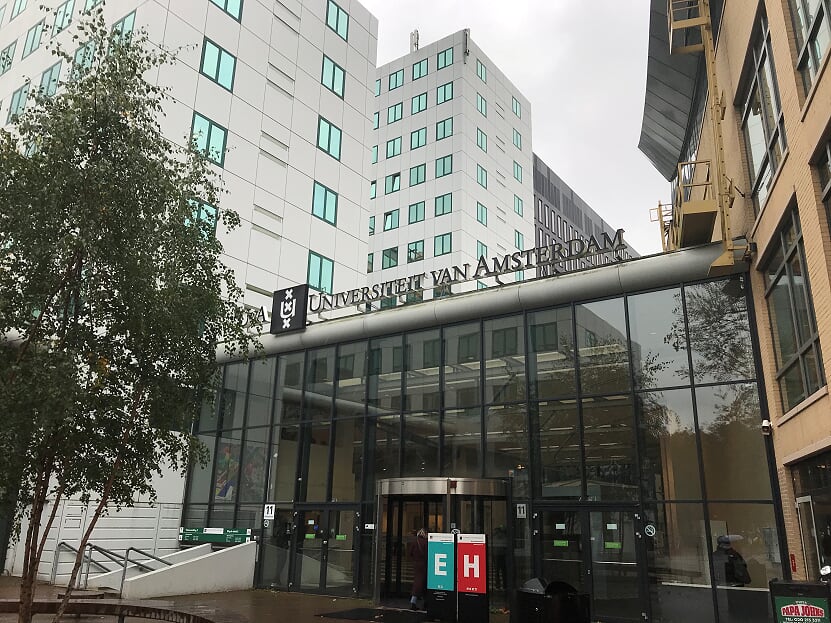
I will be giving a seminar “How society functions under authoritarian repression in the Middle East” at the Amsterdam Centre for Middle Eastern Studies at the University of Amsterdam on 7 November 2019, at 11am.
I will be giving a talk and participating in a debate before an audience of EU and MENA youth hosted by the Friends of Europe (FoE) and the Anna Lindh Euro-Mediterranean Foundation (ALF) on 4th and 5th November 2019 in Brussels.
“In an era in which we are facing global issues that demand quick and effective collective action, such as climate change, migration and growing inequalities, both politicians and citizens appear to be distracted and paralysed by polarisation. Trust in the rational and stable middle ground of deliberative party politics is disappearing, with people instead opting for strong emotions, populistic rhetoric and big personalities. Issues related to national identity, cultural values and ethnic origins have been prominent in the political debate worldwide, causing not only political division, but also cultural and social polarisation.
Many governments are unable to respond adequately to the growing social, ethnic and religious conflicts – or oftentimes even foment these tensions. Instead, antagonistic narratives seem to be the only way of conceiving the vote. Societal debate has been hijacked by the more extreme movements that instigate high-tension debates, in which more moderate voices and much needed debates about common concerns such as climate change are losing power and influence.
What is the glue binding us together for the future? What can be done to encourage moderate voices? How can we counter social and political polarisation?”
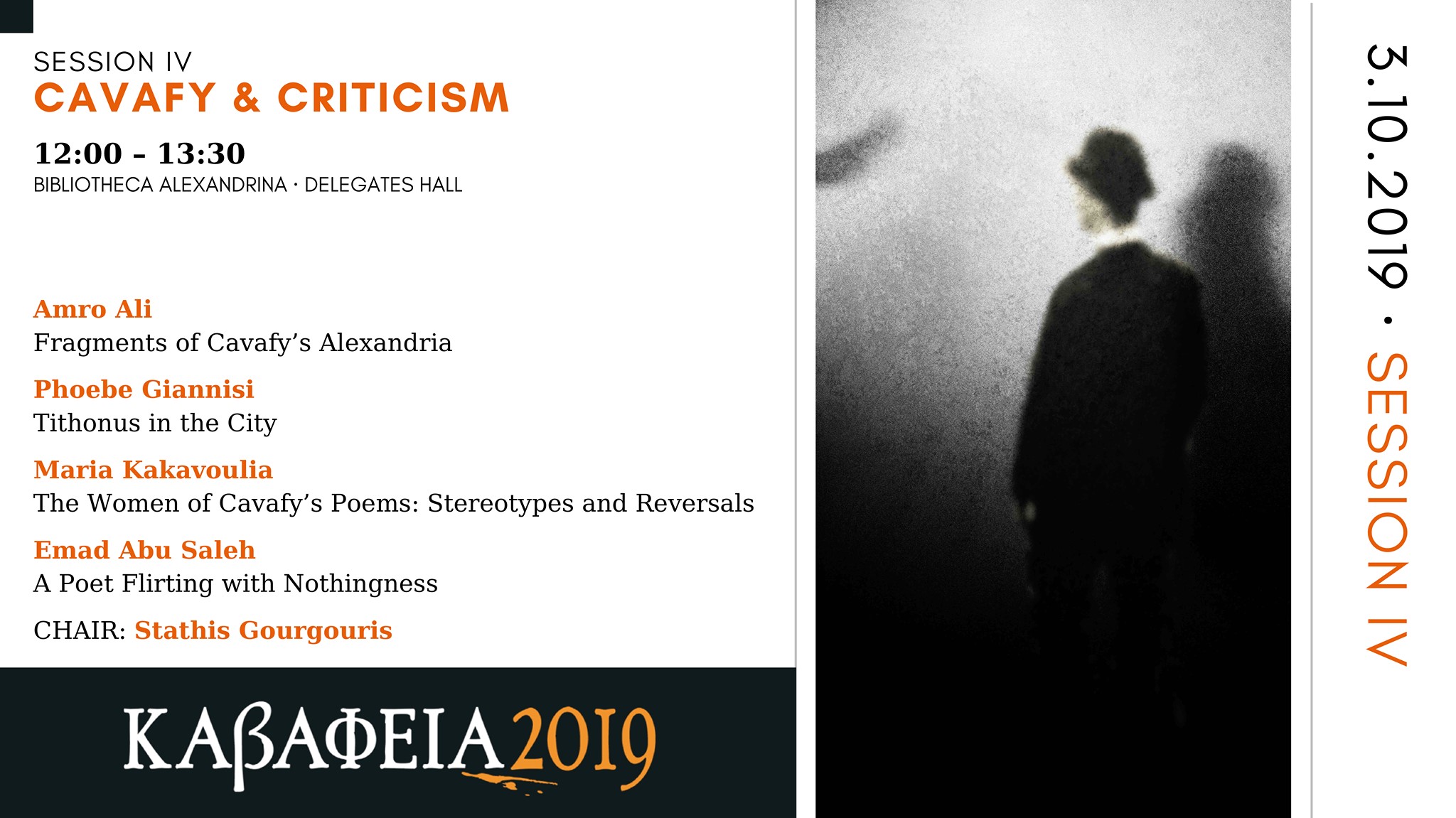
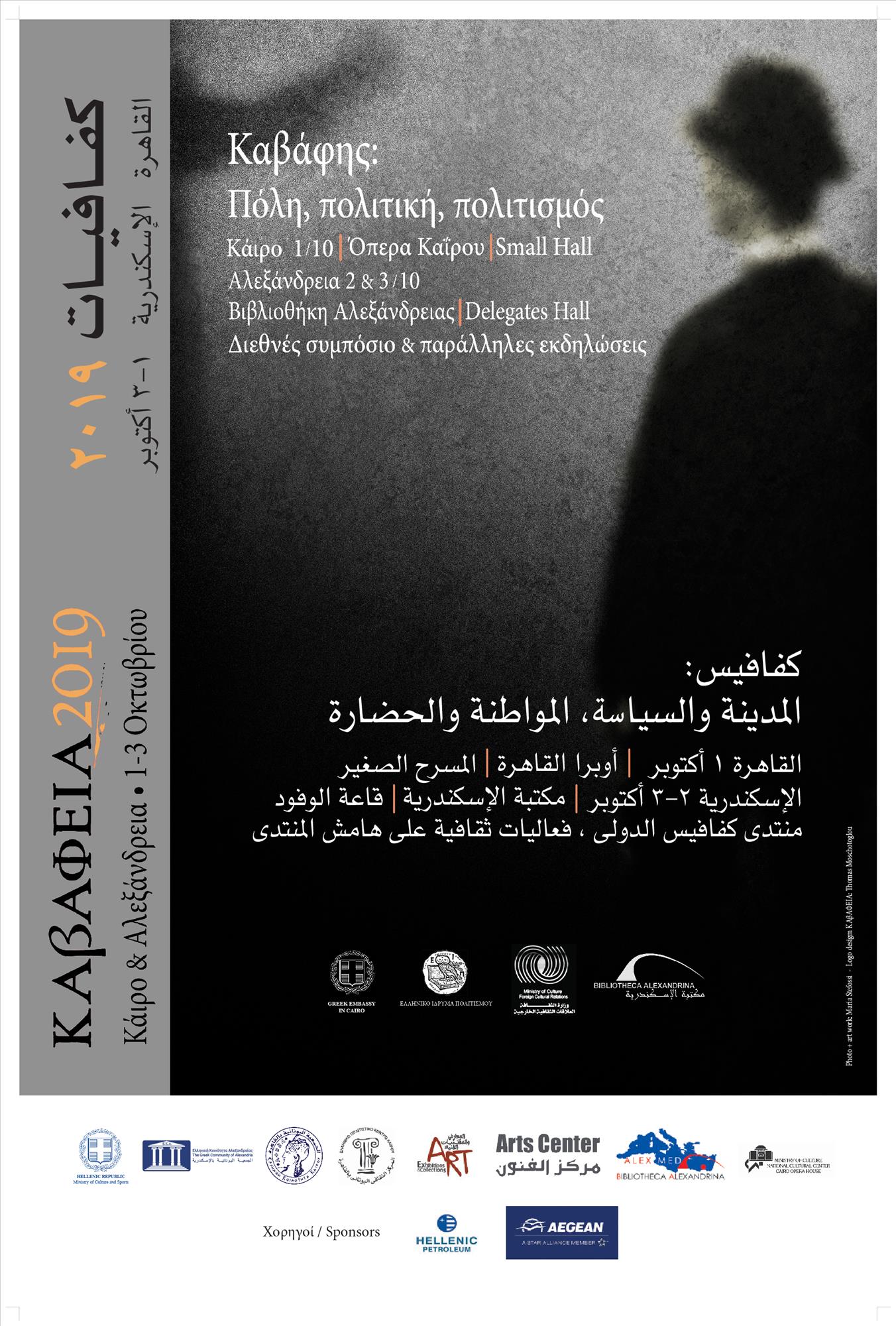
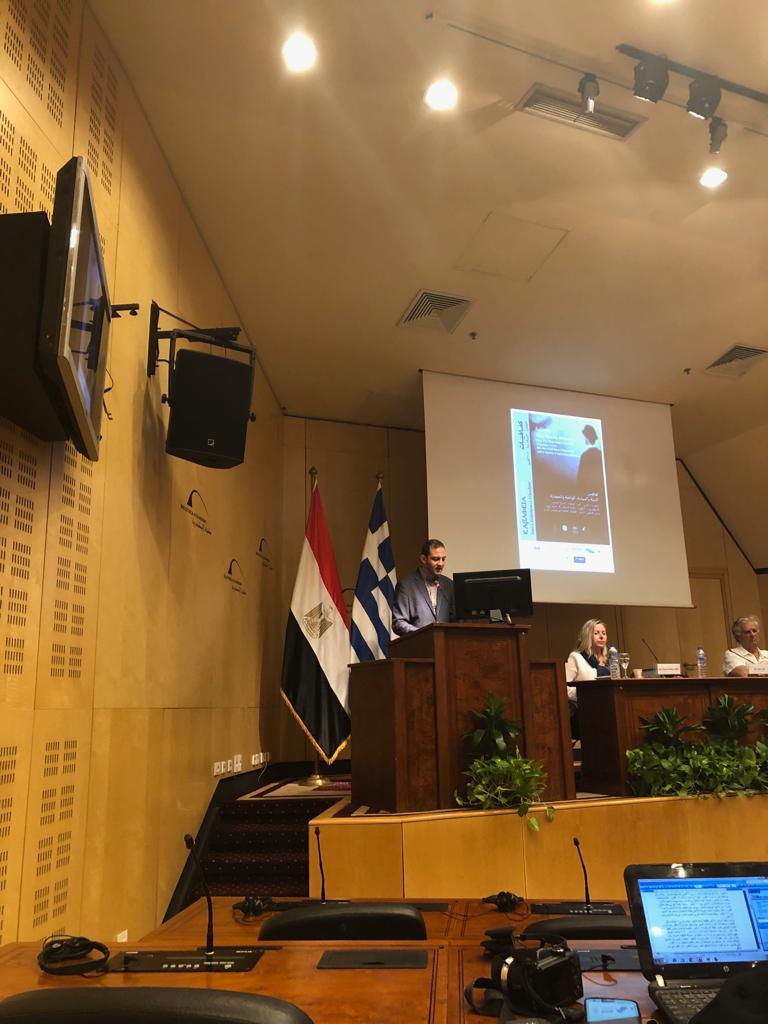
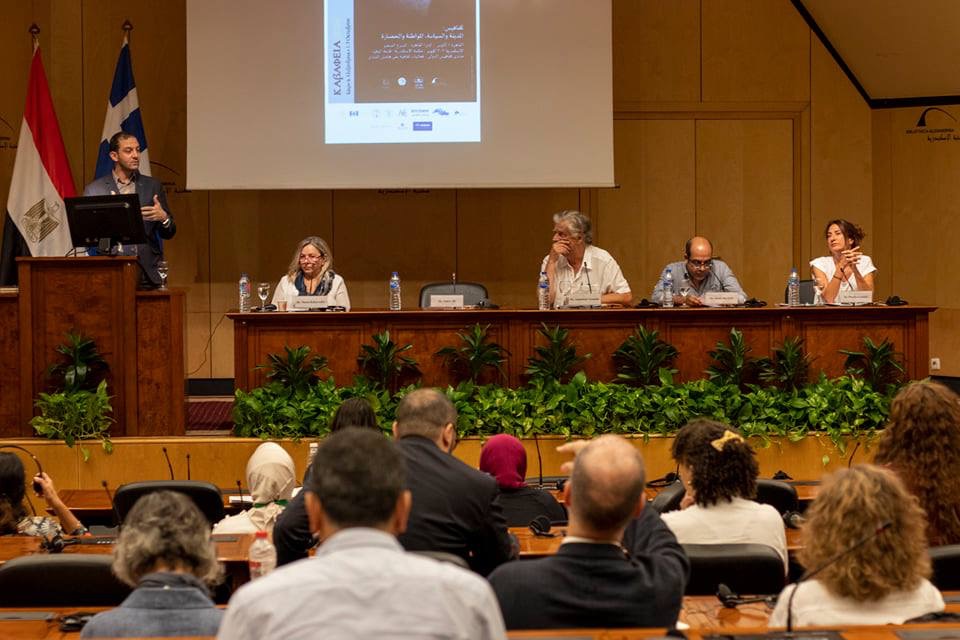
It was an honour to be invited to speak at the Cavafy International Symposium which was held at the Bibliotheca Alexandrina. The symposium, Cavafy: Polis & Politics; Civitas & Civilization, brought together scholars, intellectuals, writers and poets from Egypt, Greece, the Greek diaspora, and elsewhere to discuss the many ways C. P. Cavafy’s work lives on in the city in which he lived and wrote. “Fragments of Cavafy’s Alexandria,” was my contribution for the Cavafy and Criticism session.
There are two words that I chose to focus on: “implication” and “real” to understand Cafavy’s relationship to Alexandria, and the Alexandria he imagined.
Cavafy came to represent a moment in the city’s life, while, at the same time, his poems brought Alexandria’s past into the present. Like the rare perfect marriage, Cavafy gave the city a new mythology, and Alexandria gave the poet a history and a setting in which he could ground his poems and hear his voice.
A visiting British critic Bonamy Dobree, speaks of Cavafy’s conversation in tones:
“I have met an Alexandrian—with all that implies. Implication, that word is important when thinking of Mr. Cavafy, for his poems are like his conversation, his conversation like Alexandria, and Alexandria is all implication. . . . He may talk of the Alexandrian tram-service, of the Ptolemies, of the use of a certain word in seventeenth-century English: one scarcely knows what it is that one has talked to Mr. Cavafy about . . . both his talk and his poems leave you with a flavour, something you have never quite met before, a sound that remains in the ear. . . .”
“Only the city is real,” said Durrel, “Real,” the only word, as Nabokov has said, that requires quotation marks. While Cavafy’s Alexandria is a mythical land, but it is Alexandria; her landscape and her peoples, the spirit of place, had, perhaps more than any other city of the 20th century, the power to excite mythic visions, and in order to know those visions fully we must examine the spot on which they grew.
One of Cavafy’s achievements went beyond his beautiful poetry. I would dare to say that his unintended achievement was to show how a city can continue to exist, even after so much has disappeared, through what remains implied. He turned his face to the streets and half-forgotten conversations rather than the monuments and cliched grandeur of the city.
That is what interested me in thinking about Cavafy and Alexandria, imagining the city in fragments in a place that unfortunately does not generously yield its archives and records.
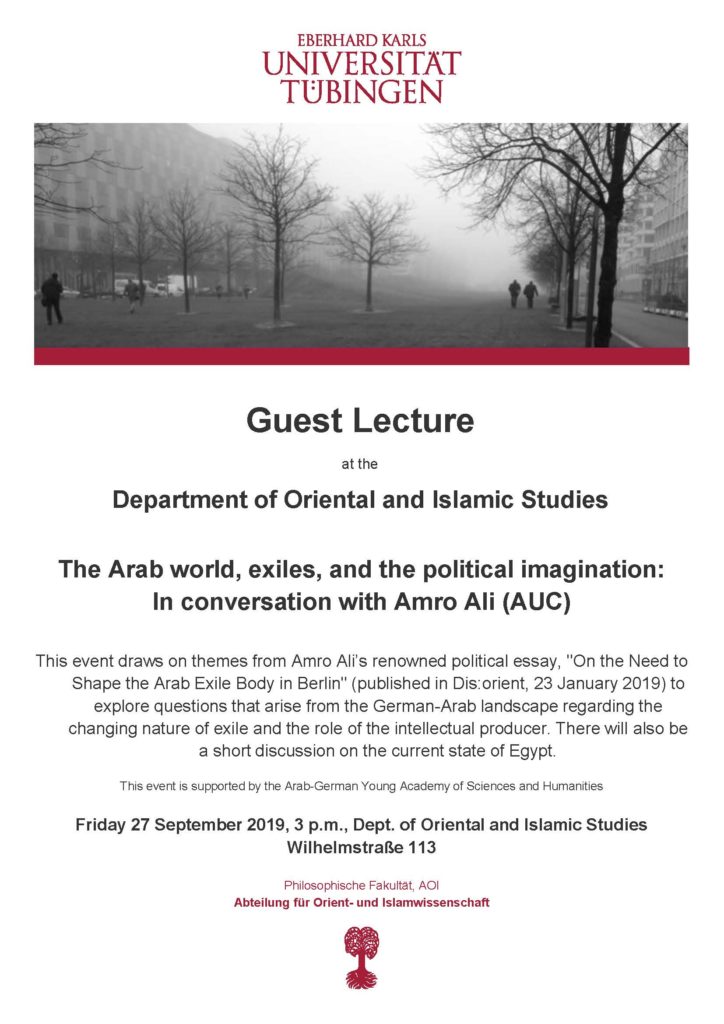
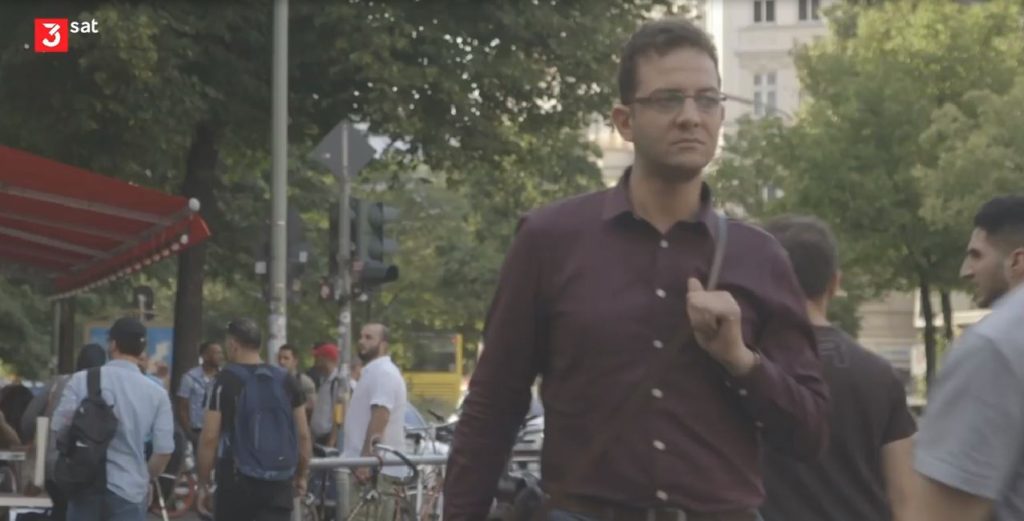
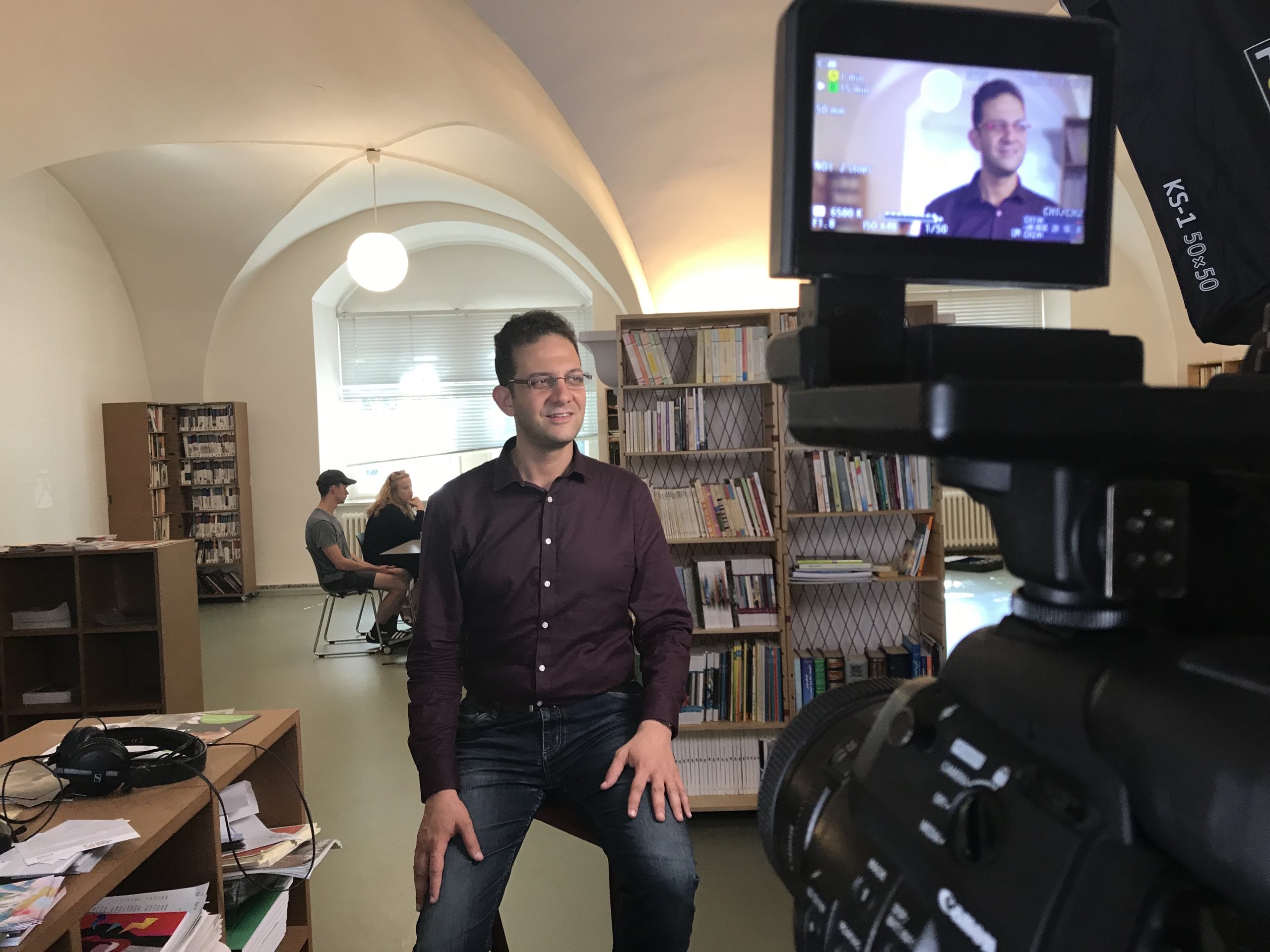
A feature report on the Arab Berlin exile essay was aired on the Kulturzeit program on the German 3sat channel. Click here to watch the video.
“Berlin wird immer mehr zu einem Ort, an dem sich Künstler und Intellektuelle aus den arabischen Ländern zusammenfinden, um das Erbe ihrer Revolution zu retten.”
A feature report on the Arab Berlin exile essay was aired on the Kulturzeit program on the German 3sat channel (17 September 2019). Click here to watch the video. “Berlin wird immer mehr zu einem Ort, an dem sich Künstler und Intellektuelle aus den arabischen Ländern zusammenfinden, um das Erbe ihrer Revolution zu retten.”
A feature TV report Berlin als Zentrum des arabischen Exils (in German) on the Arab Berlin exile essay was aired on the Kulturzeit program on the German 3sat channel (17 September 2019). The video can be watched below.
“Berlin wird immer mehr zu einem Ort, an dem sich Künstler und Intellektuelle aus den arabischen Ländern zusammenfinden, um das Erbe ihrer Revolution zu retten.”
Osnabrück University – 10.30-11.30am, 5 August 2019
Edward Said wrote that exile is “the unhealable rift forced between a human being and a native place, between the self and its true home.” Additionally, exile transpires irrespective of one being banished from the homeland, as the Palestinian poet Mahmoud Darwish once put it, “Exile is more than a geographical concept. You can be an exile in your homeland, in your own house, in a room.”
With this backdrop, the workshop will seek to crystalize the phenomenon of exile, its toxins and “antidotes,” by developing the language of metaphors that can add linkages between the individual and the public, individual and the narrative, individual and the world. Globally, the metaphor has come under assault by the forces of literalism allied with declining education standards, distraction as a modus operandi, and neoliberal modernity that not only has little patience for the poetical intangibles and non-metricised languages, but has discarded vision and meaning in favour of addition and acceleration that operates through consumer desires, individual anxieties, emotional manipulation, and false promises that repeatedly drag humans away from the realm of communal authenticity.
The metaphor when employed compellingly in language, can add depth to the dizziness of exile, inject a re-perception of social problems, furnish a re-analogisation of the world, and kindle a reconstruction of imagination capacities needed for political thinking that can aid in a type of discerning navigation through a political and moral quagmire.
The workshop is part of the “Refugees and Home-Making in Osnabrück” event that merges academia and art and will be held at Osnabrück University from 5th until 7th August 2019.