This article originally appeared in openDemocracy:
http://www.opendemocracy.net/amro-ali/voting-for-security-in-alexandria
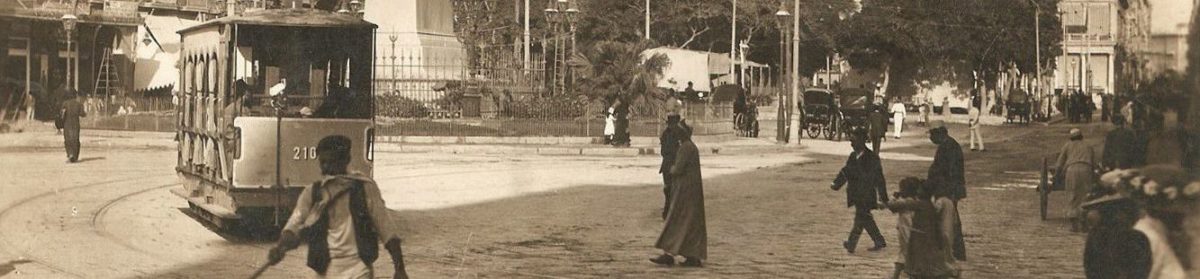
Anxiety stood in line as well to cast its vote in the second largest city of Alexandria. One week before our historic presidential elections, I am exiting the Bibliotheca Alexandrina, and I see a man wrestled to the ground after an attempted extortion from a woman he carjacked weeks earlier: a sting operation by her relatives. In the Sidi Gaber suburb, early afternoon, I am in a taxi and ahead of me, I see a man clinging to the outside of his stolen car’s window as it speeds off. He is dragged some 30 metres before falling and severely cutting his face. While walking in Cleopatra Hamamat, I encounter another man with a bleeding face, this time slashed with a razor blade in front of his mother, following a dispute.
Author: Amro Ali
The shock therapy moment in Salafi politics
Across the streets of Alexandria, Egypt, there is a peculiarly subdued behavior amongst the ultra-conservative Muslims, also known as ‘Salafis’. Their characteristic certainty and preaching has been replaced with a somewhat stoic expression of disorientation and withdrawal.
This feeling goes deeper than the recent disqualification of Salafist presidential candidate Hazem Salah Abu Ismail. It speaks of the shock therapy Salafis have undergone since last year’s revolution due, in part, to the politics 101 trajectory of their representatives.
Continue reading “The shock therapy moment in Salafi politics”
Syria protests in Egypt
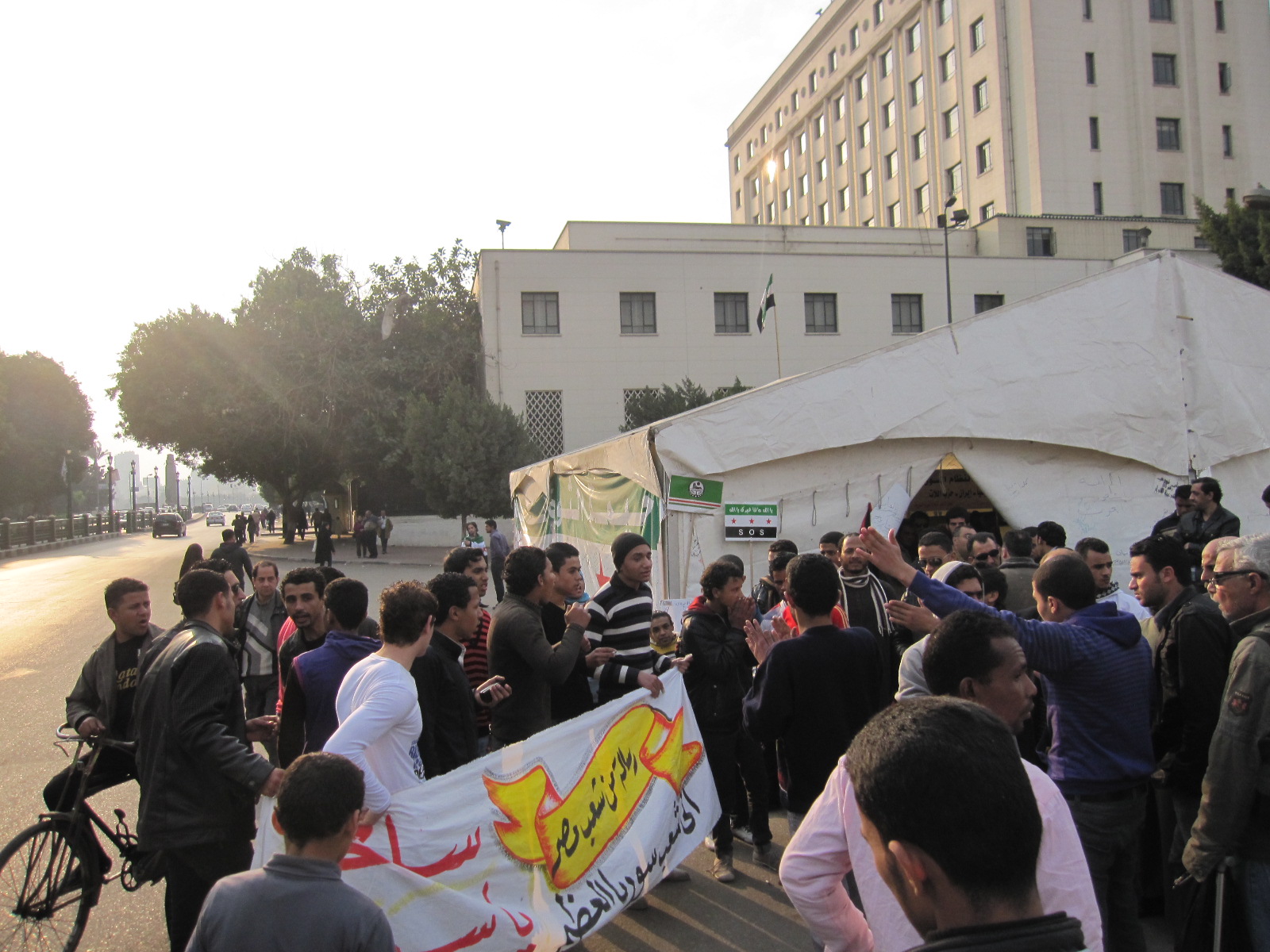
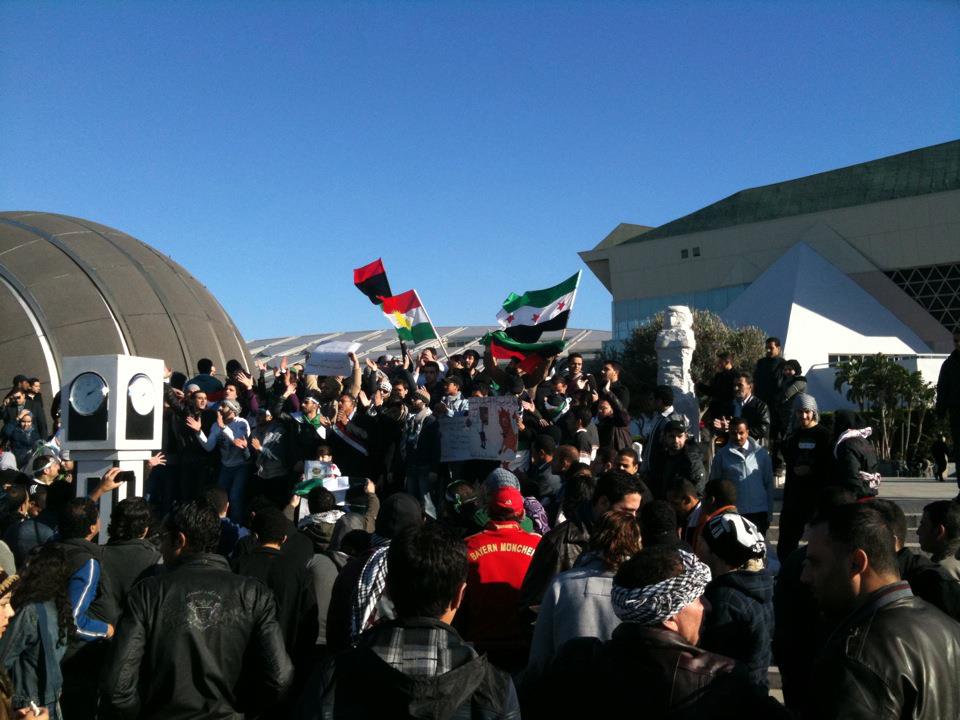
Egyptians
It took less than hour for me make this, and yet it became viral all over Facebook since I first uploaded the photo on 16 Feb. It must have struck a cord. I was not aiming to amuse or offend, but to highlight the Hezb al Kanaba (Party of the Couch) who will sit back, smoke shisha, and complain rather than getting up and doing something.

My Interview with the Montreal Review
The Montreal Review interviews scholar and stand-up comedian Amro Ali on his journey, the politics of humor and the Arab Spring.
Click here: Montreal Review interview
The Tahrir Effect on Occupy Wall Street
 In my regular visits to Occupy Wall Street, I examined the ways and extent that the Egyptian Revolution and the Tahrir Square narrative had on their operations. I’ll be presenting my finding at Cairo University on the 18th of Feb. See events page.
Below is a collection of the photos illustrating the Tahrir effect.
[nggallery id=14]
E-gypt: The Convergence of Politics, Demographics and a Wired Society
Presentation – E-gypt: The Convergence of Politics, Demographics and a Wired Society (Transcript)
Venue: The Journalism School, Columbia University, New York City.
Time: 6.00pm
Date: 29 September 2011
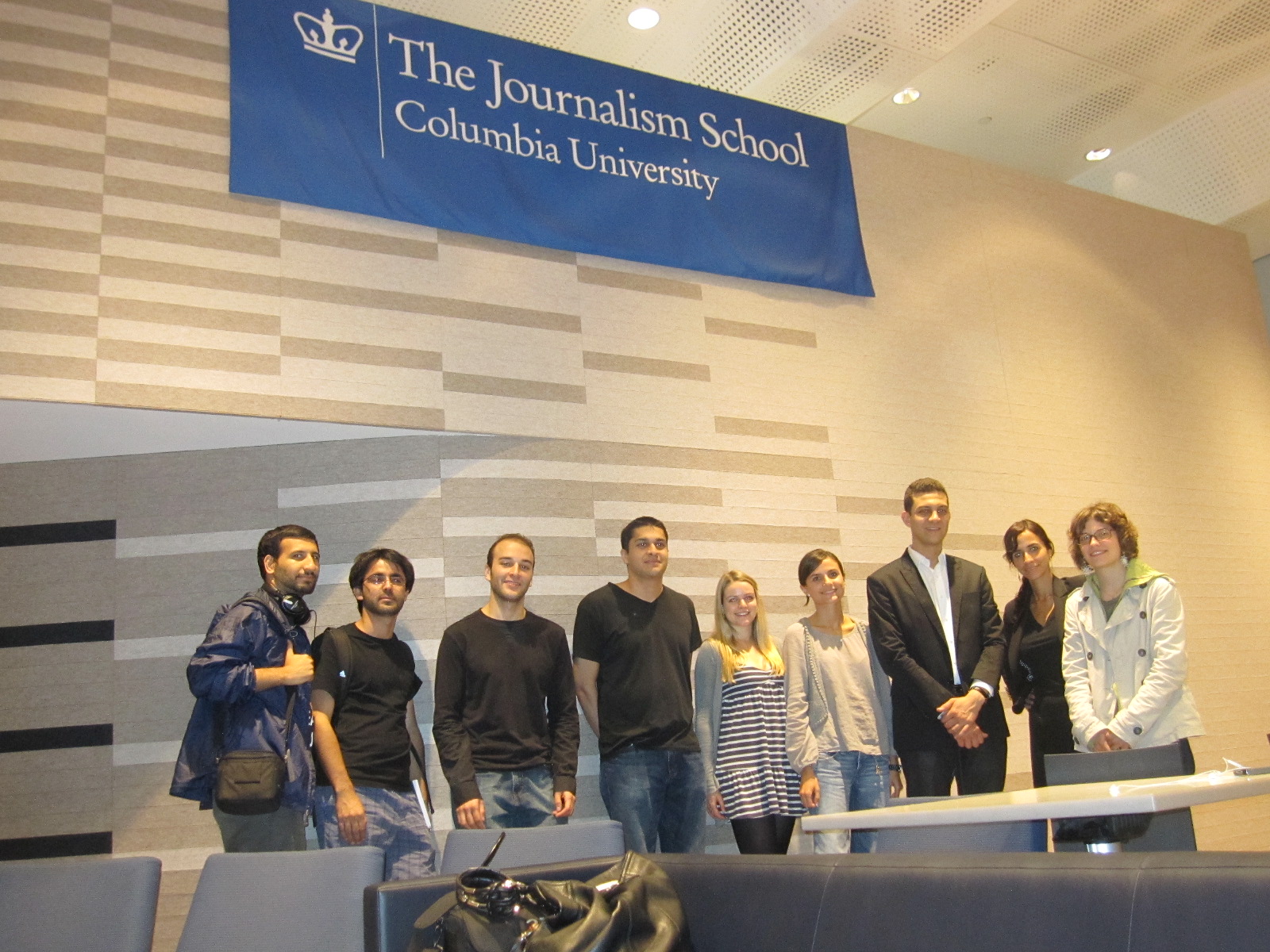
From the outset, I wish to thank Salim, the Columbia School of Journalism, the Arab and Middle Eastern Journalists Association, and Columbia University. It really is an honour to have been invited to speak at such a renowned university in the great city of New York. It’s also refreshing to see students in the audience of Middle Eastern heritage studying something else besides engineering and medicine; but you know you have ruined your marriage prospects as a result.
As you well know Australia is very far away. To show you how far away it is, I grew up in a city in Western Australia called Perth. We have a central park there, and when I asked my high school teacher why that is so, he repeated an urban myth that if you dig a hole through Central Park in Perth, straight through the Earth’s core, you will come out in Central Park, New York. But I found the process too difficult so I took a plane. I bet some of you will go back home and be tempted to stick a pin through your desk globe, now you know how earthquakes are started. Before anyone asks why my accent is not completely Aussie, it is a case of my vocal cords never assimilating properly with the rest of my body.
Me and Salim were working on an appropriate title for the event, we thought of ‘Walk like a Digital Egyptian’, but that came across as too passé. We might get sued by the Bangles. So we settled for e-gypt.
Continue reading “E-gypt: The Convergence of Politics, Demographics and a Wired Society”
Inspired, Transfixed and Transformed: Painting the Egyptian Revolution
Presentation Inspired, Transfixed and Transformed: Painting the Egyptian Revolution
Host: Egyptian American Professionals Society
Date: 24 September 2011
Time: 7.30pm
Venue: Marriott Woodbridge Renaissance Hotel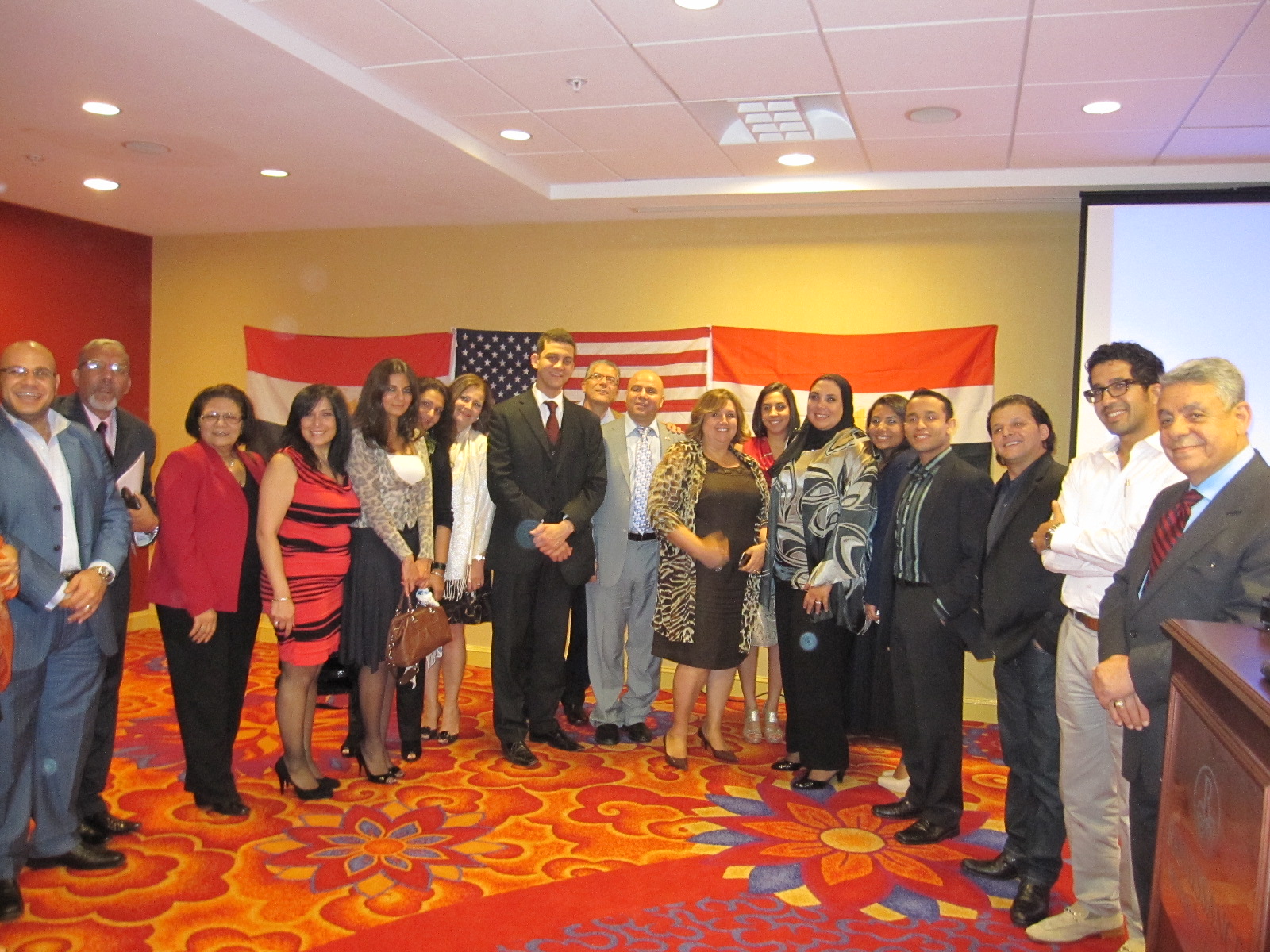
It is a great honour to be here, and I would like to thank Professor Morad, and the Egyptian American Professionals Society for the invitation to be present in New Jersey. Growing up in Australia, I first heard of New Jersey because of Bon Jovi. He had it on the back of his jacket so I thought New Jersey was a brand name of a jacket. The world has not forgiven you for Jersey Shore. But you made up for it with Jon Stewart.
As you well know Australia is very far away. To show you how far away it is, I grew up in a city in Western Australia called Perth. We have a central park there, and when I asked my high school teacher why that is so, he said that if you dig a hole through central park in Perth, straight through the Earth’s core, you will come out in Central Park, New York. But I found the process too difficult so I took a plane.
Before anyone asks why my accent is not completely Aussie, it’s just an unfortunate case where vocal cords never assimilated with the rest of my body.
Continue reading “Inspired, Transfixed and Transformed: Painting the Egyptian Revolution”
Defriending the Status-Quo: Translating Social Media onto Egypt’s Streets
Presentation: Defriending the Status-Quo: Translating Social Media onto Egypt’s Streets (Transcript)
Venue: Department of Cultural Studies and Oriental Languages, University of Oslo
Date: 19 September 2011
I would like to thank Professor Albert for the invitation, and the Department of Cultural Studies and Oriental Languages, and the University of Oslo. From the outset, I would like to pay my condolences to the victims and loved ones of the horrific tragedy that struck Norway a few months ago. I was in Australia when it happened, and like many I was in shock horror at the carnage. However, my breath was taken away by the Norwegian spirit that came together in unity. You really did show the world the spirit of humanity, and why Norway always deserves its reputation as a promoter of peace. There was one scene on the news, seeing a Norwegian mother cry for the loss of her son, I was reminded by a weeping mother in Egypt, who was holding a framed portrait of her son who died during the revolution, walking aimlessly on the streets of Alexandria, asking anyone for justice for her son. The pain of our losses is immeasurable, yet the unity of our humanity is incomparable.
As you know social media has been a very hot topic this year, it has lended itself to explain the successes of the Arab Spring, to its dark side in the recent London riots.
The first Norwegian I ever met in my life was a visiting professor in Australia. He told me something very profound, he said if you want to know the mood of a country, listen to their jokes. Egypt has no shortage of jokes, yet the most common joke that circulated around Egypt this year was this one: Mubarak goes into the afterlife, and meets with former Egyptian presidents Nasser and Sadat. They asked him: “How did the Egyptians kill you?” By poison, like Nasser?, By gun, like Sadat?’. Mubarak said, ‘no, they killed me by Facebook.”
Continue reading “Defriending the Status-Quo: Translating Social Media onto Egypt’s Streets”
Media and Intranational Cascading Effects: The Egyptian Revolution’s Cairo-Alexandria Interdependency
Presentation: Media and Intranational Cascading Effects: The Egyptian Revolution’s Cairo-Alexandria Interdependency, by Amro Ali.
Conference: Covering the Arab Spring
Date: 1-2 September 2011
Venue: University of Copenhagen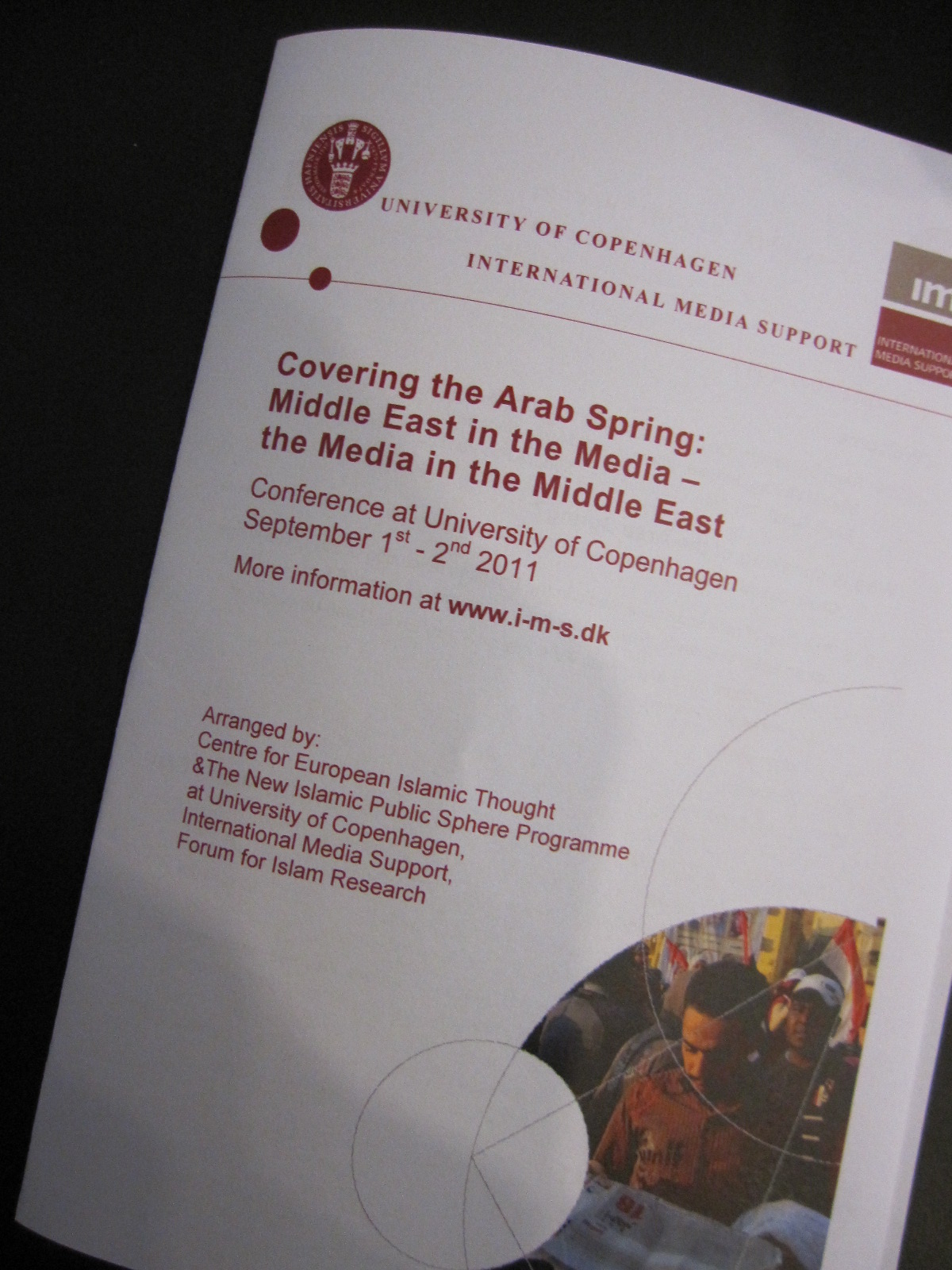
Slide One: Introduction
There has been much discussion on digitally enabled cascading effects, or domino effects, across national boundaries in the Arab spring. But internal cascading is not often given the same amount of attention, despite it being a critical component to the relationship between the media and the masses.
During the course of the past couple of months, I undertook weekly travels between Cairo and Alexandra to study the dynamics and mechanics of the social movements in both cities. On the Friday 27 of May this year, I was observing the mass demonstrations in Alexandria, what was dubbed the second revolution. One of the lead protesters took out his smart phone to check the progress of demonstrations in Cairo, and announced to the crowds that our brothers in Cairo have reached a million. The implication being that Alexandria can beat that. The Alexandria protests got bolder, the chants got louder, the marches got stronger.