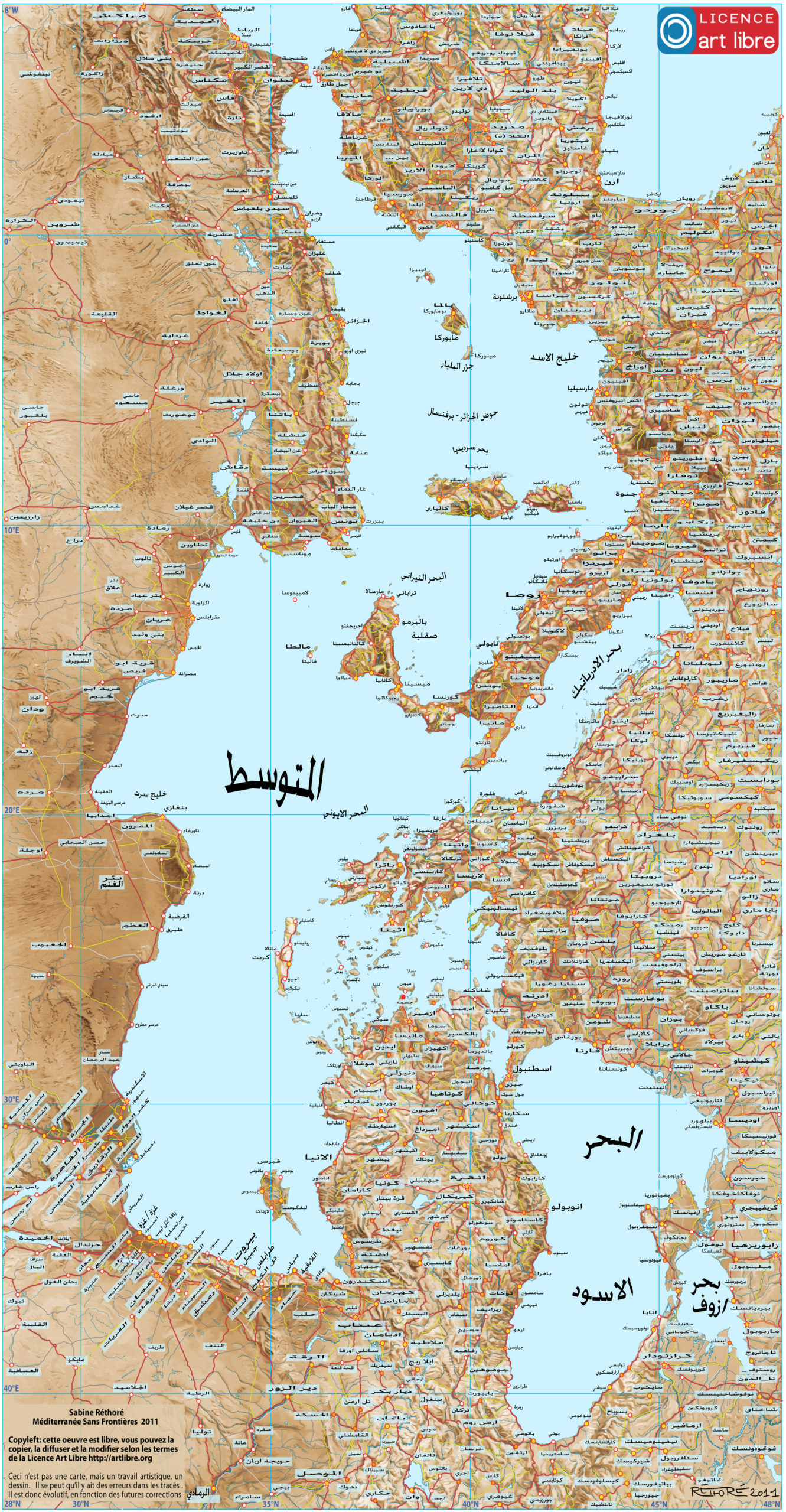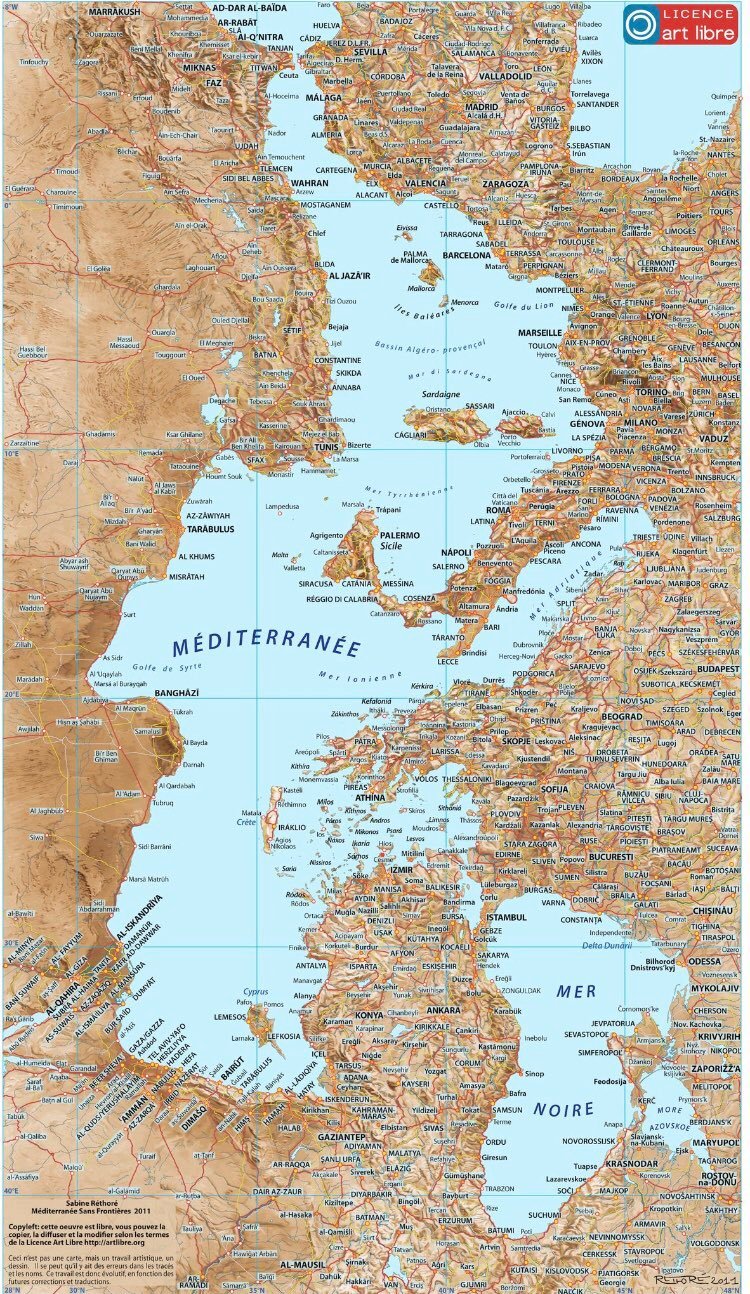
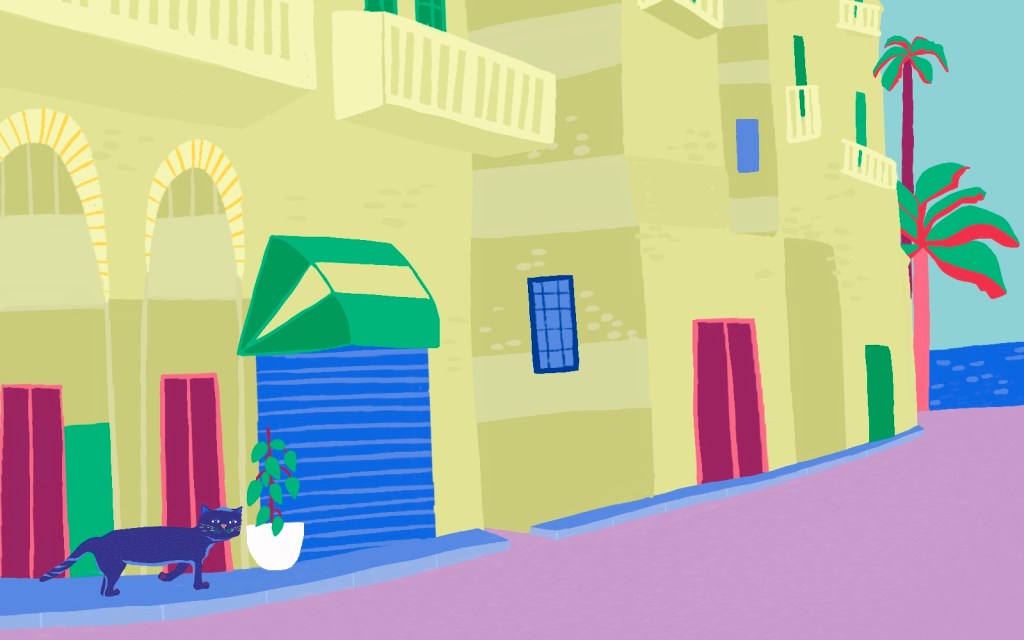
Alexandria’s connection to the Maghreb is often overlooked. But the cosmopolitan port city developed through centuries of migration and influence from the western side of the Mediterranean, up until the colonial era and the building of self-centered nation states.
This essay was originally published in Mashallah Magazine as part of the Mediterranean Routes series
***
“She is a unique pearl of glowing opalescence, and a secluded maiden arrayed in her bridal adornments, glorious in her surpassing beauty, uniting in herself the excellences that are shared out by other cities between themselves through her mediating situation between the East and the West.”
– Moroccan explorer Ibn Battuta on Alexandria, 1326 CE.
***
It was always a quiet curiosity to me as a child in Alexandria that I would address my maternal grandfather as baba sidou when every other child around me referred to their own grandfather as gidou – the customary address to an Egyptian grandfather. It was only many years later that I discovered that baba sidou’s father, my great grandfather, was a Moroccan merchant who left northern Morocco circa 1903 to settle and marry in Alexandria, earning a living by importing goods from his homeland to Egypt. The title baba sidou, used to address grandfathers in some parts of northern Morocco, was a linguistic inheritance of an otherwise enigmatic heritage.
The memory of this form of address to my larger-than-life grandfather, Abdelmeged, was enough to spark an interest in attempting to trace the origins of his father. It also led me to widen my understanding of Alexandria in the great historical narrative of movements and peoples and the role of the Maghreb (here used in the classical sense to include northwestern Africa and Islamic Spain or Al-Andalus 711-1492 CE) in this spectrum.
The Maghrebi character of Alexandria is undeniable when you consider architecture, religious currents, philosophy and historical knowledge production.
The Maghrebi character of Alexandria is undeniable when you consider architecture, religious currents, philosophy and historical knowledge production. The city’s most prominent mosques and districts are named after medieval Moroccan and Al-Andulusian Sufi scholars including Sidi Gaber, Sidi Bishr and Shatby. It is, however, the iconic Abu Al-Abbas Al-Mursi mosque by the sea that stands out, housing the tomb of the scholar who gave the mosque its name. Born in Murcia in the south-east of Al-Andalus in 1219 CE, Al-Mursi moved to Tunis, then finally Alexandria, where he remained teaching for 43 years until his death. The white marble floor of the mosque, which was renovated and expanded over the centuries, underpins a cream-coloured structure with four domes that surround the octagonal skylight. The mosque itself was the inspiration for the Sheikh Zayed Grand Mosque in Abu Dhabi which opened in 2007.
The Middle Ages saw Moroccan colonies emerge in Cairo and Alexandria, with the latter witnessing the construction of a madrasah for Maghrebi students founded by Saladin. By the late nineteenth century, the words jisr (bridge) and juj (pair or two) were frequently heard in the streets of Alexandria, meaning that either Moroccan Darija words had supplanted some Egyptian words in the Alexandrian dialect or it was simply a case of two dialects being spoken.
Why Alexandria?
The late Moroccan philosopher Mohammed Abed Al-Jabri notes a tradition in which the borders of the Maghreb “end where couscous ends, and couscous ends in the east in Alexandria and Upper Egypt.” Of course, Egypt historically has rarely been considered part of the Maghreb, which commonly ends at Libya at most. Yet the obscure tradition is quite interesting as it signals that distant Alexandria must have formed some reference point in the Maghrebi worldview.
The motives to make Alexandria their new home were quite evident. Mohammed El-Razzaz argues that the city was perhaps the furthest one could flee while still linking up to the familiarity of a multicultural harbour city. Alexandria was the last major port before heading to Mecca on the pilgrimage route. It had a vibrant merchant class due to, as the fourteenth century Tangiers-born explorer Ibn Batuta noted, its unique position of a “mediating situation between the East and the West.” In Alexandria, Maghrebi scholars could meet their counterparts from Cairo, Damascus, Baghdad and distant places. It is not difficult to see how couscous ended up as a dish being served in Alexandria.
“The Maghreb ends where couscous ends, and couscous ends in the east in Alexandria and Upper Egypt.”
The relationship between the Maghreb and Alexandria is not only old, it also had a dramatic start fit for a novel or film. In 818 CE Cordoba, an uprising that came to be known as the “Suburb Affair” took place in the southern impoverished district of Al-Rabad, across the Guadalquivir river, and was brutally suppressed by the Al-Andalusian caliph Al-Hakim II. Some 15,000 Cordoba residents fled the tyranny and, because they lived largely off piracy, sailed towards Egypt and seized Alexandria, turning it, in effect, into a city state. This was the first major case of re-immigration back into North Africa from Islamic Spain, including a smaller number that escaped to Fes. While it is possible the Cordobian exiles had local support at first, Muslim and Coptic sources speak of the cruelty that Alexandria endured under their rule. They were expelled a decade later by Caliph Al-Ma’mun when he reasserted his authority over Alexandria. The exiles then left and took over Crete. An indomitable bunch.
In one sense, the violent affair set the historical tempo of the Maghrebi resonance with Alexandria, which paved the way for a peaceful centuries-long story where merchants, travellers, pilgrims, exiles, scholars, philosophers and mystics left the Maghreb and the collapsing Al-Andalus and headed eastward to Alexandria and, at times, to the rest of Egypt. The Fatimid empire that sprung from Tunisia and ruled Egypt (969-1171 CE) facilitated one of the largest population migrations from Sicily (which was part of the Maghreb), Algeria, Morocco, Libya and, especially, Tunisia to Alexandria. The Valencia born Al-Andalusian geographer and poet Ibn Jubayr noted upon his arrival in Alexandria in 1183 CE the multitudes of Maghrebis arriving, and was mesmerised by the city: “We have never seen a town with broader streets, or higher structures, or one more ancient and beautiful … We observed many marble columns and slabs of height, amplitude, and splendour such as cannot be imagined … Another of the remarkable features of this city is that people are as active in their affairs at night as they are by day.”
Piecing fragments
On my first visit to Morocco in January 2018, I was trekking along the mountains of Chefchaouen when I met a farmer named Abdullah who narrated interesting local fables that dealt with Egypt, including one in which Pharaoh Ramses II gave Morocco its name, even while “he preferred to die in Egypt.” The Egyptian pharaoh holds an impressive grip over the Moroccan imagination as the epitome of all evil (I have discussed this in a 2018 photo essay). Fables go both ways. In Alexandria, an aging resident in 2012 told me a local legend of the ghost of Sidi Gaber, named after sheikh Jaber Al-Ansari, a scholar and shepherd who grew up in Al-Andalus shortly after the Islamic conquest of the Iberian peninsula and settled in Alexandria. In June 1940, his ghost saw the Axis warplanes approach as they were about to bomb the British military installations in the Sidi Gaber area. So as to protect his name-bearing Sidi Gaber Mosque, he waved the planes away and consequently – so the story goes – all bombs fell on the nearby Cleopatra Hamamat district in the first week of the campaign.
The oversupply of information and digital asphyxia has de-narrativised the Mediterranean.
These tales are frozen in time, as the routes that enabled them no longer emerge in today’s era of mass media and predictable tourism patterns. The oversupply of information and digital asphyxia has de-narrativised the Mediterranean as it no longer permits for the emergence of fables and an air of mystery to this world.
Land and sea hajj routes that for centuries were essential to the flourishing Maghrebi self-understanding have long since been replaced by air travel, bypassing the symbolically rich ports along the way, Alexandria no less. As Abderrahmane El-Moudden puts it succinctly:
“For many centuries, the pilgrimage caravan was the most important, if not the only, means of travel to the Holy Lands. On their way, Moroccan pilgrims were forced to cross the majority of Arab Muslim lands. This fact alone gives the Moroccan travels a complexity that is reflected in the texts and colours the perception of sacred space and time.”
The author hints at the slow lingering process and toil that came with travelling that carried a high risk of death but enabled the surviving returnees to retell their stories that were chiselled from, perhaps, the longest journey they have ever embarked upon. The idea of such deep and prolonged transcontinental experiences today collapses under the parochial weight of Egyptian and Moroccan nationalist narratives and their desire to demarcate borders, categorise populations, and restrict movements in a region once characterised by fluid boundaries and transnational migration.
The idea of such deep and prolonged transcontinental experiences collapses under the parochial weight of Egyptian and Moroccan nationalist narratives
Scratch the surface of many Egyptians and Maghrebis and you will find foreign links in their family tree. Nationalist constructs can get quite ludicrous if you really think it through. For example, for an Egyptian to claim descent from pharaonic Egypt is to make the impossible claim that the chain of one’s lineage was never “disrupted” in over 2000 years. It would also deny the history that saw movements of peoples including Arabs, Maghrebis, Al-Andalusians, Berbers, Ottomans, Jews and so forth that married into Egyptian Muslim families, or the innumerable Greek, Syrian and Ethiopian Christians that married into Coptic communities. This is not the same as making a cultural claim. One can certainly associate with and draw lessons from a country’s long history and rich traditions. But culture is often too lightweight a contender to the disturbing “races and blood” discourse even if these terms are not specifically used, but implied.
How it ends
It is probably worthwhile to capture a snapshot of the current dynamics between Egypt and Morocco. At the political elite level, tensions surface from time to time, given that Egypt faces a balancing act to placate Morocco and Algeria who have long standing hostilities with one another. In the media, attacks have taken place with a misogynistic stab.
In 2014, Egyptian presenter Amany Al-Khayat – spited by the Palestinian leadership’s appeal to distant Morocco, rather than neighbouring Egypt, for help during the war on Gaza – deried Morocco as a country with a “HIV prevalence rate” and an “economy of prostitution.”
This ignited a wave of anger from Morocco and sparked a diplomatic crisis; Al-Khayat later apologised. In 2020, Moroccan singer Ibtissam Moumni was outraged that Egypt cancelled a concert by fellow Moroccan artist Saad Lamjarred because of rape charges that he was facing: “You think that Saad Lamjarred will hold a concert and harass your daughters, who are like men.” This caused a fury on Egyptian social media and she later apologised on Instagram.
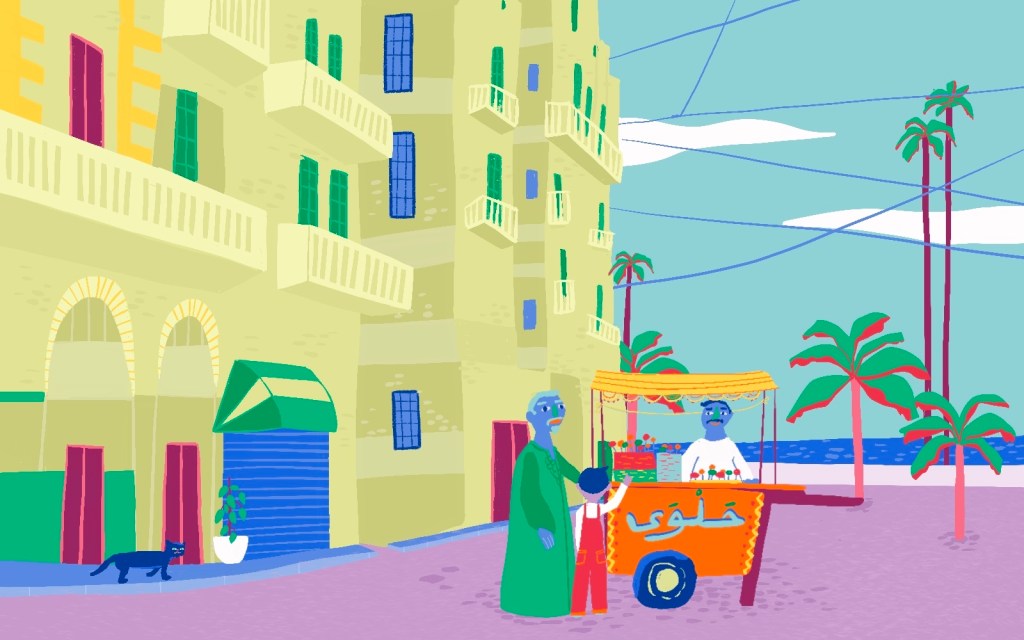
Yet policymakers, media pundits and celebrity bickering usually operate in a world away from coffeehouses, mosques and campuses. Interestingly, Al-Khayat and Moumni’s conciliatory approaches saw them appeal to both countries’ civilisations, rich heritage and intellectual traditions. This, incidentally, is how the countries’ publics view the other. When the former grand mufti of Egypt, Ali Gomaa, labelled the fourteenth century Granada-born Maghrebi scholar Imam Abu Ishaq Al-Shatibi (who is buried in Alexandria and has a major district named after him) as a mere “journalist,” Moroccan scholars were angered and launched a heated rebuttal at Gomaa. At least the once thriving medieval relationship still matters in some sense.
The current passport apartheid system have restricted meaningful mobility, preventing Moroccans and Egyptians from visiting each other freely.
But the above mentioned incidents pale in comparison to the greater tragedy of the North African story. The historical symbiotic relationship between Egypt and Morocco is not as flourishing as it once was. The francophone and anglophone colonial trajectories divided the Maghreb and Mashreq further. The current passport apartheid system, and visa regimes that prioritise EU nationals over someone else from the global south, have restricted meaningful mobility, preventing Moroccans and Egyptians from visiting each other freely.
Moroccans rarely meet Egyptians, which creates a vacuum that is filled with personalities and places like the pharaohs, Um Kalthoum, Abdul Basit Abdus Samad (a famous Quran reciter, 1927-1988), Al-Azhar, the pyramids and, undoubtedly, Mohamed Salah. Perhaps also comedian Adel Imam, who gets a disproportionate amount of attention and has skewed the image of Egypt like everywhere else. The decline of Egyptian soft power through film means that the Egyptian dialect is now understood mainly by the older generation of Moroccans. For Egyptians, the mention of Morocco evokes beauty, enchantment, religious heritage and kinship, with a sprinkle of celebrities or the talk of a recent football game.
For Egyptians, the mention of Morocco evokes beauty, enchantment, religious heritage and kinship.
However, regrettably, Egypt joins the rest of the Arab world chorus in never failing to note sehr (black magic) when the topic of Morocco arises. The idea is that Moroccan women are prone to employing witchcraft to cause some sort of harm to others. This can indicate why Egypt’s opposition media outlets were able to effectively spread the rumour – relying on dubious documents – that the current Egyptian president’s mother was a Moroccan Jew. Not only was there no factual basis to the antisemitic nature of this claim, it also says a lot about the function of Morocco as a distant and mysterious enough place to give the rumour an air of plausibility. The viral claim moved the Moroccan state to officially declare the documents to be a forgery.
On dying and rebirth
Towards the end of the conversation, Abdullah, the farmer in Chefchaouen, mentioned something that grabbed my attention. “A big part of our community migrated to the city of Alexandria over the centuries,” he said. I beamed with a smile.
Soon after, I came to realise that my great grandfather had dropped his Moroccan surname, making it difficult to trace his origins, and picked up an Egyptian name instead, Al-Fayoum, after the oasis town in Middle Egypt. Why he chose that name in particular I could only speculate. Given that it was part of a trade route, I would suspect that he had visited the town. One family tale says that he had fled a conflict taking place in Morocco, most likely the rebellion against the French and Spanish carving out colonial zones of influence in Morocco in the early 1900s. The name change may have been a way to evade the transcolonial collaboration across North Africa to arrest dissidents in distant lands. Additionally, the rising sense of Egyptianness at the turn of the century could have been an invitation for him to become part of the emerging national narrative. This was symbolically realised when he married an Egyptian woman named Baheya El-Sherif.
He knew I loved to go to the top and see my city from there, as if I was a low gliding bird.
My usual routine as a five-year-old in the 1980s was to go to see baba sidou after school. He would take me to the downtown area of Mahatet el-Raml and buy me popcorn or a sweet of sorts. On other occasions, he would wait specifically for the double decker blue tram as he knew I loved to go to the top and see my city from there, as if I was a low gliding bird. I would take out chalk from my pocket that I had snatched from the blackboard at school and start writing on the floor of the tram, both in Arabic and English, to the delight of the curious onlookers. One passenger told my grandfather that, “he will be something great in the future someday.” We would disembark in Azarita where he grew up, attend his favourite mosque for the asr (mid-afternoon) prayer, then he would go to the coffeehouse to meet friends and smoke sheesha while I played in the street in front of him.
This routine also included a visit with baba sidou to see his mother Baheya in the same area. Although her husband Al-Fayoum had died long before I was born, I was able to glimpse the last two years of her life, as a bedridden 95-year-old widow with her browned caramel skin drooping down gracefully. She had a certificate that qualified her as a midwife – I cannot remember if she hung it on the wall but she was extremely proud of the achievement – having received it at a time when education and qualifications for Egyptian women were hard to come by. A once outspoken wealthy woman who rose from the working classes, she ran coffeehouses and had her own horse-drawn carriage, but due to dwindling fortunes now lived in a tiny apartment. She died soon thereafter.
With his death, along with that of my great grandmother, came the end of one era as I knew it in Alexandria.
A few months later, her beloved son, the 69-year-old Abdelmeged – baba sidou to me – entered his beloved mosque in Azarita and, while in the kneeling position, passed away. The stoic worshippers shifted him so that he would lean against the wall, still kneeling, and then prayed over his body. With his death, along with that of my great grandmother, came the end of one era as I knew it in Alexandria. The time of seamless movement of personalities and their lives across the southern Mediterranean had dried up in the shadow of the mighty nation state and the hardening of borders.
My great grandfather, Al-Fayoum, who I know little about, became a sort of vector point. He left no photographs or written evidence – or I have yet to locate them – and thus I have relied on fragmented oral testimonies. My fickle memory of my dying great grandmother, a formidable Egyptian woman who married a stranger from the other side of the southern Mediterranean and edge of the Arab world, still lingers in my mind. Two simple words, baba sidou, encapsulates my own Egyptianness and sheds a new light of complexity on my Egyptian parents; one that is accomodating of complicated histories and sits well with my multifaceted Muslim, Arab, Egyptian, North African, Mediterranean, Alexandrian, and Australian identities.
Towards a reverse journey
In the summer of 2018, while in Alexandria, I made an error in my booking of a flight to Spain to attend a conference in Seville. I ended up having two tickets to Madrid that were non-refundable, but I could reschedule one of the flights. After the conference, I made my way to Cordoba and then to Granada. There was a restlessness to my presence in these two glorious cities. Cordoba is a place where you either find love or bring someone you love. In Granada, I stood before the gates of the Alhambra but could not bring myself to enter it. It is so majestic that entering it alone would have felt like selfishness.
The stopover in Casablanca had fate written all over it, as I had a chance encounter with a Moroccan doctoral researcher.
At the back of my mind throughout the trip was the costly accidental ticket. The rescheduled flight was for March 2019, a very inconvenient date during the teaching semester at the American University in Cairo. Since the airline would not allow me any later date, and because I was not quite yet in a holiday mood, I decided to pepper the trip with academic engagements.
The stopover in Casablanca had fate written all over it, as I had a chance encounter with a Moroccan doctoral researcher. After a week in Madrid, I booked my return flight with a three-day layover in Casablanca just to get to know this person better.
As we walked along the Casablanca shore one day, she narrated her life and showed me a black and white picture of her grandfather, a merchant riding a horse at the pyramids. She talked about her paternal ancestors, who were expelled from southern Spain in the closing curtain of the long Spanish Reconquista era, settled in the Moroccan port city of Tetouan in the fifteenth century and remained there until her great grandparents’ time. After that, the descendants migrated south. For a moment, I joked and wondered, what if Al-Fayoum had ever crossed paths with her great grandparents.
I told her that the hardest question I could ever be asked is “where is home?”
It was as if I was on the reverse journey of my great grandfather, or that of the Andalusian shepherd boy Santiago in Paulo Coelho’s The Alchemist (in my defence, I was young when I read the book), who has recurring dreams of a hidden treasure at the pyramids of Giza. His journey across North Africa passes through the town of Al-Fayoum where he meets the alchemist and falls in love with a woman named Fatima.
The inquisitive researcher and I talked about the world and how I never knew a proper sense of home, having lived in several places. I told her that the hardest question I could ever be asked is “where is home?” She gave an evocative response that broke the long silence of my universe, “I will be your home.” Her name is Kenza, meaning “hidden treasure” in Arabic.
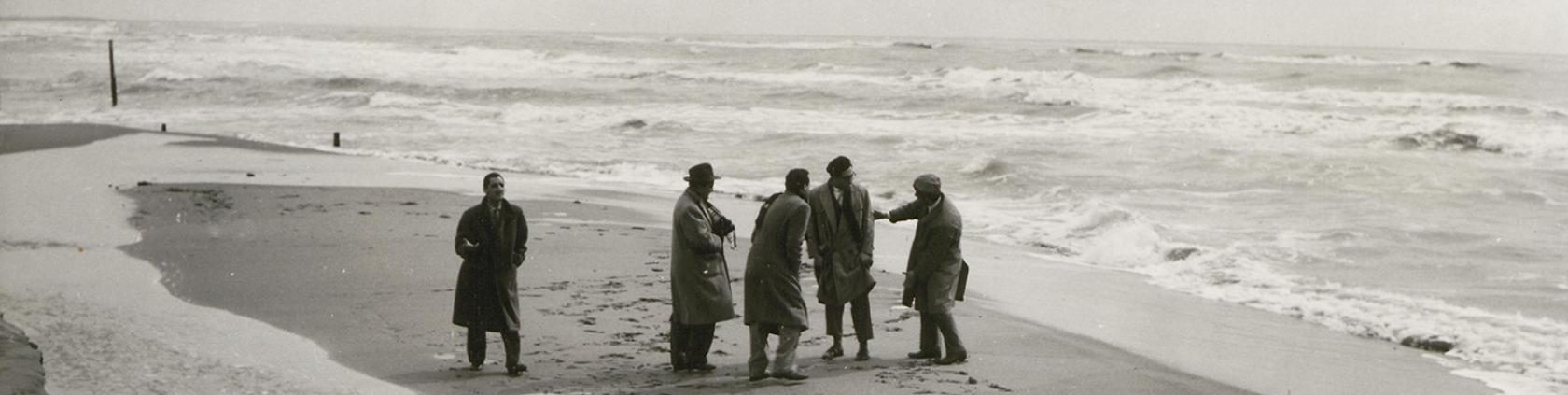
After a long series of obstacles, including a pandemic that is not kind to movement, we eventually married last summer. Hopefully someday, we can make it to Cordoba and, maybe, eventually cross the gates of Alhambra in Granada. Inshallah. For the time being, we will head to Alexandria, and do the ritual walk along the corniche until we arrive at the wave breakers along the Sidi Gaber shore, only to sit down, facing the sea, eating couscousy bel sukkar, sweet couscous cooked the Egyptian way with shredded coconut, butter, nuts, sultanas, cinnamon and hot milk.
***
References
Eickelman, Dale F (eds.) Muslim Travellers: Pilgrimage, Migration, and the Religious Imagination Comparative Studies On Muslim Societies (1990).
Norman Rosh, A. M. R. (1994). Jews, Visigoths, and Muslims in Medieval Spain: Cooperation and Conflict. Leiden, E.J. Brill.
Razzaz, M. E. (2013) In the Footsteps of Mystics and Intellectuals: The Andalusi Legacy in Egypt Rawi Magazine.
Von Grunebaum, G. E. (1970). Classical Islam: A History, 600 A.D. to 1258 A.D. New York, Taylor & Francis.
Woidich, P. B. a. M. (2018). The Formation of the Egyptian Arabic Dialect Area. Arabic Historical dialectology: Linguistic and Sociolinguistic Approaches. C. Holes. Oxford, Oxford University Press: xix, 422 pages.
***
All illustrations for the Mediterranean Routes series were produced by Atelier Glibett in Tunis.