“Our inheritance was left to us by no testament” – René Char
Category: Arab World
“If the sun sinks in a sea of troubles. And a wave of darkness sweeps the world. And we can no longer see or understand and the way is lost in lines and circles. Then, all you wise and experienced ones, your only guide is the eyes of words.” – Ahmed Fouad Negm, Uyoun al-Kalamaz, “Eyes of Words,”(written in Egypt’s Qanatir prison, 1970).
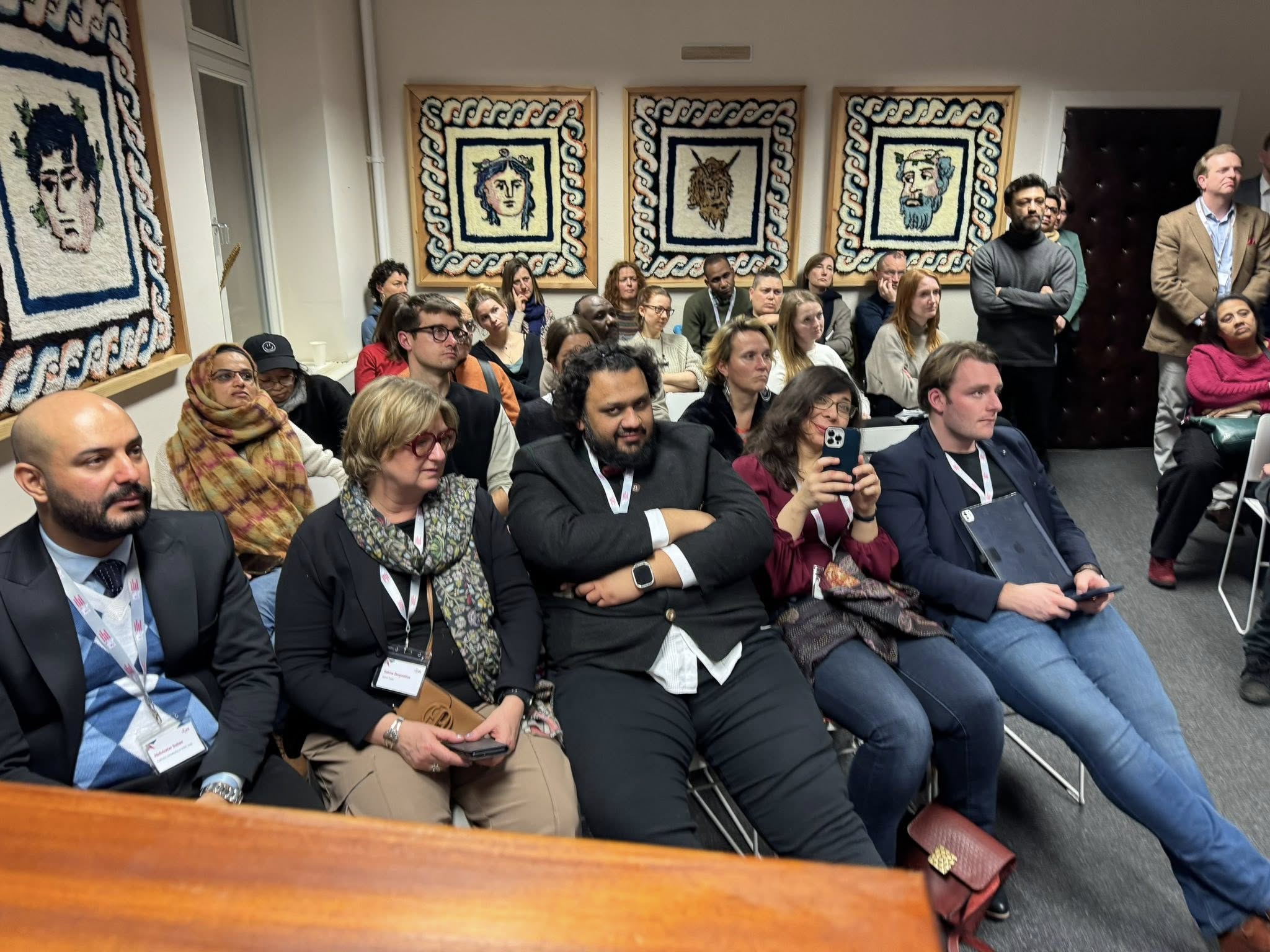
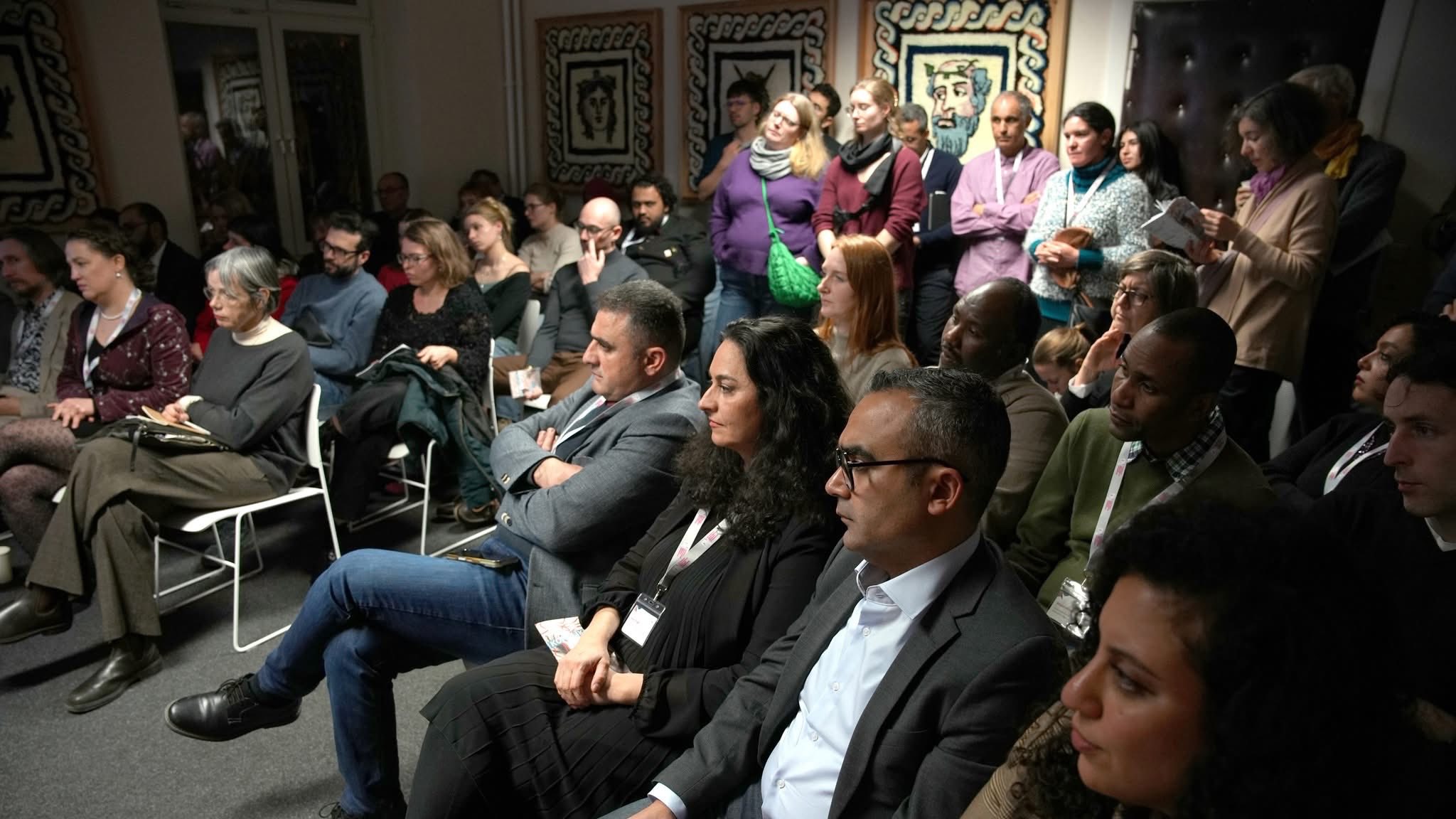
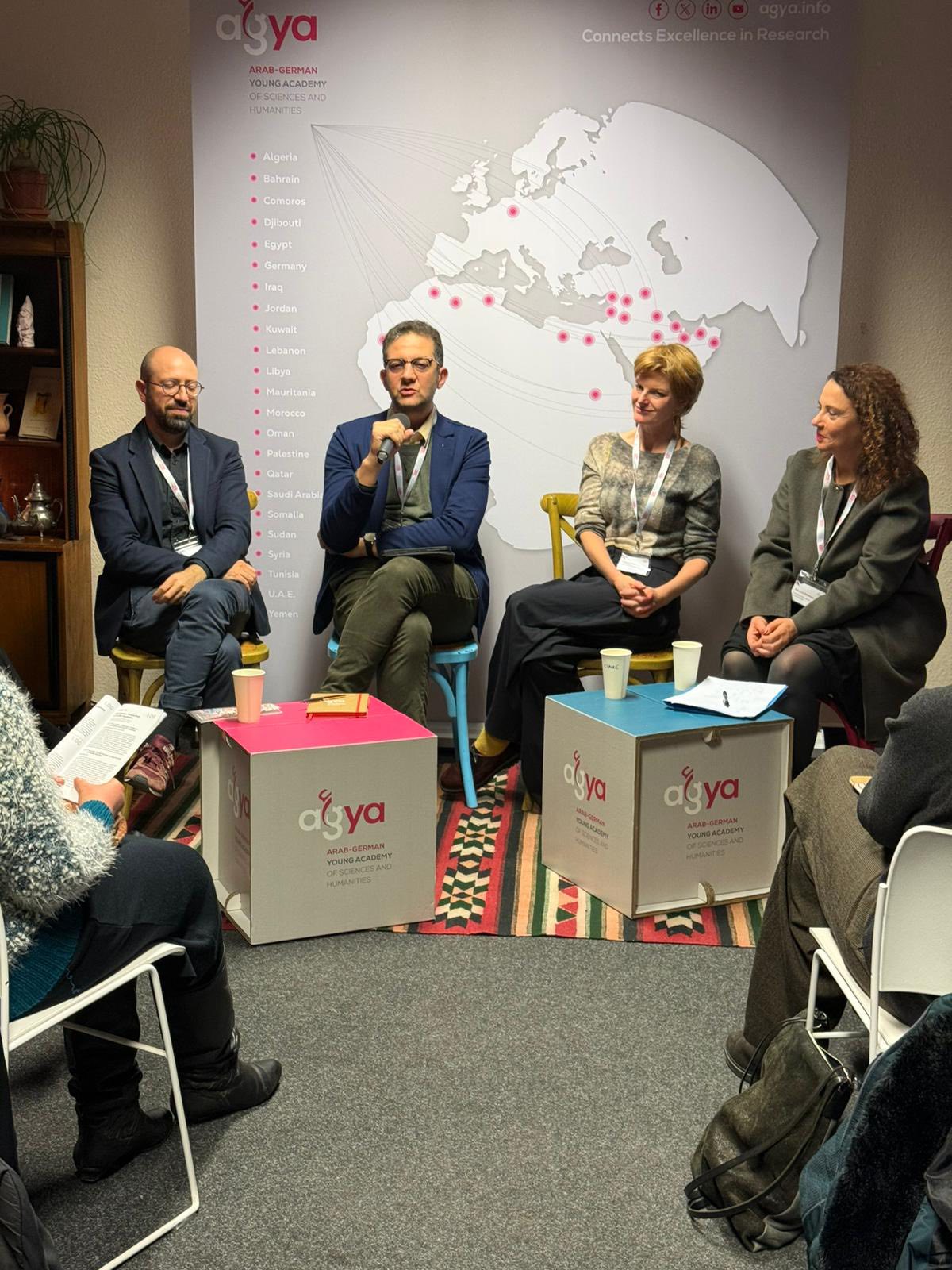
At the Berlin-Brandenburg Academy of Sciences and Humanities, AGYA organized the salon around the theme of conflict as part of the annual Salon Sophie Charlotte in Berlin (17 Jan 2026). I spoke on how Mediterranean communities are moving away from nostalgia as a political resource (e.g. old cosmopolitan myths) and more towards future-oriented imaginaries of belonging that are less about shared origins and more about shared vulnerabilities: climate change, housing precarity, mobility restrictions, and economic uncertainty.
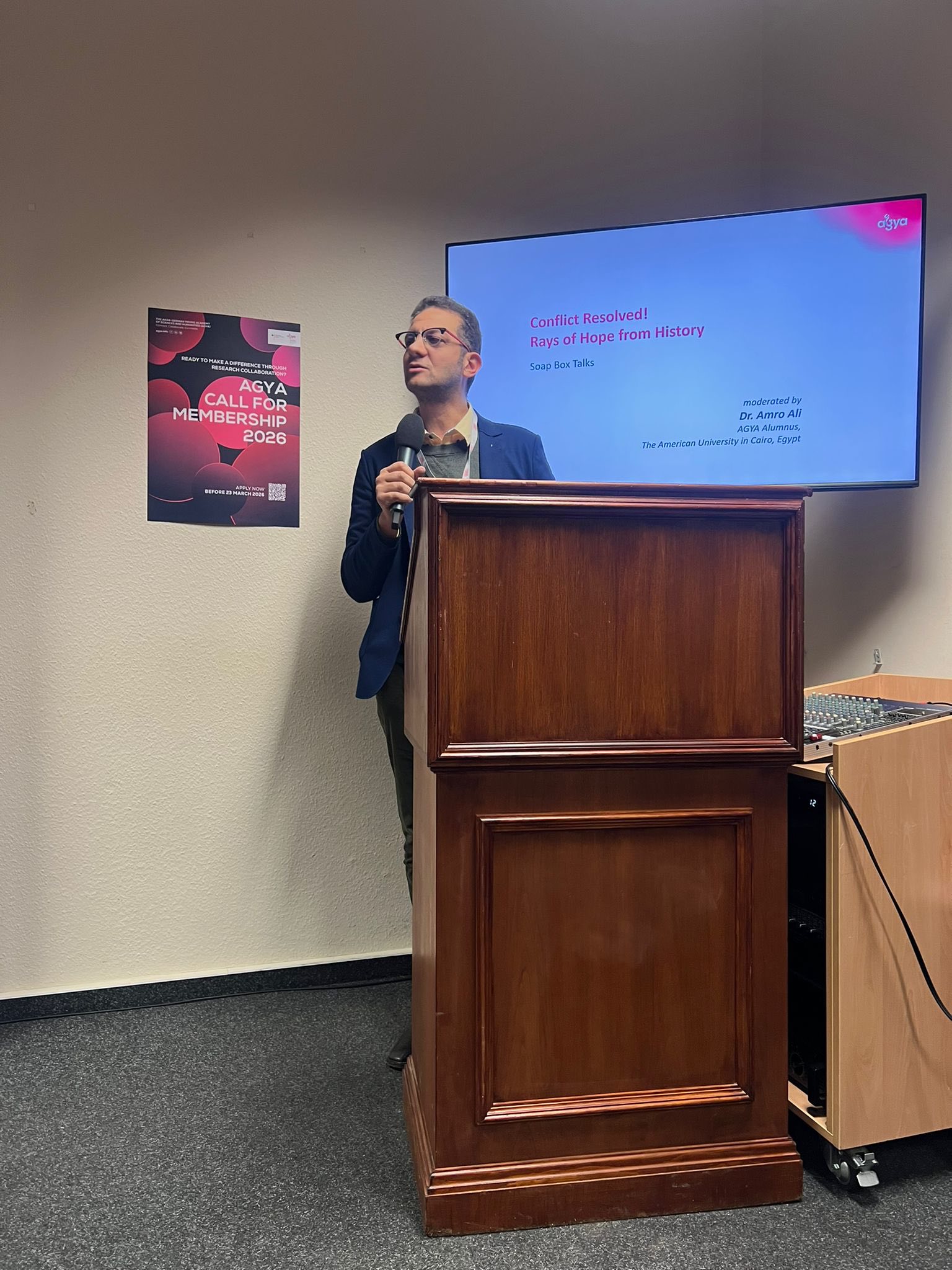
I was also honored to moderate the soap box talks with nine outstanding scholars, looking at the history of conflict resolutions.
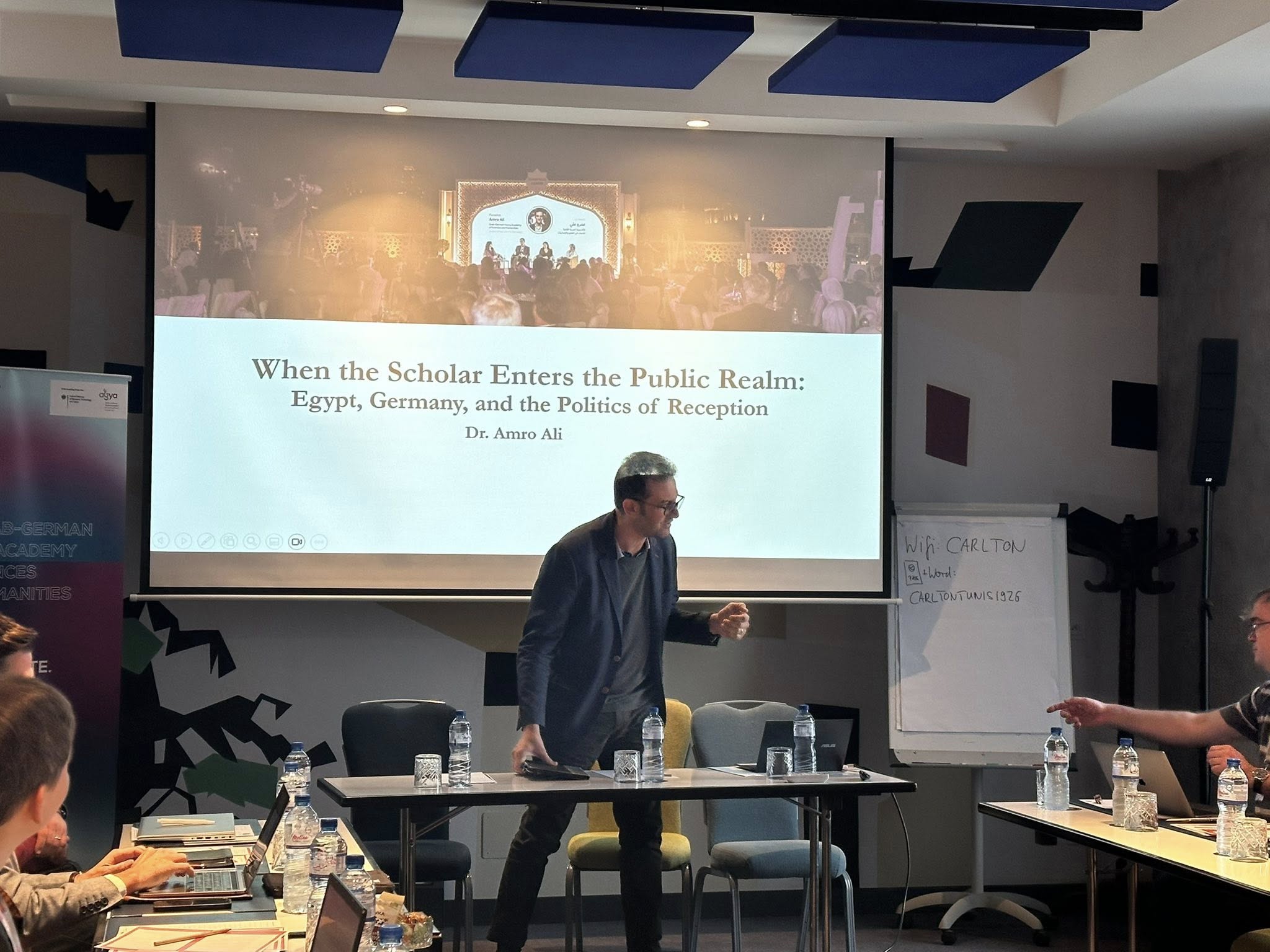
In my first autoethnographic paper which I presented in Tunis as part of the workshop The Standing and Understanding of Scholars in Society: Arab and European Experiences, I chart my journey on how scholars and public intellectuals are received in Egypt and Germany.
Based on my experiences from academia, policy work, and public writing, I argue that the scholar’s reception in Egypt and Germany exposes two distinct regimes of knowledge regulation, one shaped by state securitization, the other by memory politics and moral boundary-work.
My paper argued that the reception of public intellectuals reveals the moral architecture of a society, as public engagement does not merely expose the scholar; it reveals the deeper structures of each society, their anxieties, their memory politics, and their tolerance for dissent.
Some of the questions I pose are:
How scholars can contribute meaningfully to public debate without becoming targets of politicized scrutiny?
How does one come to terms with the public realm as a process of negotiated visibility under unequal conditions of risk?
How can standup comedy (what Bakhtin describes as the carnivalesque), short fiction writing (Walter Benjamin would call “historical illumination”), and poetry (Adorno called it a “non-identical mode of thinking”) overcome the limitations imposed by academia and public intellectualism?
How do we treat the political essay as form and method?
What this means for scholars working across regions, institutions, and policy environments?
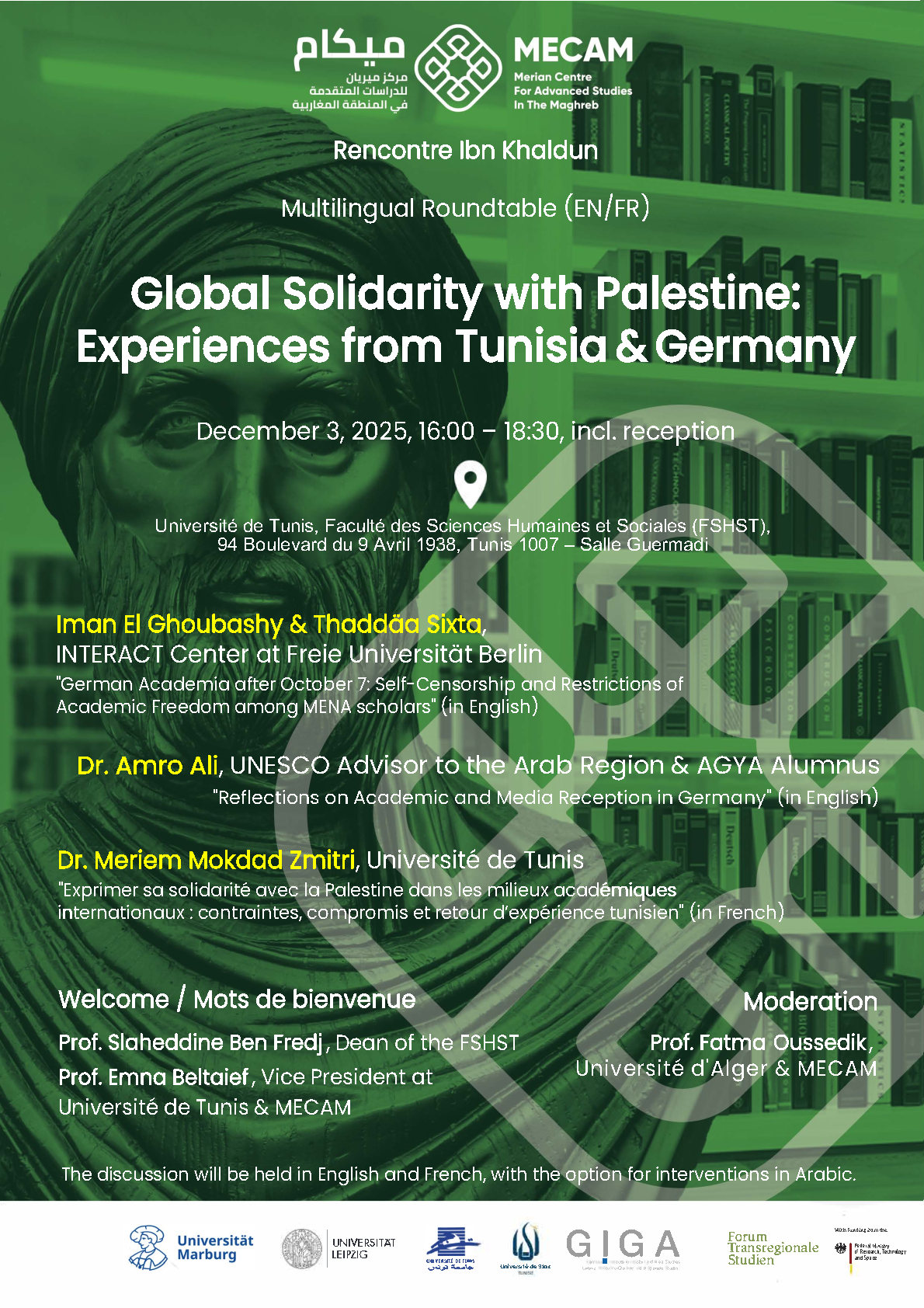
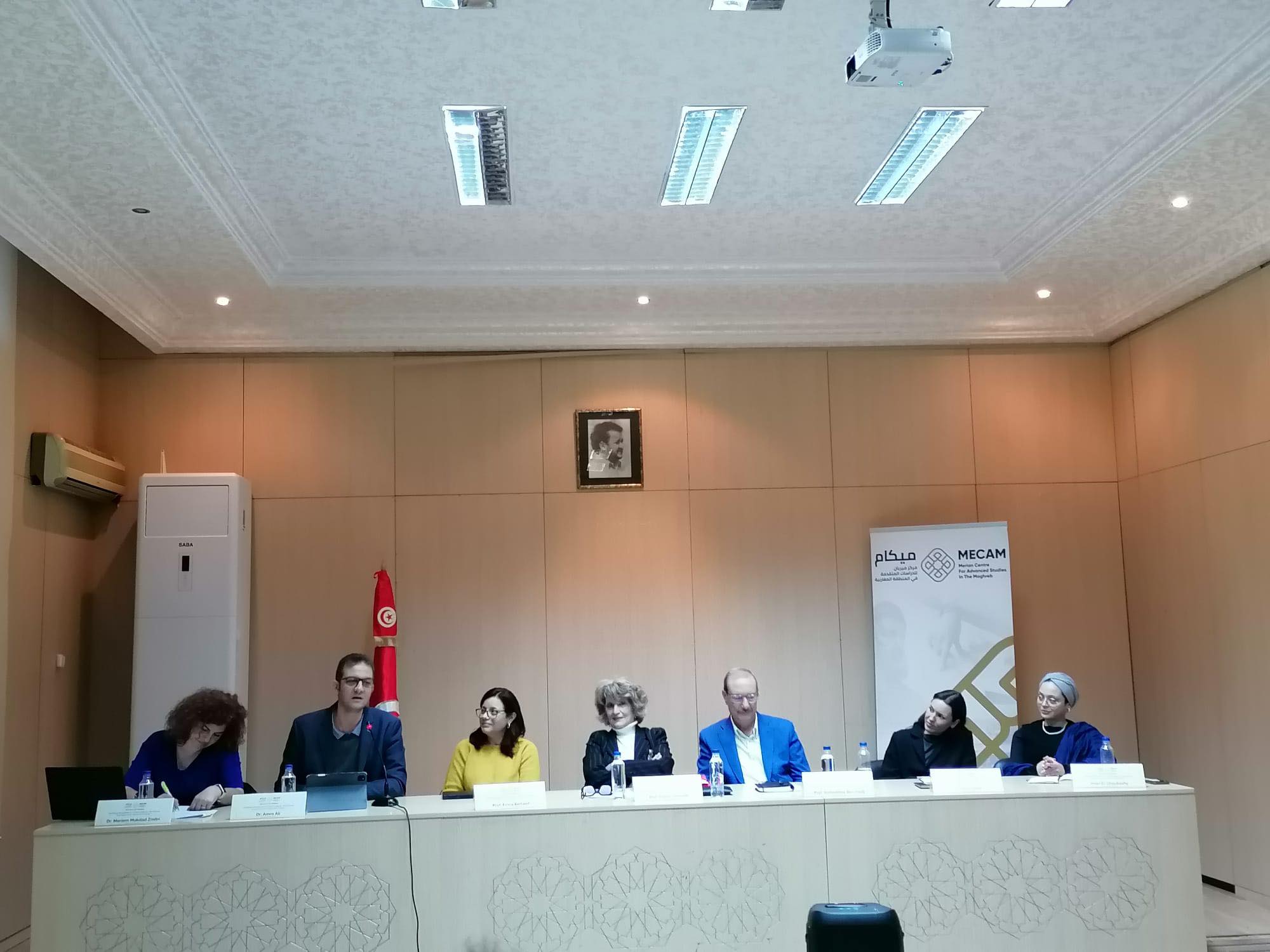
It was an honour to speak at the University of Tunis in which I reflected on my experiences on how the subject of Palestine has unfolded over the years in Germany. This was a very unusual event as it was remarkable that six German institutions were behind this initiative which is a strong signal that institutional pushback within Germany is beginning to take shape. This has been confirmed by my colleagues.
On the other hand, the choice of Tunis was quite telling. The event was basically held on the “periphery” as a way to limit visibility within Germany. In some respects, it was an experiment that enables cautious engagement while not fully challenging established boundaries within Germany proper or overplaying their institutional hands. The fact remains that the German status quo of silencing the pro-Palestinian narrative is unsustainable and therefore cracks are starting to appear.
Event abstract: “This multilingual Rencontre Ibn Khaldun event will feature three contributions that offer distinct perspectives on experiences of solidarity with Palestine in Germany and Tunisia. In doing so, the roundtable aims to create space for open and pluralistic exchange. It will bring together speakers from diverse backgrounds to share their insights and offers ample room for dialogue among participants and the audience. The discussion will be conducted in English and French, with the possibility for interventions in Arabic.”
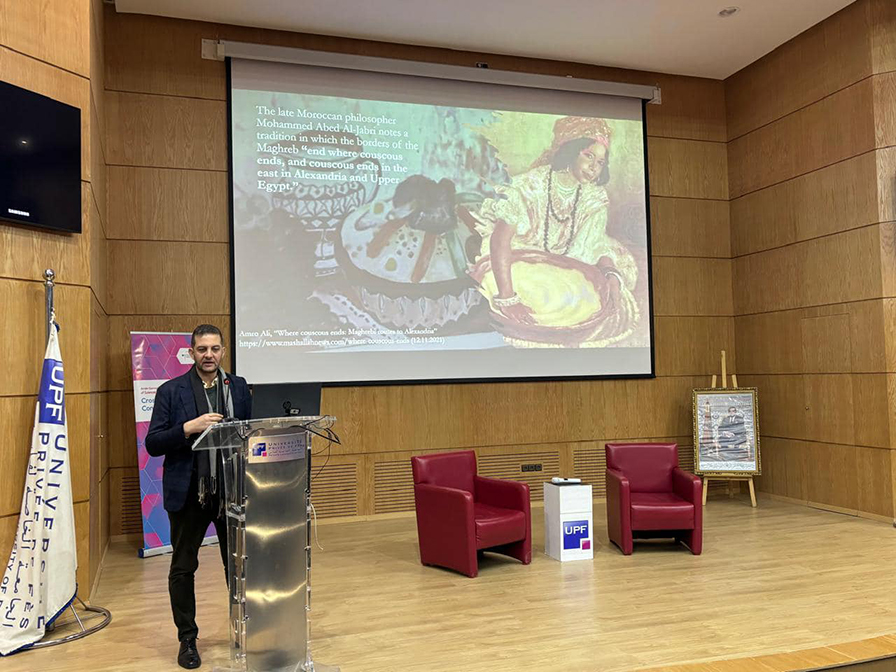
I presented my paper at Hassan II University of Casablanca on how the waterfront comes in the form of corniches, beaches, promenades, and quays, and why they are where Mediterranean cities stage their most charged rituals of civic life. The basin of memory sheds light on why littoral spaces act as a projection that crystalizes identity, belonging, nostalgia, and crisis through inhabitants, the state, and visitors.
The presentation was part of the workshop “Urban Conflict and Conviviality around the Mediterranean: Exploring Entanglements, Encounters and Transformations around a Contested Sea”
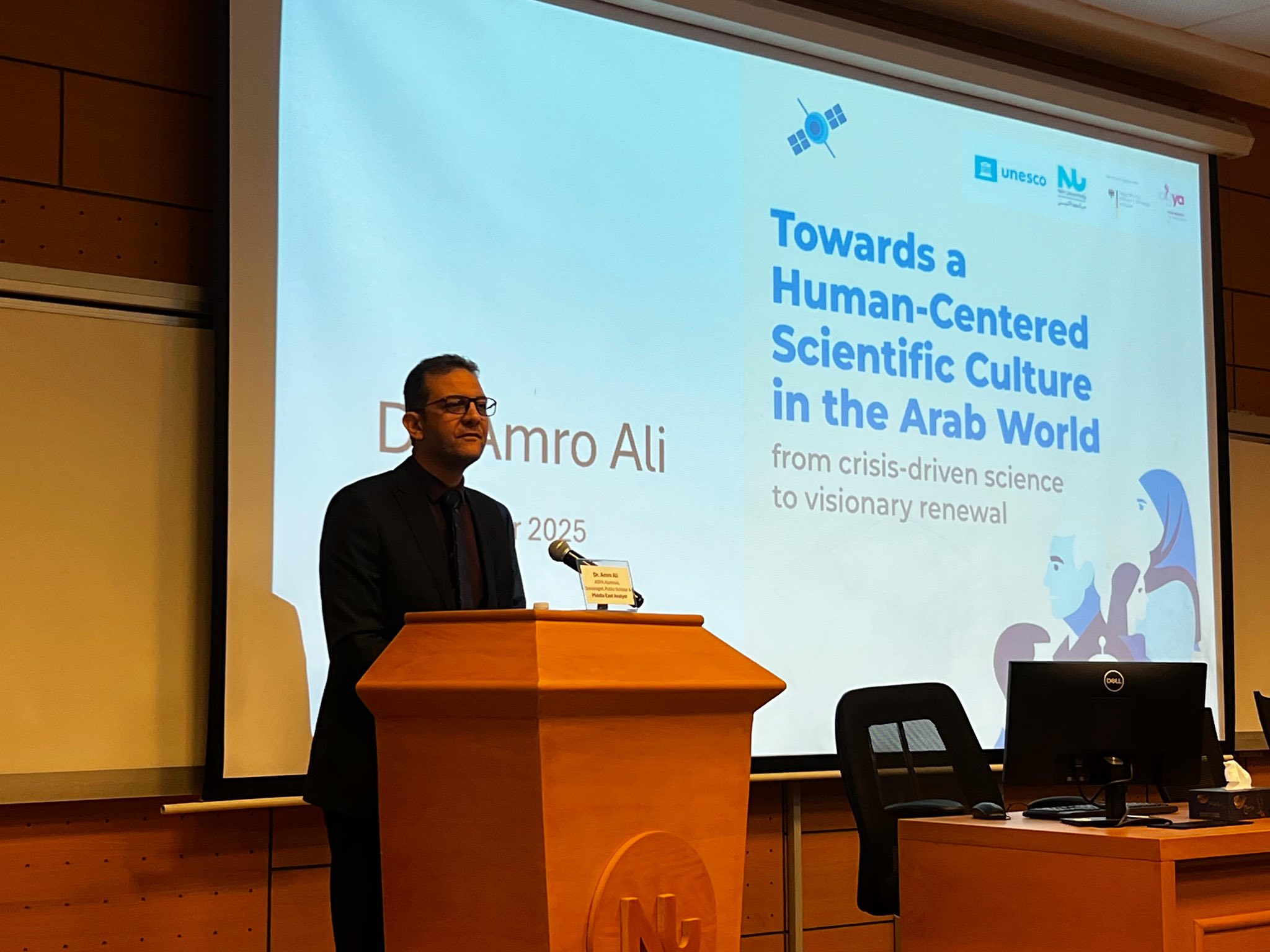
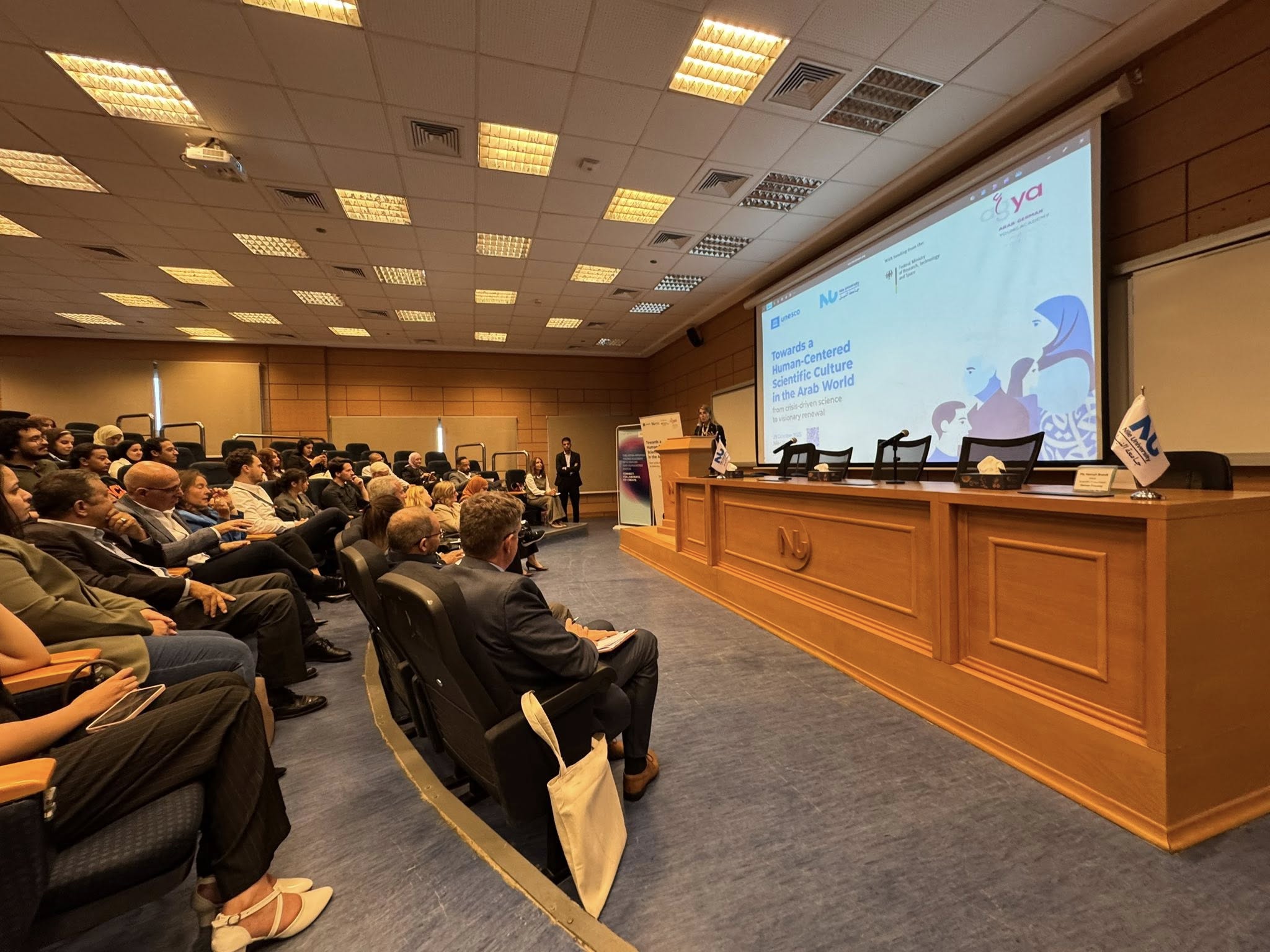
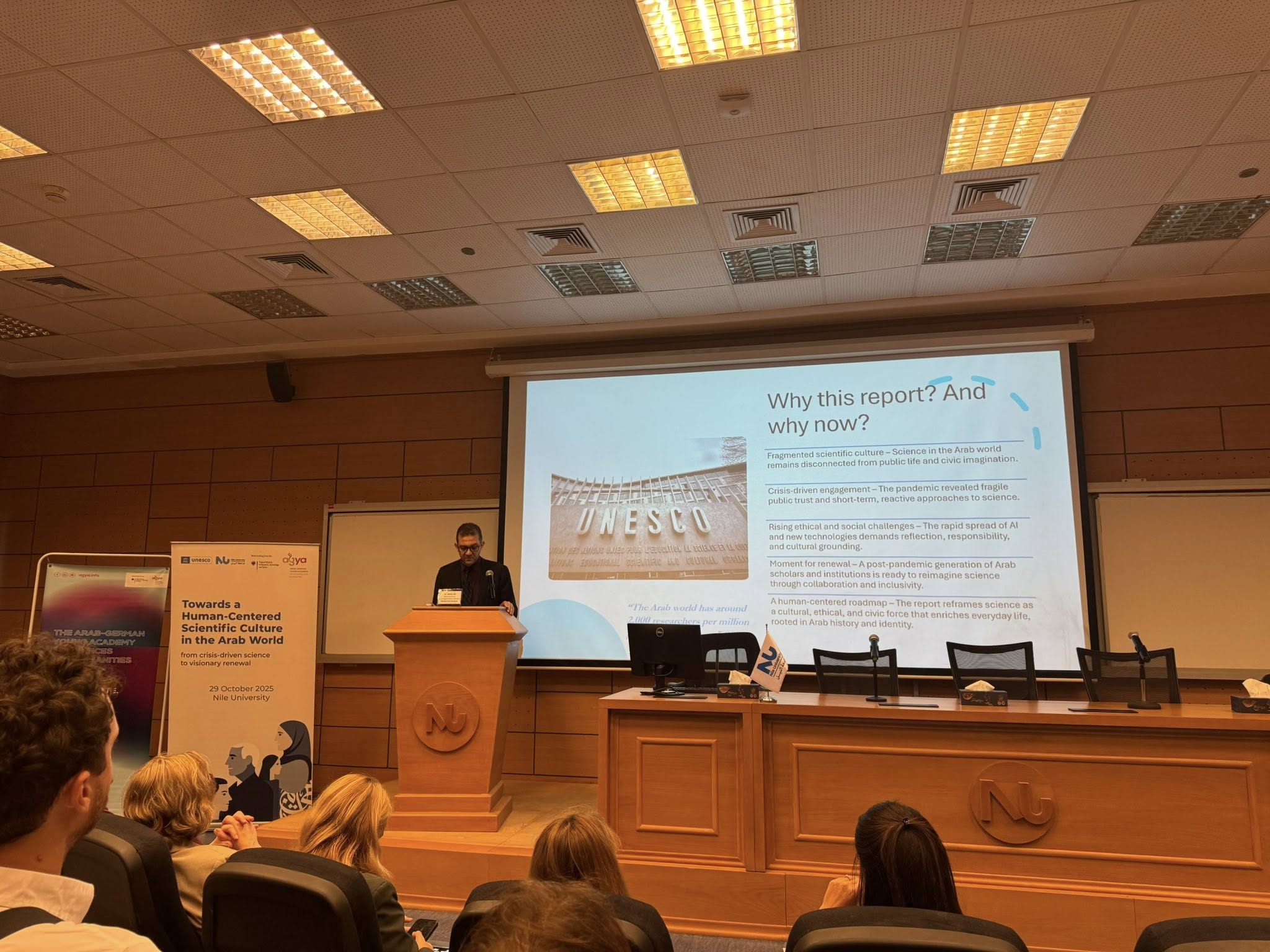
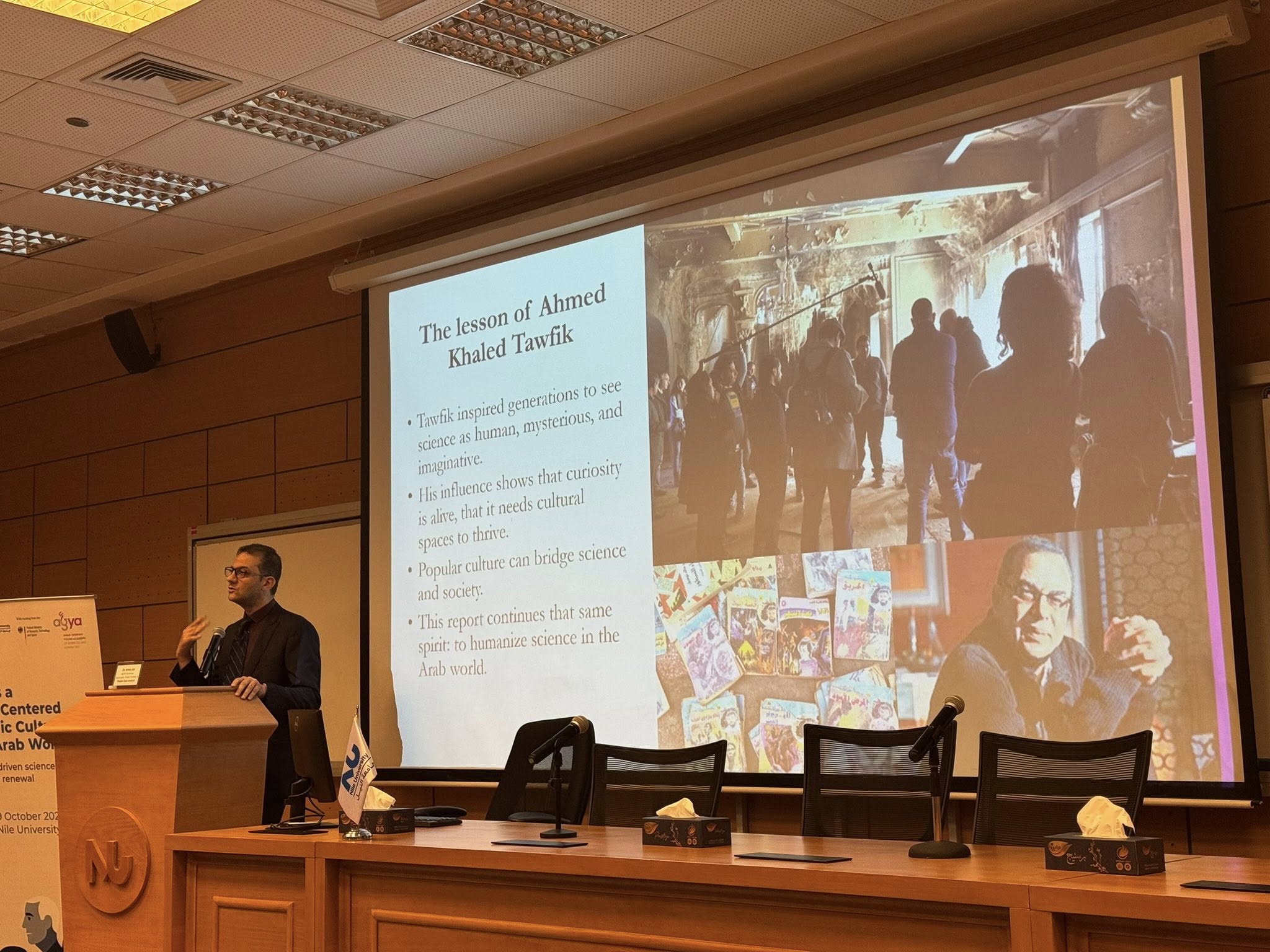
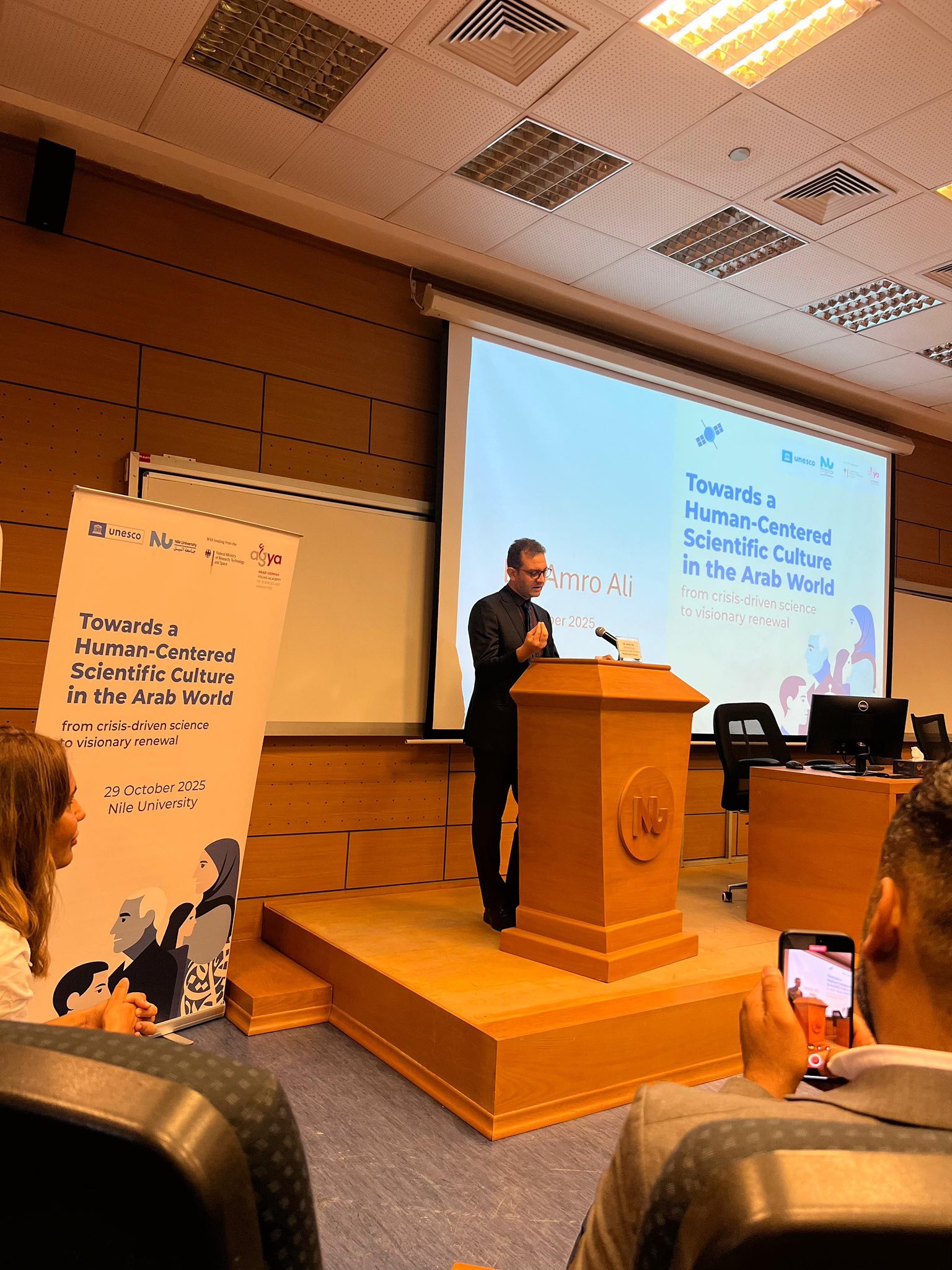
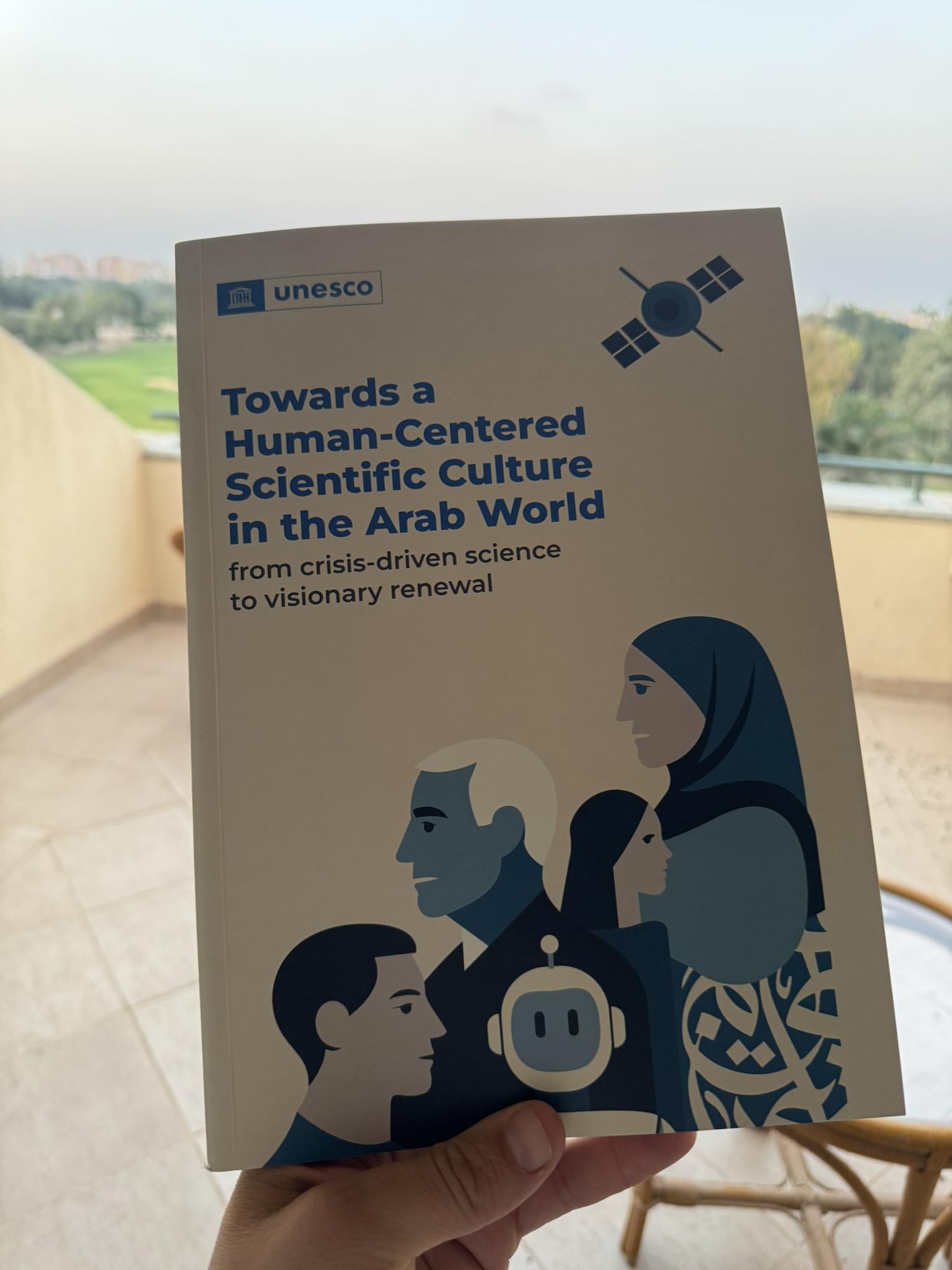
I was delighted to finally launch the UNESCO report “Towards a Human-Centered Scientific Culture in the Arab World” that I authored in a joint partnership between UNESCO AND AGYA at Nile University, Cairo.
The report envisions a scientific landscape in the Arab region that is more inclusive, collaborative, and responsive to human and social needs. It highlights successful models of Arab-Arab scientific collaboration and advocates for greater support to encourage the mobility of researchers.
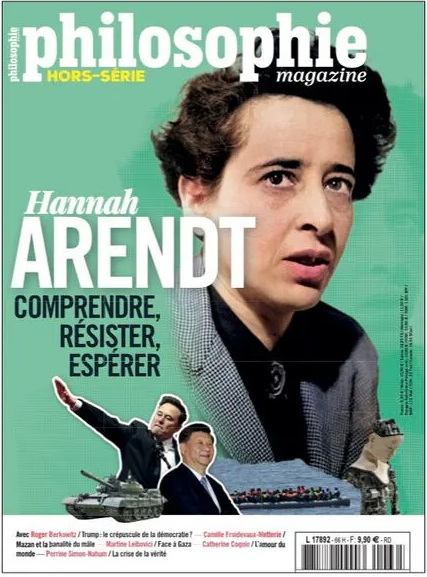
Voici mon article sur Hannah Arendt dans le monde arabe, publié dans le magazine français Philosophie. Apparemment, le article n’est disponible qu’en version imprimée, alors j’ai inclus ici un scan, gentiment envoyé par un lecteur.
Here is my article on Hannah Arendt in the Arab world, as part of a special edition on Arendt in the French philosophy magazine, Philosophi.. Apparently, the article is only available in print, so I’ve included a scan here that was kindly sent by a reader. (English version coming soon).
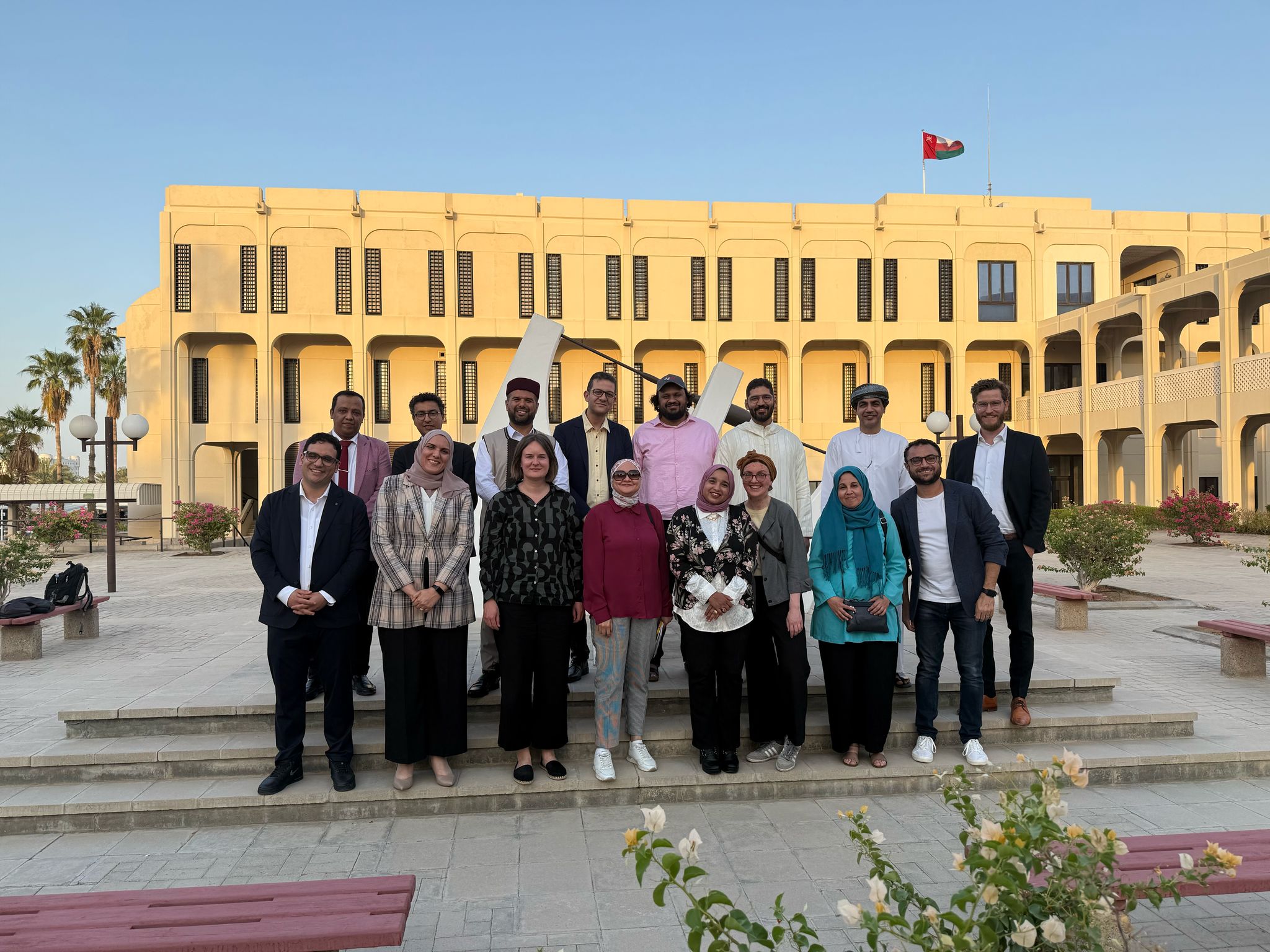
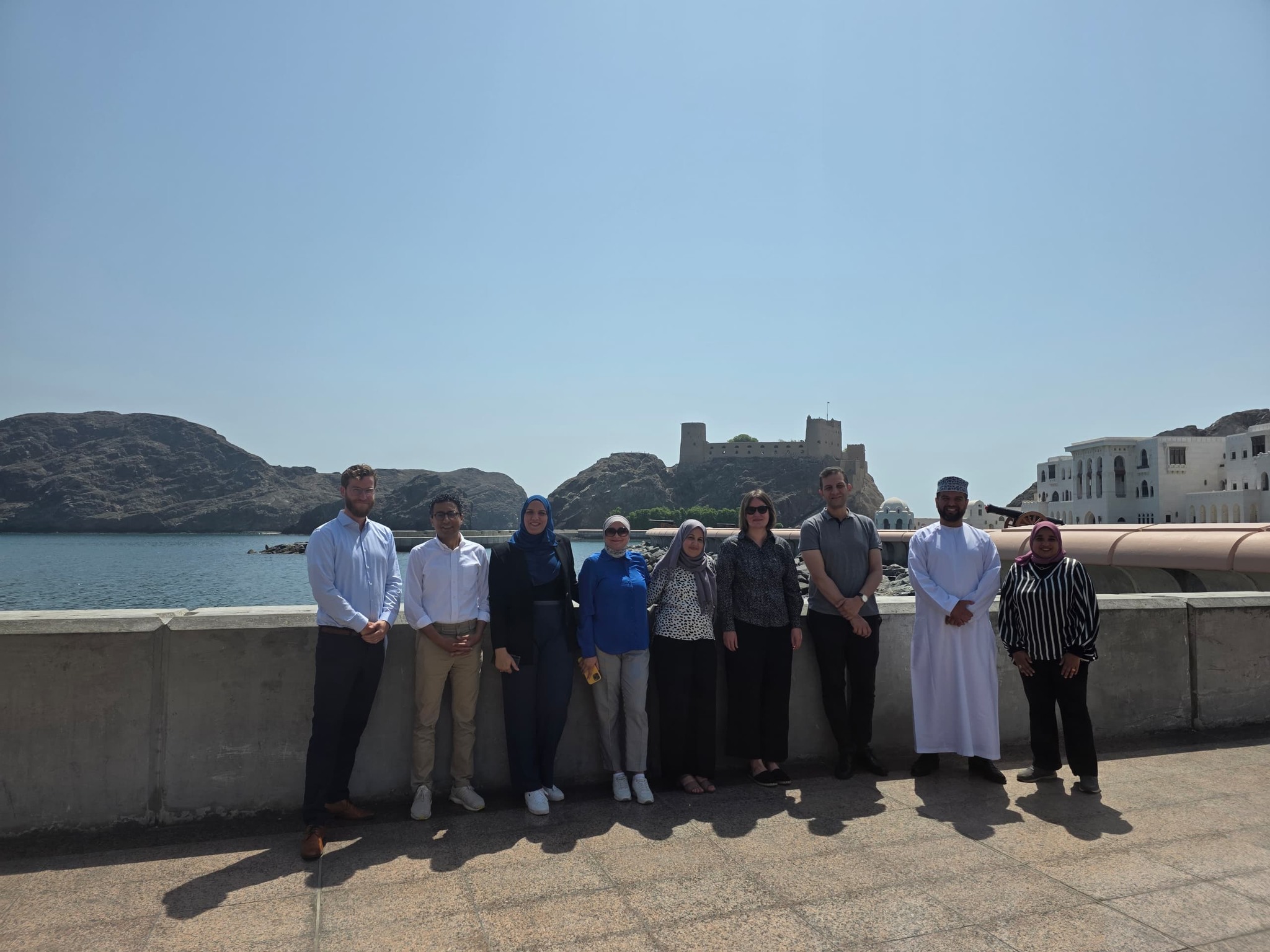
It was a wonderful workshop in Muscat, and I was honoured to contribute my experience with UNESCO (paper title: Why UNESCO Matters in the MENA Region: Policy, Knowledge, and Social Transformation) to the AGYA working group ‘Dynamics of Transformation’ that explored the role of consultancies in policymaking across the Arab world, from education reform to energy strategy, and examined ways to incorporate local leadership. This will be the foundation for a future publication.
My presentation “Before Borders: Pre-colonial routes and worldviews in the Southern Mediterranean” for the conference/workshop on perceptions of the League of Arab States.
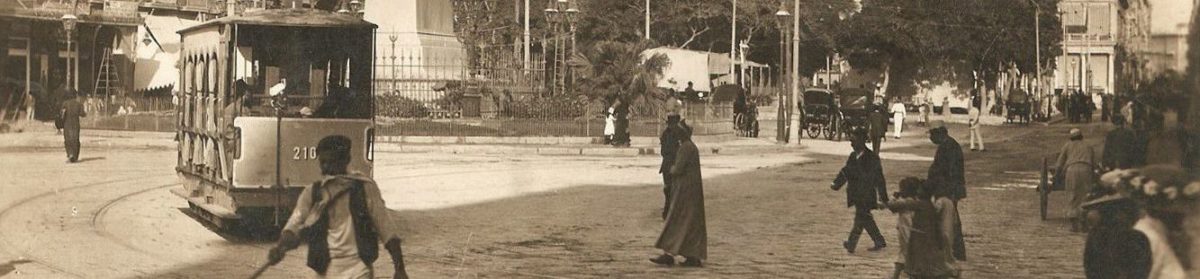
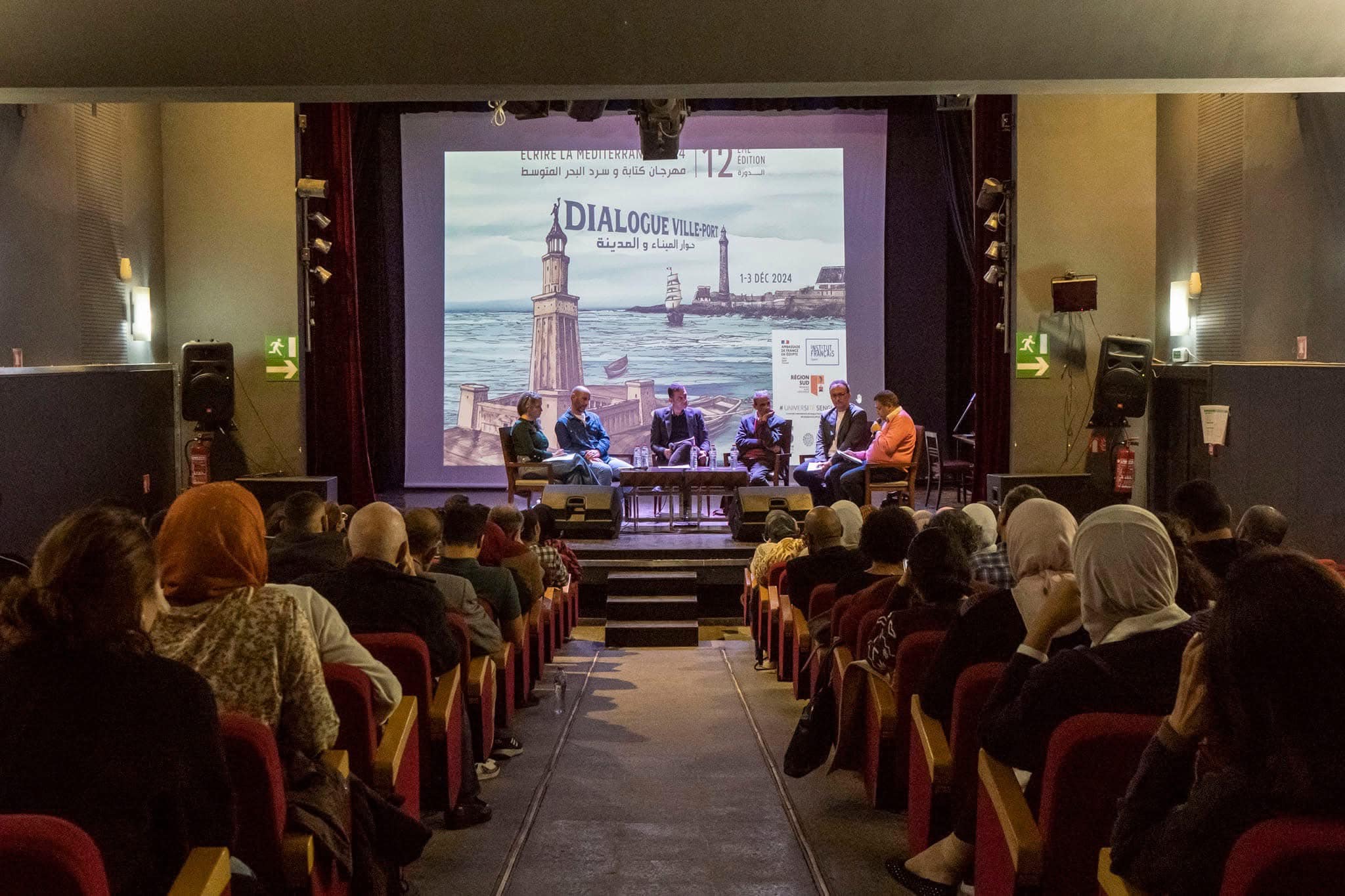
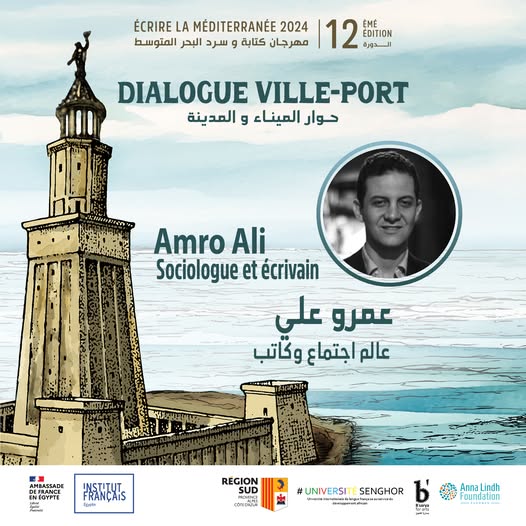
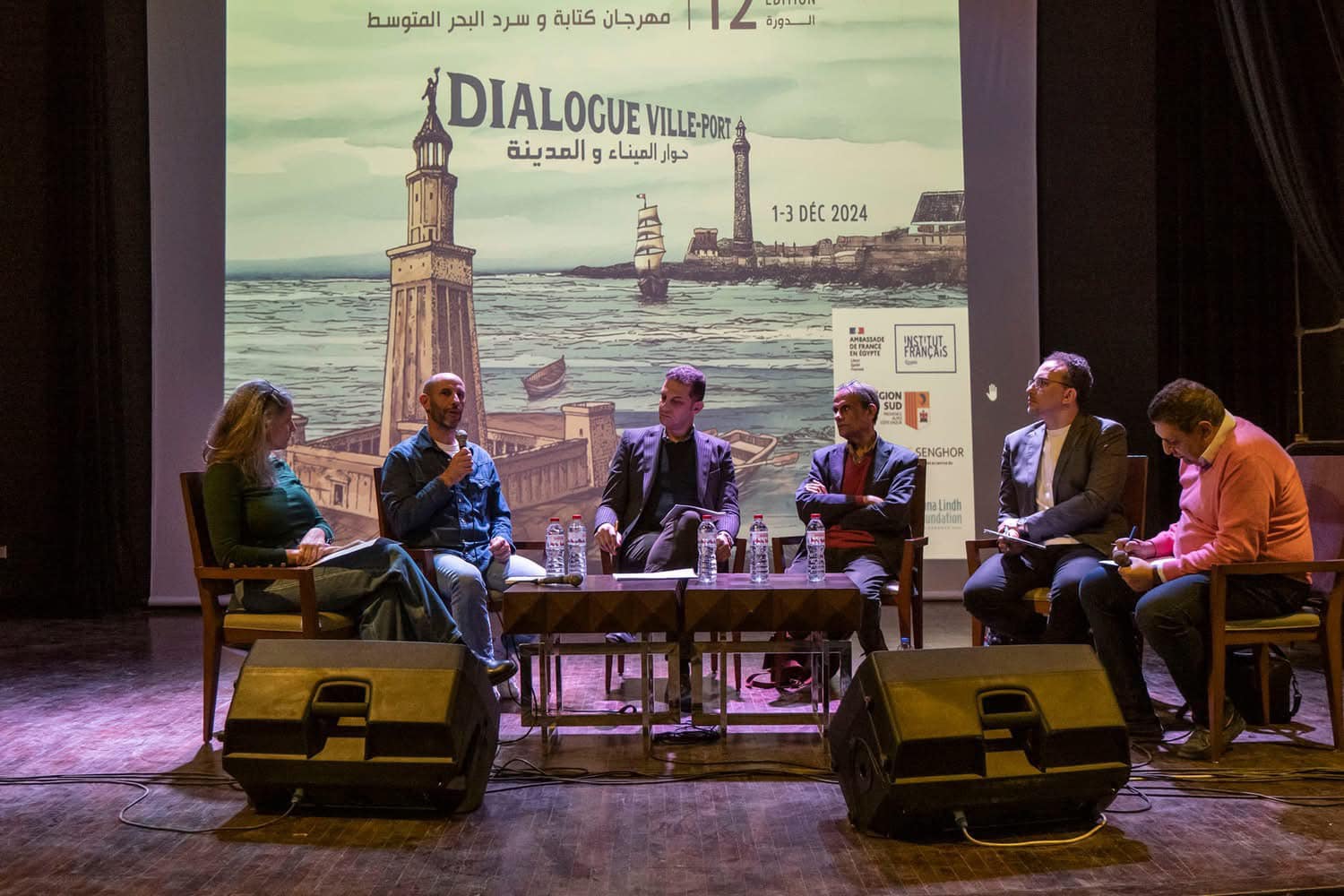
It was an honour to moderate the Port-City dialogues event between the scholars and writers of Alexandria and Marseilles, with Alaa Khaled, Mohamed Adel Dessouki, Anne Millet, and Philippe Pujol. We explored the role of port cities after empire, and how ports shape the identities of these two magnificent cities of the Mediterranean.